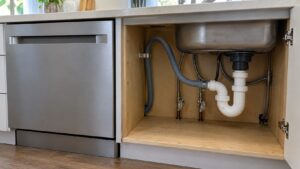
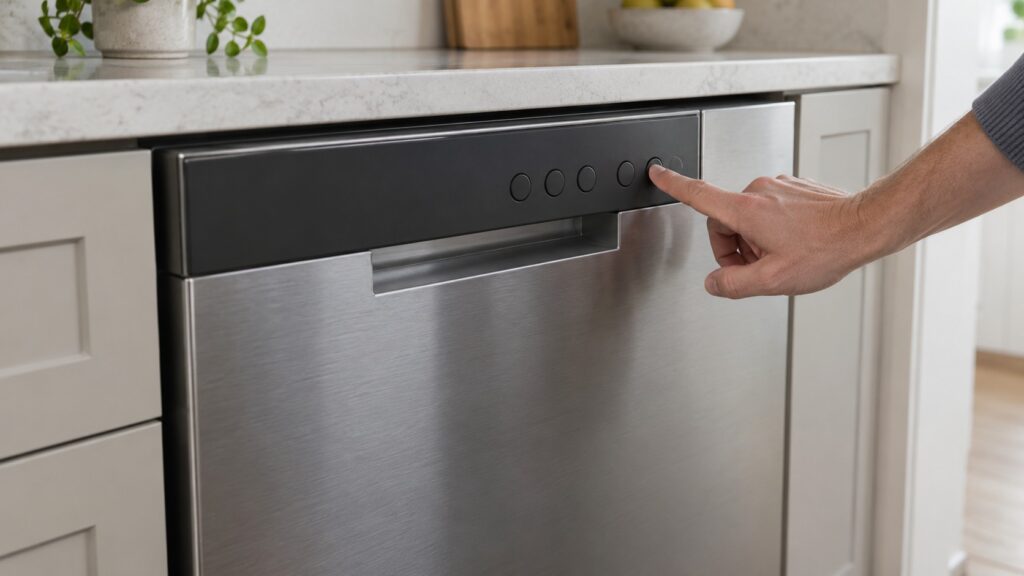
A Fisher Paykel dishwasher won’t start for one of four reasons: it has no power, the drawer is not closed and sealed, a setting or control lock is stopping the cycle, or the panel is holding a fault such as a flood or fill code. The first three are things you can check in a few minutes with the dishwasher left alone. The fourth means reading the panel and, for flood codes, stopping and calling a technician. This guide takes the checks in the order that finds the cause fastest, and it is about a dishwasher that does nothing at all. If only one of two drawers is affected, start with our guide to one drawer not working.
Why won’t my Fisher Paykel dishwasher start?
Look at the panel before you do anything else. A panel that is completely dark and unresponsive points at power. A panel that lights up but does nothing when you press start points at the drawer, a setting or a lock. A panel that shows a letter and number points at a code, and that code is the fastest route to the answer. Our A1 page and F1 page are two examples of how a code leads to a specific cause.
Noting what you see, and which drawer if you have a double unit, is the most useful thing you can do before you call. It separates a power problem from a drawer problem from a fault, and each of those has a different fix.
Is the dishwasher getting power?
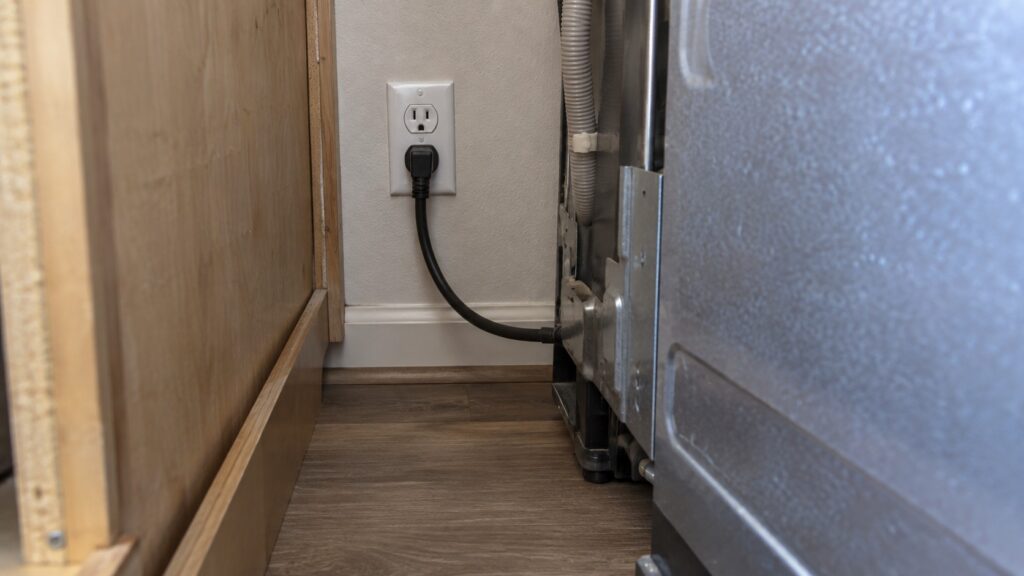
Start at the breaker. A tripped breaker is a common reason for a dead panel, and it may have tripped because of a power cut or a surge rather than a fault in the dishwasher. Switch it fully off and then on again. If a built-in dishwasher is plugged in, the outlet is usually behind the unit or in the cabinet next to it. Do not pull the dishwasher out to look unless you are comfortable doing it safely, with the breaker off, and do not use an extension cord. If the breaker trips again as soon as you reset it, leave it off and call a technician, because a repeating trip is the circuit telling you something is wrong.
A shared outlet that serves a disposal or other appliance can be switched off at a wall switch, so check that too. When the dishwasher has power, the panel should respond to a touch.
Is the drawer closed and sealed?
A DishDrawer will not run unless its lid has closed and sealed, because the machine needs to confirm that before water enters. Pull the drawer out and look at the sealing face for grit, detergent film or a fallen utensil, and make sure nothing in the load stands above the edge of the drawer. Our guide to DishDrawer seal and gasket care shows how to clean the seal and what a worn one looks like. Close the drawer firmly and listen for the lid to seat. Do not slam it, because force does not help the mechanism. If the drawer still will not seal, the page on a drawer that won’t seal covers the next steps.
Could a setting or lock be stopping the cycle?
If the panel is lit but the cycle will not begin, check that a cycle has been selected and that the start key has been pressed as your owner’s manual describes. Some models have a control lock or a delayed start, and the way these are set and cleared differs by model, so check the owner’s manual for your unit rather than guessing at key combinations. If the manual is lost, the model number on the plate inside the cabinet lets you find the right one. A delayed start that was set by accident can look exactly like a dishwasher that will not start.
Does the panel show a code?
If the dishwasher starts and then stops, or never starts and shows a letter and number, the code decides what happens next. Fill problems such as U1 and A1 usually come down to the tap, the inlet hose and the inlet valve. Flood codes are different. F1 on newer drawers and E6 on classic ones mean the flood switch has detected water in the base, and the machine will not run until that is dealt with. Switch the dishwasher off at the breaker with dry hands and a dry floor, look for water in the tub and under the front kickplate, and do not keep resetting it. Repeated resets are how a small leak becomes damage to the cabinet.
Our guide to DishDrawer F1 and F2 error codes explains how to tell a physical blockage from a board fault.
What should you not do?
Do not open the cabinet, remove panels or work on wiring, the pump or the water connections yourself, because water and electronics share the space and a mistake can be dangerous. Do not bypass the lid sensing or hold the drawer shut with tape. Do not keep pressing start dozens of times. If the dishwasher still will not start after the checks above, switching it off at the breaker and calling a technician is the right call.
When should you call a technician?
Call if the breaker trips again after you reset it, if the panel stays dark with good power, if the drawer will not seal after you have cleaned the seal and checked the load, if a flood code appears or returns, or if the dishwasher shows a code that comes back after a power cycle. A technician can test the board, the lid mechanism, the flood switch and the supply. Our Fisher Paykel dishwasher repair page explains what a visit covers.