What Excess Foam means (fisher paykel dishwasher excess foam)
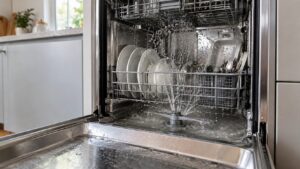
When you see fisher paykel dishwasher excess foam, it is an observable condition — too much foam in the drawer, which triggers the A7 auto-recovery program. Using the wrong detergent or too much of it is almost always the cause, and switching to the correct dishwasher detergent resolves it.
Symptoms to look for (fisher paykel dishwasher excess foam)
An over-foaming drawer is hard to miss: suds build up inside, and the DishDrawer responds by launching its A7 auto-recovery routine to rinse them away, which stretches the cycle out. The tell-tale clue is timing — the foam almost always follows a heavy detergent dose, the wrong product, or dishes pre-rinsed with hand soap. This is a chemistry problem, not a broken part, so matching what you saw before the cycle to the list below usually points straight at the fix.
- Foam is visible in the drawer
- A7 auto-recovery may run
- The cycle takes longer to finish
- It follows a heavy or wrong detergent dose
Likely causes
Excess foam is nearly always about what went into the drawer, not what is wrong with it. Hand-wash soap, an over-generous detergent scoop, too much rinse aid, or soapy residue carried over from pre-rinsing all whip up more suds than the wash can handle. Working through these usual sources of foam first means you rarely need trained service or Fisher & Paykel parts at all.
- Wrong detergent — hand-wash soap foams heavily
- Too much detergent — an over-dose foams
- Rinse-aid overdose — adds to foaming
- Pre-rinse soap residue — foaming carries over
What you can check
Because this is a detergent issue at heart, the fixes are simple and entirely owner-level. Switch to a dishwasher-specific detergent at the recommended dose, stop rinsing dishes with foaming hand soap beforehand, and let the A7 auto-recovery program run its course to clear the existing suds. If foam keeps returning even with the correct detergent, that is the point to book service. None of these steps involve opening a sealed system, bypassing a safety device, or touching live wiring.
- Use only dishwasher-specific detergent in the recommended dose.
- Avoid pre-rinsing dishes with foaming hand soap.
- Let the A7 auto-recovery program finish.
- If excess foam recurs with correct detergent, book service.
Parts a technician may check or replace
Depending on what the diagnosis shows, a technician may inspect, test, or replace the detergent type/dose, rinse aid, and wash system. The correct part for your Fisher & Paykel Dishwasher is matched from the model and serial number, and genuine components are fitted through trusted parts suppliers rather than generic substitutes so that performance, safety, and the appliance’s long working life are all protected. Confirming the failed part before ordering avoids replacing more than the problem actually requires.
When to call a technician
Excess foam that recurs with correct detergent needs a technician to check the wash and rinse system. When the fix calls for trained service, book a visit through our scheduling page and an experienced, qualified technician will diagnose and repair it.
Prevention and care
Keeping foam under control is mostly about detergent discipline. Stick to a dishwasher-specific product, measure to the recommended dose rather than eyeballing it, go easy on rinse aid, and skip the soapy pre-rinse that carries suds into the wash. Since A7 is the drawer’s own recovery response rather than a breakdown, the real prevention is simply recognizing what triggered it so you can avoid repeating the dose next time. Keep the control panel clean and dry so the A7 indicator is easy to read and clear.
Related help and Fisher & Paykel resources
Browse other Fisher & Paykel Dishwasher diagnostics, read about Fisher & Paykel Dishwasher repair, look up your unit in the Fisher & Paykel models reference, or the related A7 excess-foam recovery, browse service locations, or schedule a service visit. For Fisher & Paykel manufacturer documentation and model lookup, visit Fisher & Paykel at fisherpaykel.com/us.