A Fisher Paykel dishwasher noise is normal when it is a soft, even hum or the sound of water, and a problem when it is a grinding, a repeated knock or a buzz that stops the cycle. The sound, the moment it happens and which drawer it comes from will tell you most of what you need. A hum while the drawer drains is usually the pump doing its job. Grinding or a rattle is more often debris or a loose item. A buzz that ends in silence and a code is a motor or pump that has stalled. This guide helps you sort the sounds and do the safe checks.
Is it normal for a Fisher Paykel dishwasher to make noise?
Yes, within limits. Every dishwasher makes some sound: water spraying, a pump running, a valve clicking as it opens or closes. On a DishDrawer, each drawer is a complete machine with its own motor and pump, so you may hear the sounds of two machines in a double unit, and the sounds will come from a different drawer at different times. What matters is a change. A dishwasher that has always hummed during the drain phase and still does is behaving normally. A dishwasher that has started to grind, knock or buzz where it did not before is telling you something.
Listen for a minute at the start of a cycle, then in the middle, and then at the drain. Note which phase the sound belongs to, and which drawer. That alone narrows the cause a great deal.
What does a humming noise mean?
A low, steady hum during draining is a working pump, and our guide to a dishwasher not draining uses it as a test: a working drain pump makes a low humming sound during the drain phase, while complete silence or a loud grinding points to a pump issue. A hum that continues and is not followed by water leaving the drawer suggests the pump is running but blocked, and the filter is the first thing to check. A hum or buzz that comes with the cycle stopping points at a motor or pump that has stalled, which our page on DishDrawer F1 and F2 error codes describes: a healthy motor is a soft, even hum, while a stalling one makes a brief buzz and stops.
What causes knocking or rattling?
Most knocking is something the machine is spraying onto or around. A utensil that has slipped through the basket, a tall glass that touches the spray arm, a lightweight plastic item that has flipped or a pan whose handle blocks the arm will all knock or clatter in the wash. Stop the cycle, open the drawer and look. Rearrange the load so nothing stands proud of the rack and nothing can reach the spray arm. Check that the spray arm turns freely by hand and that its holes are clear, as our spray arm maintenance guide describes. If the knock continues with an empty drawer, it is not the load.
What causes grinding or crunching?
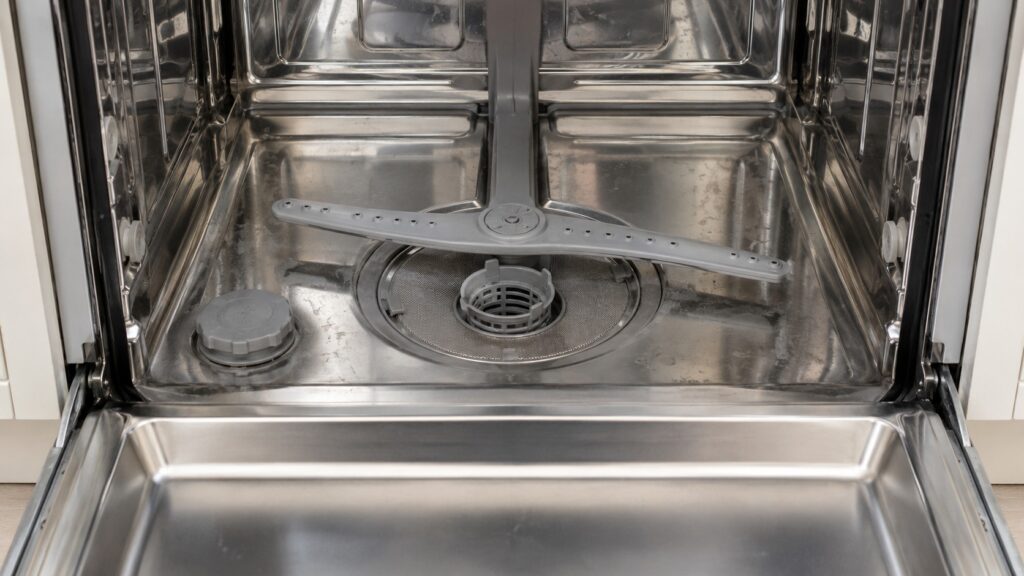
Grinding in a dishwasher is a hard object being ground or chased by the pump. The usual suspect is broken glass or a fragment of crockery, a bone or a seed that has got past the filter, or a small hard item such as a toothpick or a cap. Our F1 and F2 guide notes that a fragment of glass is one of the things that causes the motor to stall. Switch the dishwasher off at the breaker, take out the lower rack and lift out the filter, then look and feel carefully around the area, because glass can cut. Anything you can lift out cleanly, remove. Our guide to cleaning your Fisher Paykel dishwasher filter shows how the filter comes out. Do not go beyond the filter area, and do not take the pump apart.
What about a buzz, a whirr or a loud noise at fill?
A short buzz as the drawer starts to fill can be the sound of water being let in. A louder or longer buzz at fill can point to a supply problem, and it may come with a fill code such as A1. A whirr during the wash can simply be the motor and the spray at work. A loud noise that is new, constant and not tied to the load is worth a visit. Noise level is also a buying criterion, and our DishDrawer vs dishwasher guide discusses quietness, but we do not quote decibel figures here because they vary by model and by test.
Could the noise be water where it should not be?
A dishwasher that makes sloshing or gurgling sounds when it is not running, or that shows a flood code, may have water outside the tub. If you suspect that, switch the dishwasher off at the breaker with dry hands and a dry floor, pull the drawer out and look in the tub and under the front kickplate. Do not keep resetting a flood trip. Our guide on how flood protection works explains why the system shuts the machine down.
When should you call a technician?
Call if grinding continues after you have cleared the filter area, if a buzz ends the cycle with a code that returns after a power cycle, if the noise is new and loud with an empty drawer, or if there is any sign of water in the base. A technician can test the motor, the pump and the valves and replace the part at fault. A part swap is usually far cheaper than a new dishwasher, and our Fisher Paykel dishwasher repair page explains how a visit works. Tell us which drawer, and what the sound is like, using words such as hum, knock, grind or buzz.