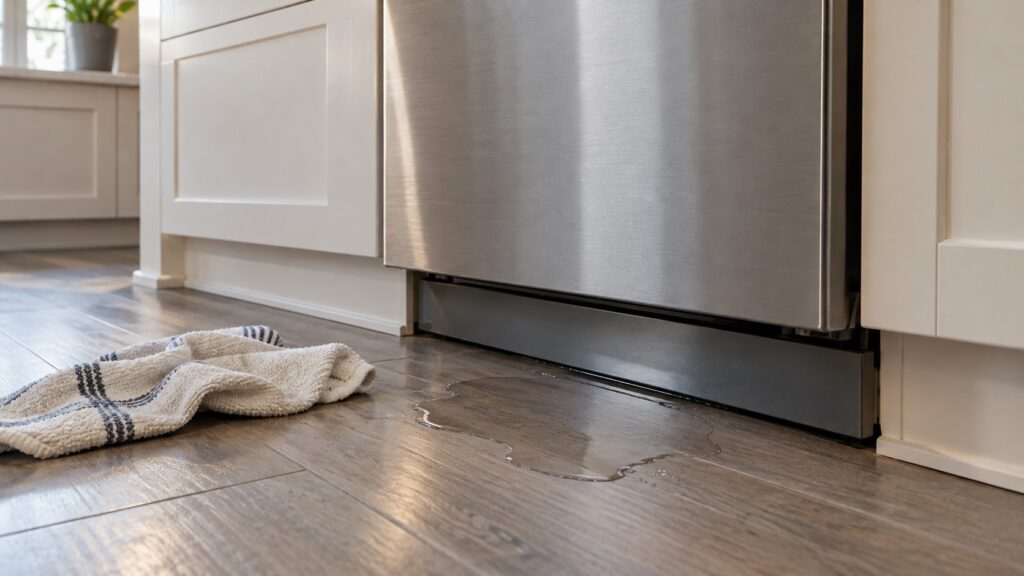
Fisher Paykel dishwasher leaking from front problems usually come from one of four places: debris or residue on the drawer seal, too much foam from the wrong or too much detergent, a drawer that is not closing fully because of the load, or rinse aid spilled while filling. A leak that starts at the front edge of a DishDrawer is often an easy fix, but water that has reached the base of the machine is not, and the drawer’s flood protection exists for a reason. This guide helps you work out which kind of leak you have, shows what is safe to check yourself and says when to stop and book a visit.
Why is my Fisher Paykel dishwasher leaking from the front?
A DishDrawer closes against the tub with a rubber seal that keeps wash water and steam inside. When a bit of debris, a streak of detergent or a film of grease sits between the seal and the rim, the drawer does not close tightly and water can escape at the front edge. The same thing happens when a dish, a utensil or a tall item sticks out and keeps the drawer from closing completely. Our guide to DishDrawer seal and gasket care explains what the seal does and how to keep it clean.
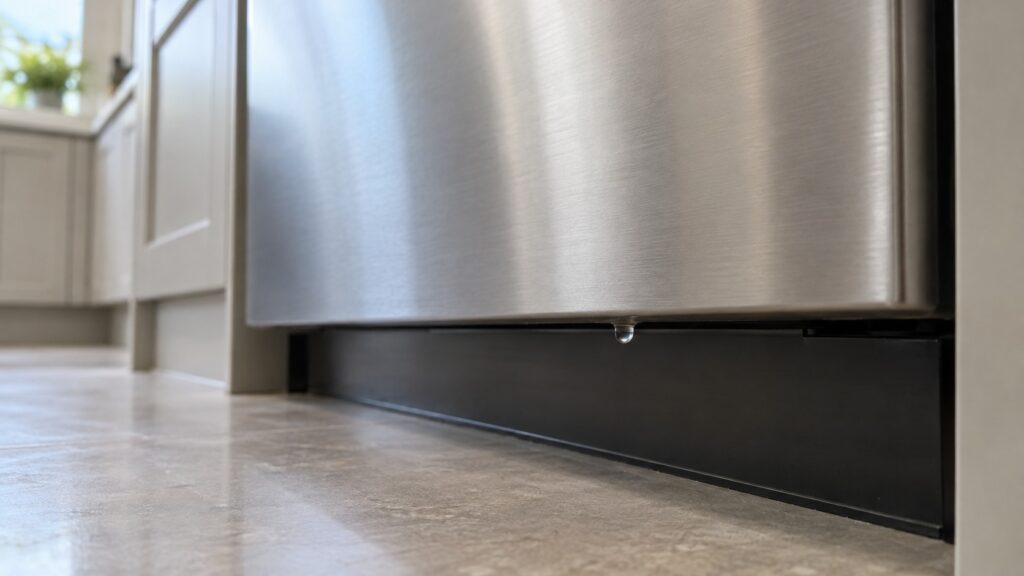
Think about when the leak appears. Water that shows at the front during the wash points to the seal, the load or the foam. Water that appears after the cycle ends can come from the same places, or from water that sat in the seal folds and ran out when you opened the drawer.
Is the seal dirty, or is something blocking the drawer?
With the drawer idle, pull it fully open and look at the seal and the tub rim in good light. Wipe both with a soft cloth dampened with warm water and a drop of mild dish soap, working along the lip and into each fold, then dry them with a clean towel. A soft brush such as an old toothbrush handles a stubborn crease. Do not use scrapers, steel wool or abrasive pads, which can nick the rubber and make the leak worse.
Then look at the load. Rearrange it so that nothing sticks out above the rim, nothing rests against the front of the drawer and no item can swing into the path of the closing drawer. An overloaded basket can push against the front and stop the drawer from seating. Our DishDrawer loading tips show how to arrange a drawer, and the general guide on dishwasher loading mistakes covers common errors. If the drawer will not close fully or the machine refuses to start, read our page on a drawer that will not seal.
Could foam or rinse aid be the cause?
Yes, and it is easy to miss. Too much detergent, the wrong kind of detergent, or dishes pre-rinsed with hand soap produce suds, and foam pushes out through the front edge. Our page on excess foam explains the condition. The fix is chemistry, not parts: use a dishwasher detergent made for the purpose, use the amount your owner’s manual recommends and do not use hand soap.
Rinse aid is the other suspect. If you overfill the rinse aid dispenser or spill some while topping it up, the extra can run out and look like a leak at the front. Wipe up any spill, fill only to the mark and read our guide on rinse aid dispenser problems if the dispenser itself looks suspect. One thing to try is a short cycle with a clean, sensibly loaded drawer, a normal amount of detergent and a dry floor in front, so that you can see where any water appears.
When is a leak serious?
Treat water under or behind the machine as serious. The DishDrawer has flood protection in the base, and our page on a dishwasher flood explains that a trip means water has reached the chassis tray and may be shown as F1 on later units or E6 on classic ones. Do not restart the drawer until the source has been found. Close the water supply valve if you can reach it safely, mop up the floor to avoid a slip, and call for a visit.
If water has reached an outlet, a plug or wiring, or if you smell something burning or see sparks, switch the breaker off at the panel while standing on a dry floor, and do not pull the plug from a wet outlet. Do not open panels or lift the unit to look for the source; that is a technician’s job. A leak that returns after you have cleaned the seal, corrected the load and used the right detergent may mean the seal is damaged or a hose or joint is leaking, and it needs a technician.
When should you call a technician?
Call when the leak comes back after the simple checks, when water reaches the base or the floor behind the drawer or when a code appears. We are an independent repair company, not the manufacturer. Our dishwasher repair page explains how a visit works, and you can schedule a visit online.