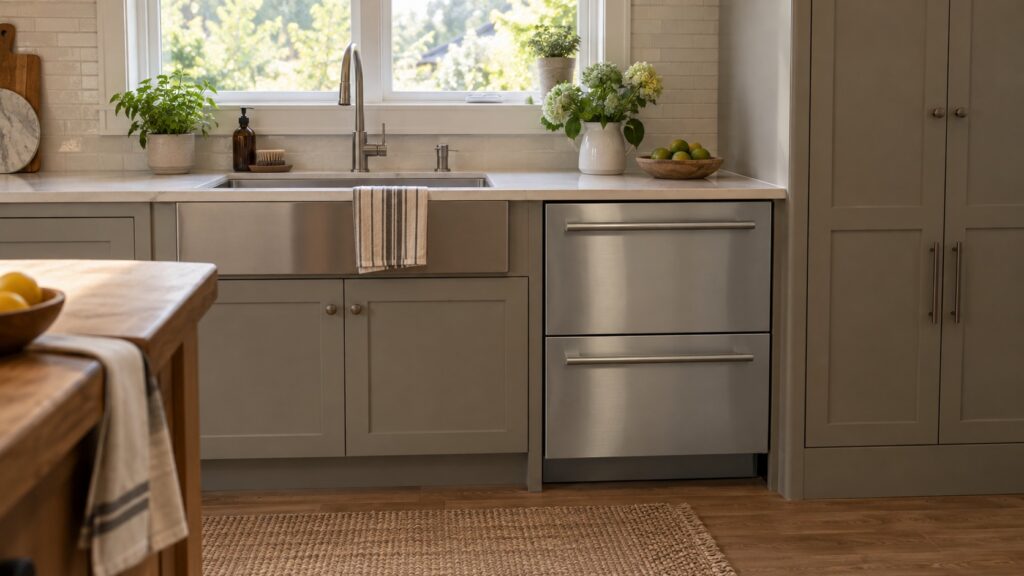
The Fisher Paykel DishDrawer vs dishwasher question is not really about which one washes better — both do the job — but about how a household actually uses a dishwasher. Two independent drawers suit some kitchens beautifully and frustrate others, and the difference comes down to load sizes, cabinetry and how you feel about paying more for flexibility. This guide lays out the real trade-offs so the choice is made on the facts.
Capacity is the first honest comparison
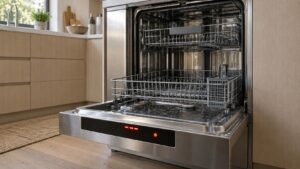
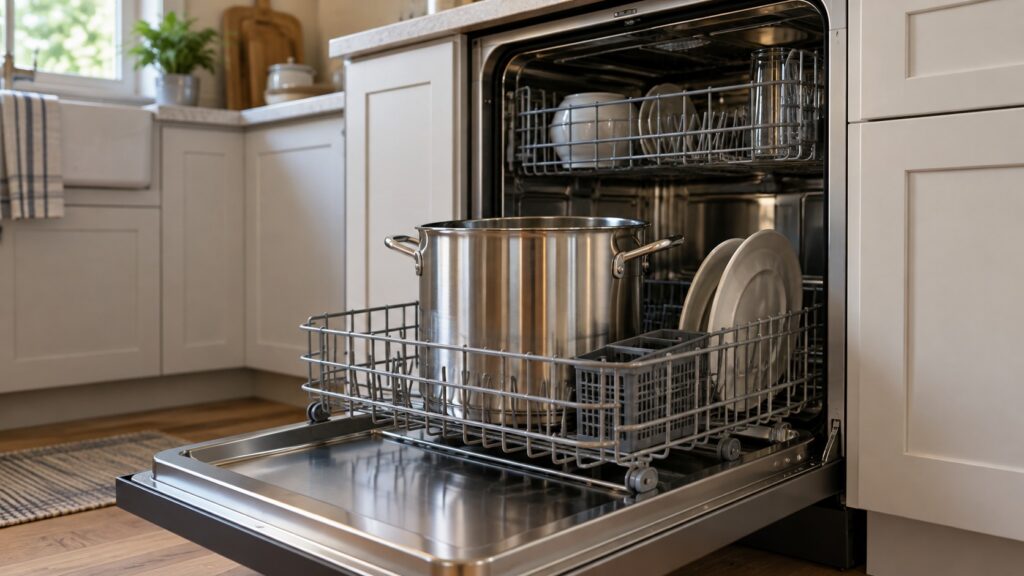
A full-size built-in dishwasher holds more in one go than a double drawer unit, and it handles awkward tall items — stockpots, oven racks, baking sheets — better, because a single deep tub has room a drawer does not. If you regularly wash after a big family meal, that matters.
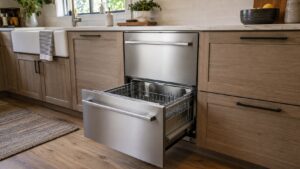
A double drawer unit holds a comparable amount overall, but split across two smaller spaces. Tall items are the constraint: anything that does not fit the depth of a drawer has to be washed by hand or laid down in a way that blocks the spray. Measure your largest regular item before deciding.
Where drawers genuinely win
Half loads. A couple, or a household that cooks lightly, runs the top drawer daily and the bottom one twice a week. That is less water, less energy and no waiting for a full machine.
Two cycles at once. Delicate glassware above, pans below, at the same time, on different programs. A single tub cannot do it.
Ergonomics. The upper drawer loads at hip height with no bending — a real quality-of-life difference for anyone with a bad back or knees.
Awkward cabinetry. A single drawer fits an island or a small kitchen where a full machine does not, and a pair can be split into two locations in some kitchens.
Where a conventional machine wins
Big loads and big items. One tub, one cycle, everything in.
Price. Both to buy and, when the time comes, to repair: two drawers mean two motors, two pumps and two valves, so there is simply more to maintain over a decade.
Simplicity. One machine, one filter, one set of habits. A drawer unit asks you to look after two of everything, and the drawer that gets the dirty pans needs its filter cleaned far more often than its neighbor.
Drying. Conventional machines with fan-assisted drying handle plastics better than residual-heat drying does. Our guide on fan-assisted drying explains the difference, and it is the complaint drawer owners most often raise.
Noise, in the room you live in. Both types run quietly by modern standards, but they make their noise at different times. A single tub runs one long cycle; a drawer unit may be running something for much of the evening if you use both. In an open-plan kitchen that is worth thinking about honestly — not because either machine is loud, but because two short cycles spread across a night can be more noticeable than one longer one that runs while everyone is out of the room.
Water and detergent per wash. A drawer uses less of both than a full tub, but two drawers run back to back use more than one full machine washing the same dishes. The saving is real only when the drawers let you wash less often, not when they become two half-empty machines running every evening out of habit.
Cost over ten years, not on the day
That last row is the argument people forget. When a drawer fails, you still have a working dishwasher — which, in a busy household waiting on a part, is worth more than it sounds. Our guide on one drawer not working covers what that failure looks like.
The cabinetry question
A double unit fits a standard dishwasher opening, so swapping either way is usually straightforward. A single unit needs a half-height opening, which means cabinetry work in most kitchens — plan it into a remodel rather than as a later change of mind. Panel-ready versions of both exist, and the panel weight and hinge adjustment matter more on drawers, because a heavy front affects how the drawer glides and seals.
Whatever you choose, the installation requirements are the same family of things — supply, drain, power, and a level, supported position. They are set out in our guide on installation requirements.
Choosing in one paragraph
If you cook large meals, wash big pans and want the lowest price for the capacity, buy the conventional machine. If you run half loads most days, want two programs at once, or need the loading height, buy the drawers and accept the extra cost and the two filters. If your kitchen simply cannot house a full machine, the single drawer is the appliance that exists for exactly that problem.
One ergonomic detail settles the argument in some households. The lower drawer of a double unit loads at knee height, which is lower than the bottom rack of a conventional machine and asks for a deeper crouch. The upper drawer, by contrast, is the easiest loading position of any dishwasher sold. If one person in the house does most of the loading, have them stand at both in a showroom before deciding — five minutes there settles what a specification sheet cannot.
When to call
Call when an existing machine of either kind will not fill, will not drain, or leaves dishes dirty after the filter has been cleaned, or when you want a second opinion on whether the machine you have is worth keeping before you shop. Diagnosis before shopping saves more money than any comparison of features.
We are an independent repair company, not a factory service arm. Pricing starts from a diagnostic visit — from $129 — with the estimate confirmed before work begins. Fisher Paykel dishwasher repair covers both DishDrawer units and conventional built-in machines, and you can schedule a visit online.