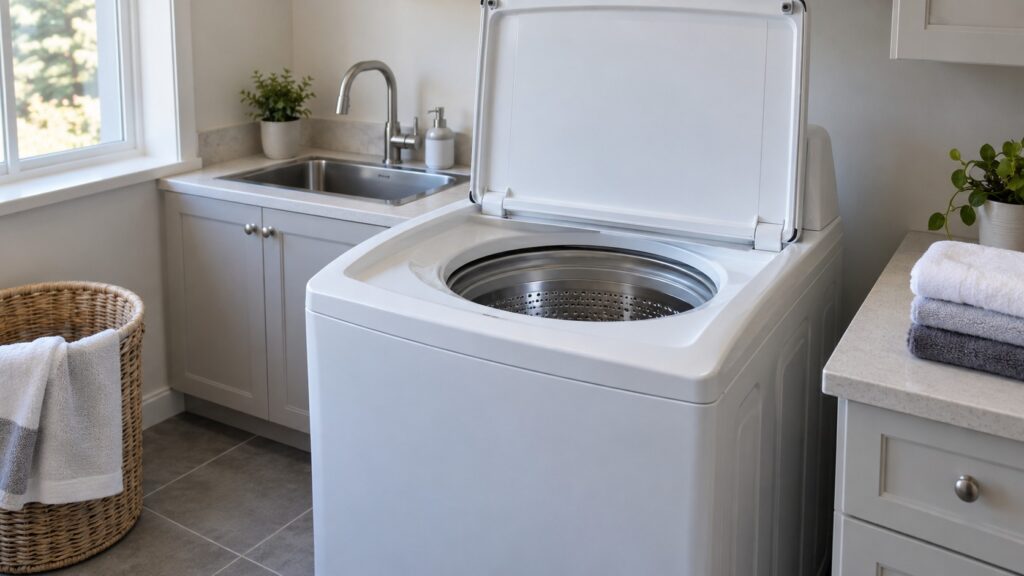
Are fisher and paykel washing machines good? From what we see on service calls, they are machines with a distinctive design, and the right answer depends on what you value. The washers we repair most are SmartDrive top loaders, such as the GWL and IWL families, and a front-load model, the WH2424, and our model pages list all of them as legacy or discontinued US washers that we still service. We cannot give you a reliability score, and we will not invent one, but we can explain what makes these machines different and what to check before you buy or keep one.
What makes a Fisher Paykel washing machine different?
The defining feature is the drive. A conventional washer turns a belt, which turns a transmission. A Fisher & Paykel SmartDrive replaces that with a motor whose rotor sits directly under the drum, controlled electronically, with a clutch on top-load models to decide whether the bowl turns with the agitator or stays still. Our explanation of how SmartDrive works goes through the parts. The design leaves no belt to slip and no gearbox to leak, and it moves the failures into a smaller number of places: the motor and its position tracking, the clutch and the water-level system.
That is a design trade-off, not a verdict. A machine with fewer wear parts is still a machine, and when something fails, the part is usually specific and often more specialized than on a conventional washer.
What are the strengths owners notice?
Owners tend to value three things. The first is gentle, controlled drum action, because the electronics vary speed and direction rather than a gearbox doing it mechanically. The second is the safety monitoring: these washers pause or drain when something is not right, and messages such as Suds Loc for too many suds, or an out-of-balance warning, are the machine protecting itself rather than breaking. Our guide on how washer safety monitoring works explains what each message means. The third is a short, specific parts list, which makes diagnosis faster for a technician who knows the platform.
What are the weak spots to know about?
Be honest about the other side. On the top-load SmartDrive washers, the faults we see cluster around the drain pump, the pressure tube and sensor that measure water level, and the clutch. Our guide to the Fisher Paykel GWL11 washer problems lays these out in detail. On the front-load model, the door boot needs regular cleaning, and the door should be left ajar between loads to prevent odor, as our guide to washer door boot cleaning describes.
Another point is availability. The washers we list are legacy or discontinued US models, so a new purchase of those exact models is unlikely, and a used one means checking the machine carefully. That does not make them poor machines. It does mean you should know what you are buying.
How long will a Fisher Paykel washer last?
We would rather point you to a range than promise a number. Our appliance lifespan guide gives industry-average ranges for each category, and our repair or replace guide for a washer explains how to weigh a repair against a new machine. How long yours lasts depends on how it is loaded, how clean the drain pump filter is kept, and whether faults are fixed early or ignored.
Should you buy a top loader or a front loader?
That is a different question from the brand, and it is worth settling first. Our top load vs front load washers guide compares the two formats. In short, a top loader is easier on the back and avoids the door boot, while a front loader tumbles clothes and can be stacked with a dryer. Choose the format that fits your laundry room, then judge the brand.
Which habits keep a Fisher Paykel washer trouble-free?
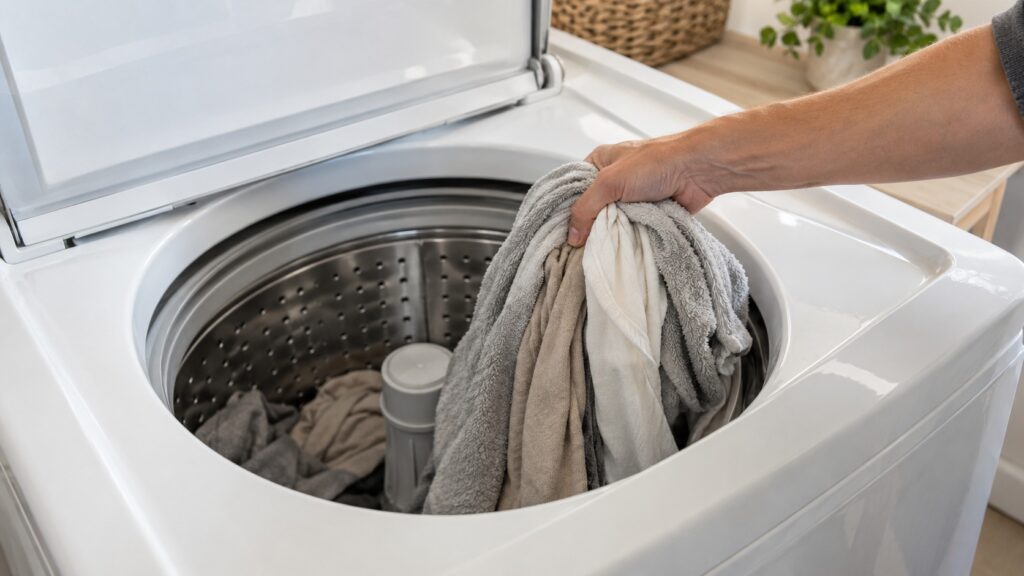
Most of the calls we get on these washers trace back to a short list of habits rather than to a defect. Use high-efficiency detergent in the amount printed on the label, because too many suds is the cause of repeated Suds Loc pauses. Spread the load evenly and avoid washing a single heavy item alone, which is the usual cause of out-of-balance warnings. Clean the drain pump filter every few months and keep the access cap snug, because a loose cap leaks and a clogged filter stops the machine draining. Leave the lid or door open between loads so the drum can dry. Replace hoses that look swollen or cracked before they fail behind the machine.
None of that is specific to this brand, and a washer that is looked after will give fewer problems on any platform. Where Fisher & Paykel differs is in the information the machine gives you: its messages are specific, and a technician told the exact message can usually name the part before arriving. If your washer stops with a message, our page on a washer that will not drain is a good place to start, because drain faults are the most common stop of all.
What should you check before buying a used Fisher Paykel washer?
Take a short checklist. Read the model plate and confirm the model against the families above. Ask for a demonstration with a load, and listen for rumbling or grinding during spin, and tell a technician if you hear it. Open the drain pump filter access and look for debris, because a neglected filter is behind many drain faults. Check that the drum turns freely by hand with the power off. Look at the hoses and the area underneath for signs of past leaks. If you are not sure, a technician can look over the machine before you commit.