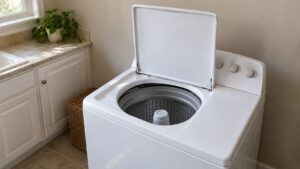
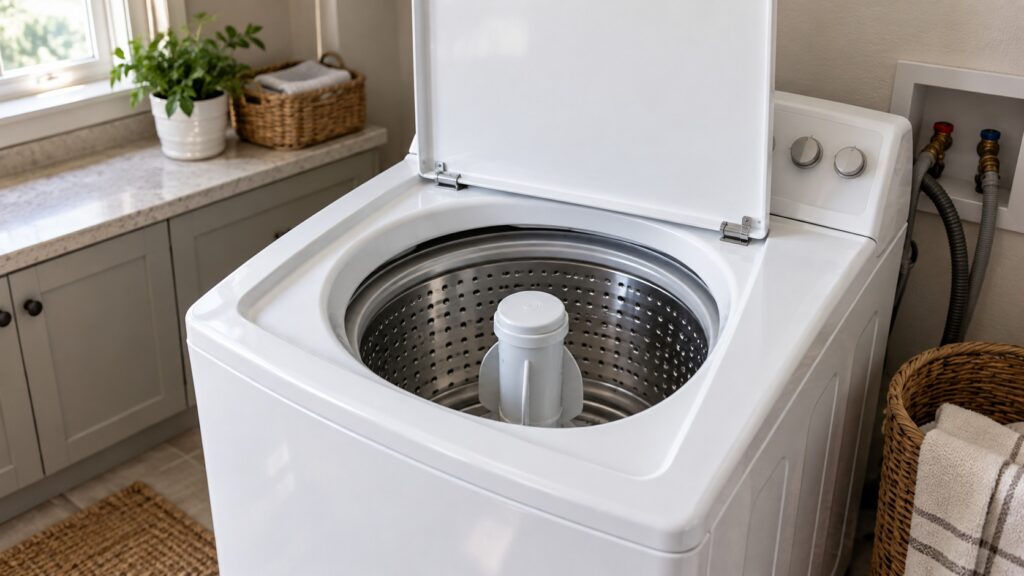
The Fisher Paykel GWL11 is a SmartDrive top-load washer, and it fails in a small number of well-known ways. Four parts account for most of what owners end up replacing: the drain pump, the pressure tube and its sensor, the clutch that engages and disengages the bowl, and the rotor and stator of the direct-drive motor. If you are searching for GWL11 parts, one of those four is almost certainly what the machine is asking for.
What makes a Fisher Paykel GWL11 different from an ordinary top loader?
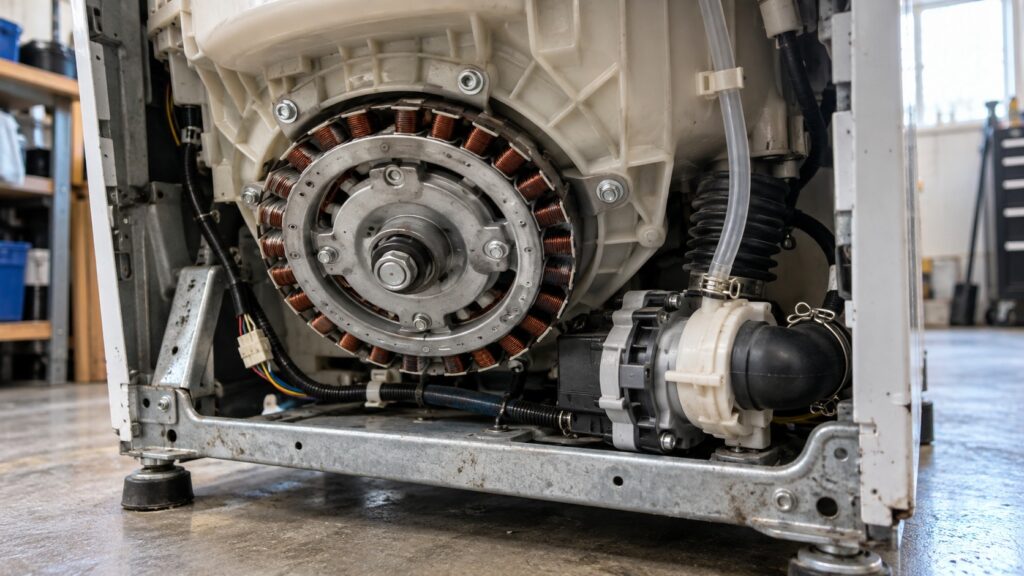
A conventional top loader turns a belt, which turns a transmission, which turns the agitator and then the bowl. The SmartDrive platform under the GWL11 deletes all of that. The motor rotor sits on the bottom of the shaft, directly under the bowl, and the electronics vary its speed and direction instead of a gearbox doing it mechanically. A clutch decides whether the bowl turns with the agitator or stays still while the agitator moves inside it.
That design is why the parts list is short and why the failures are specific. There is no belt to slip and no transmission to leak oil. What there is instead is a motor whose position is tracked electronically, a clutch that has to engage and release cleanly, and a water-level system built on a tube of trapped air rather than a mechanical switch. Every one of the common GWL11 faults sits in one of those three places. The details of the drive itself are covered in our guide on how the SmartDrive works.
Which GWL11 parts do owners actually end up buying?
In rough order of how often they come up:
- Drain pump. The single most replaced part on this platform. It is a small motor with an impeller, and coins, hair clips and underwire all find their way into it. Problem 37 is its code.
- Pressure tube. A length of clear hose from the bottom of the bowl housing up to the module. It costs very little and causes wildly disproportionate trouble when it splits, fills with lint, or simply falls off. Problem 39.
- Clutch assembly. Worn clutch splines show up as a bowl that spins when it should be still, or refuses to spin at all. Problems 40 and 56 live here.
- Rotor and stator. Rotor magnets can crack and stator windings can go open, but both are genuinely less common than the internet suggests. Confirm before you buy.
- Inlet valve. A slow or no fill on the hot or cold side is usually the valve or the screen in front of it, not the plumbing.
What do the fault numbers on a GWL11 mean?
SmartDrive machines report numbered problems rather than letter codes, and the number is displayed by a flashing pattern on the lights rather than on a digital readout. The full list is in our washer error code reference, but four of them cover most GWL11 service calls.
Problem 37 is drainage. The module expected the water level to drop and it did not. Nine times out of ten that is the pump filter or the pump itself, and it is the one fault on this list an owner can often clear without tools beyond a towel and a shallow pan.
Problem 39 and problem 38 are both the water-level system. 39 says the tube is blocked or disconnected; 38 says the sensor is reading empty while the bowl is clearly not. Because the level system also tells the machine how much water to put in, a fault here can show up first as a wash that fills too little or overfills.
Problem 40 is the clutch. The bowl was supposed to disengage and did not. A machine with 40 in its history and a bowl that drags when you turn it by hand is telling you the same thing twice.
What can I check before ordering a GWL11 part?
Three checks are safe, cost nothing, and regularly make the part order unnecessary.
- Open the pump filter. Power off, tray and towel ready, and expect water. Our guide on cleaning the drain pump filter walks the whole routine. A pump that hums but moves nothing is usually obstructed rather than dead.
- Turn the bowl by hand. With the power off and the lid open, the bowl should turn with light, even resistance. Grinding, a catch once per turn, or complete freedom with no resistance at all all point at the clutch or the bearing.
- Listen to the fill. Run a short cycle and listen for the valve. Silence on one temperature and water on the other is an inlet valve or a closed faucet, not an electronic fault.
Stop before removing the outer cabinet or the bowl. The stator is mains-connected and sits directly under standing water, and the bowl and agitator come out in a sequence that needs the right tool and a clear floor.
Is a GWL11 worth repairing?
These machines have a reputation for long service lives, and the economics usually follow the part rather than the age. A pump, a pressure tube, an inlet valve or a lid switch is a small job on a machine that may have years left. A clutch is a bigger job but still routine. A rotor and stator together on a machine already past a decade is the point where the arithmetic changes, and it is worth reading our page on repairing or replacing a washer before committing.
What does not change is the value of a correct diagnosis first. The GWL11 is a machine where the same symptom — a cycle that stops with water in the bowl — can be a two-dollar hose or a motor assembly, and the fault number is what separates them.
We are an independent repair company, not a factory service arm. Pricing starts from a diagnostic visit — from $129 — with the estimate confirmed before work begins. Fisher Paykel washer repair covers pumps, clutches, pressure systems and SmartDrive motors on the GWL and IWL families, and you can schedule a visit online. Have the flashing fault number and the full model number ready, and the visit starts with the right part on the truck.