
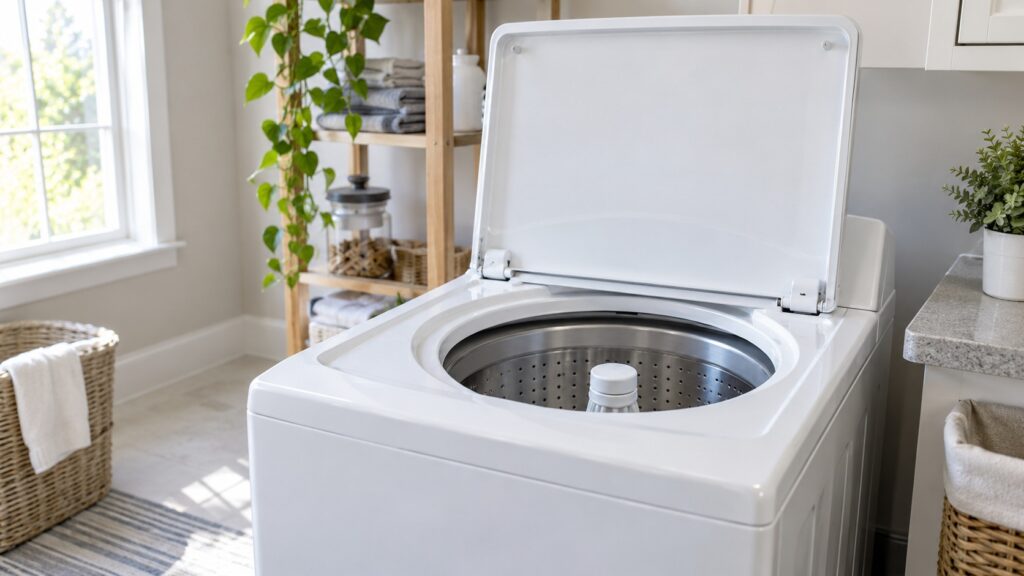
Fisher Paykel top load washer cleaning comes down to three habits: keep the lid open between loads so the tub dries, wipe the places where residue collects every month, and run a hot cleaning cycle with a washer cleaner every month or two. The GWL and IWL top-loaders are legacy US machines that many families still use daily, and a washer with a clean tub smells better, rinses better and is less likely to trip its suds protection.
Why does a top-load washer get dirty in the first place?
A washer cleans clothes, but it also collects what comes off them: body oil, lint, fabric softener, undissolved detergent and minerals from the water. In a front-load washer that residue gathers in a rubber boot. In a top-loader it collects in less visible places: under the rim of the tub, on the underside of the lid, around the dispenser and in the water that sits below the wash bowl. Damp, warm residue is where the musty smell comes from, and a washer that stays closed after a load makes it worse.
Too much detergent is the biggest single contributor. A Fisher Paykel washer watches for a surplus of suds, and a heavy dose both leaves film behind and risks the Suds Loc message. If you see that message, read our page on Suds Loc and then cut the dose, because cleaning the tub does not help if the next load goes in oversoaped.
Hard water adds to the problem, because minerals bind with detergent and leave a gray, chalky film on the tub and on dark clothes. If your clothes come out stiff or dull, or white crust forms around the dispenser, a monthly cleaning cycle matters even more, and a small amount of laundry water softener can help. Cold-only washing also leaves more residue than warm washing, so an occasional hot load helps keep the tub clean between full cycles.
How do you run a hot cleaning cycle?
Start with the washer empty. Use a washer cleaner made for top-loaders, following the amount on its label, and choose the hottest, longest cycle your model offers. If your manual describes a tub clean or sanitize setting, use that one. Let the machine fill and agitate, and if it allows a pause, stop it for an hour partway through so the cleaner can soak the underside of the rim. Then let the cycle finish and wipe the tub dry.
Plain white vinegar is a common alternative, but never combine it with bleach, because the mixture releases toxic chlorine gas. Use one product at a time, and run a short rinse cycle between products if you switch. If you use bleach, keep the room ventilated, and do not use any cleaner the washer’s manual warns against.
Which parts do you wipe by hand?
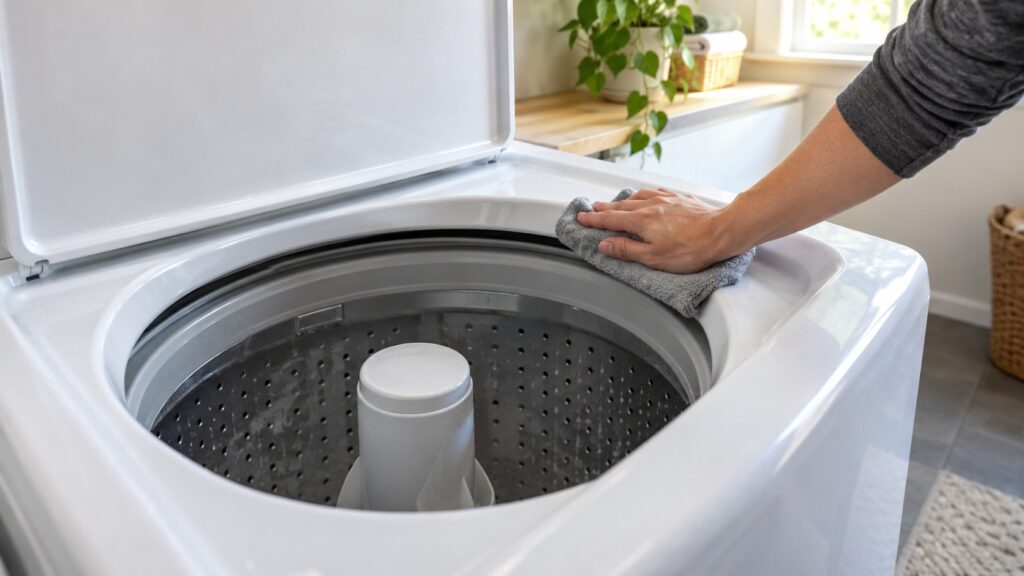
Dampen a soft cloth with warm water and a drop of mild dish soap, and work around the parts that the cleaning cycle does not reach well: the top rim of the tub, the underside and edge of the lid, the control panel and the dispenser opening. A soft toothbrush clears residue from corners. Take out any removable dispenser cup, rinse it in warm water and let it dry, because dried softener and detergent harden into a crust that blocks the flow.
Do not spray liquids directly onto the control panel or into the lid area where electronics sit. Spray the cloth instead. Avoid steel wool and abrasive powders, which scratch the enamel and the plastics and give residue more to cling to.
What about the pump filter and the hoses?
Cleaning the visible tub is only half the job. The pump filter catches lint, coins and loose threads before they reach the pump, and a clogged one slows the drain and can trigger the pump-blocked code on top-load models. Our guide to washer drain pump filter cleaning covers it step by step. Unplug the washer and keep towels ready before opening anything that holds water.
At the back, the mesh screens at the ends of the inlet hoses catch grit. If the washer fills slowly, check them. Our page on inlet hose and filter care shows how, and replacing a swollen or cracked hose is cheap insurance against a flood.
How do you keep the smell from coming back?
Four habits do most of the work. Leave the lid open between loads. Use the amount of detergent the label gives for the load size, and use a detergent designed for your type of washer. Take wet clothes out promptly, since a load left overnight breeds odor. And do not pack the machine so tight that water cannot circulate. Add a monthly wipe-down and the cleaning cycle every month or two, and the washer should smell of nothing.
If a smell persists after a thorough cleaning, look for a hidden cause: a partly blocked drain hose that leaves standing water, a pump filter that has not been checked, or a spill that has run under the tub. For leaks and water on the floor, our guide to washer leaks can help, and Fisher Paykel washer repair is there when it does not resolve.