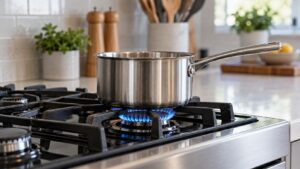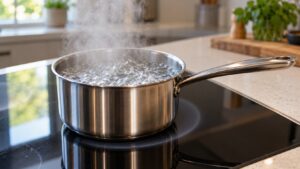
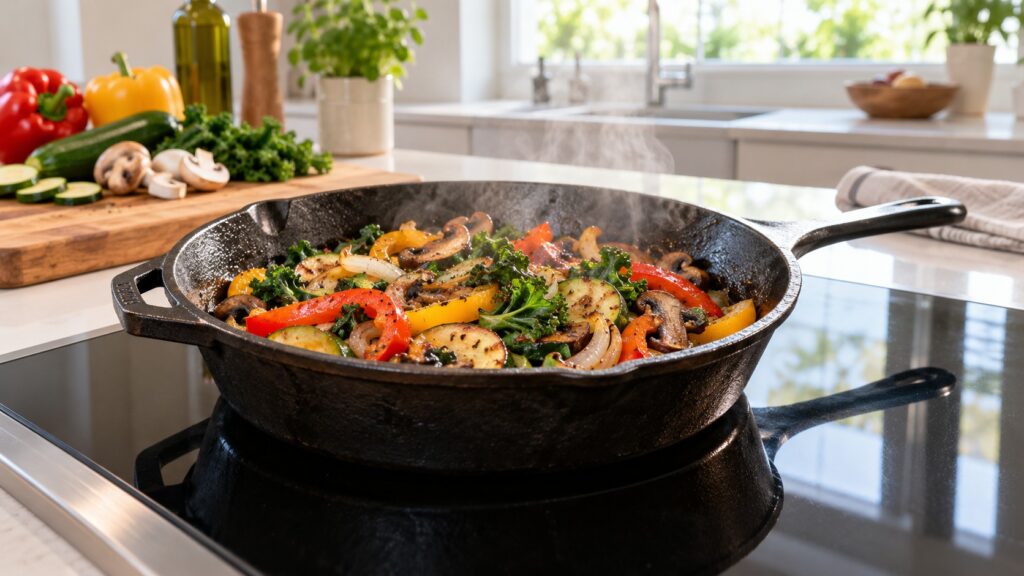
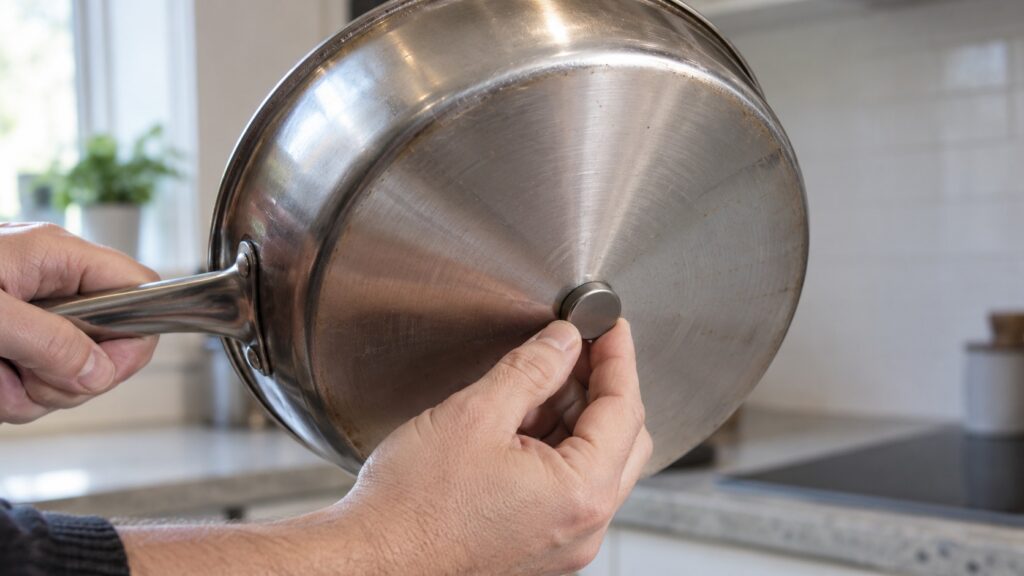
The best Fisher Paykel induction cookware is anything with a flat, magnetic base that is close to the size of the zone it sits on. Hold a magnet against the bottom of the pan: if it grips firmly, the pan will heat, and if it slides off or only clings weakly, the cooktop will not see it. Cast iron, enameled cast iron, carbon steel and magnetic stainless steel work well. Aluminum, copper and glass do not work on their own, and the cooktop will usually flash a pan symbol and refuse to heat the zone.
How do you tell if a pan will work on Fisher Paykel induction?
Use the magnet test, and use it on the bottom of the pan, not the side. Induction heat is made by a magnetic field that couples to the metal in the base, so the base is what matters. Many stainless steel pans pass, but some do not, because the grade of steel varies. Many aluminum and copper pans pass only if the maker bonded a magnetic disc to the bottom. If the pan has an induction symbol on the box or the base, that is a good sign, and the magnet test confirms it.
Failing the test does not mean the cooktop is broken. It is the most common reason people think a new induction cooktop has failed, and our symptom page on a cooktop that does not detect a pan explains it. If the zone heats with some pans and not others, the problem follows the cookware, not the glass.
What size and shape of pan should you choose?
Match the pan to the zone. A pan far smaller than the zone may not be sensed, or may heat so unevenly that it cooks on a small hot spot. A pan that is much larger than the zone heats mostly where it overlaps the coil, so the edges stay cooler than the middle. Center the pan on the marking and keep the base flat: a warped pan rocks, loses contact and may buzz. Cookware sold for induction is made to a flatter standard than general-purpose pans.
Models with a SmartZone have a larger flexible area that can take a griddle plate or an oversized pan, which is useful for roasting dishes and long pans. Our guide to SmartZone cooking shows how people use it, and the guide to 30 versus 36 inch induction cooktops covers the zone layouts.
How should you cook differently on induction?
Induction responds fast. The pan heats within seconds and cools almost as quickly when you lower the setting, so you spend less time waiting and more time watching. Start a little lower than you would on gas or radiant electric, and raise the heat once you see how the pan behaves. Water boils quickly, and a pan of oil can pass its smoking point sooner than you expect. Keep the pan attended while it preheats, and add food to a warm pan rather than a scorching one.
Never heat an empty pan. With no food or liquid to take the heat away, the temperature climbs quickly, and the cooktop may shut the zone down. An E2 or EH code on the display means a cooking zone overheated and switched itself off as a safety measure. Let it cool and see our page on the E2 and EH cooktop codes if it returns.
What noises and marks are normal?
A light hum, a faint buzz or a soft click is normal with many pans, especially layered ones, because the magnetic field makes the layers vibrate slightly. Noise is louder at high power and with a pan that is a poor fit for the zone. A cooling fan that runs while you cook and keeps running afterward is also normal, since the electronics need to shed heat. A loud rattle or a grinding fan is not.
Protect the glass. Lift pans instead of sliding them, especially cast iron with a rough base, which can leave scratches. Do not put foil, paper or a pot holder between the pan and the glass, because it can melt or trap heat. Wipe sugar and syrup spills while the glass is still warm, but not hot, since sugar can pit the surface when it cools. Our guide on how to clean a Fisher Paykel induction cooktop covers the rest.
Can you keep using your old pans?
Check each one with the magnet. Keep the ones that pass, and for the ones that do not, consider an induction interface disc only if your owner’s manual allows it, since discs heat slowly and can be inefficient. For a short list of good buys, a 10-inch skillet, a 3-quart saucepan and a large stockpot cover most meals. Replace a pan whose base has warped.
If the cooktop still refuses a pan that passes the magnet test, and the zone is not heating, our guide to induction cooktop not heating goes further, and Fisher Paykel cooktop repair can test the zone if the cause is not the pan.