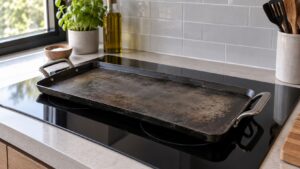

A fisher-paykel induction cooktop that will not heat is one of the most common cooking-surface complaints, and the cause is often simpler than it appears. Induction surfaces transfer energy magnetically, so the failure is frequently the cookware, the power supply, or a control setting rather than the appliance itself. This guide walks through the checks in order of likelihood.
Why a fisher-paykel induction cooktop will not heat
Induction elements only activate when ferromagnetic cookware sits on the zone. If the pan is aluminium, copper, or glass without a magnetic base, the zone detects no load and refuses to heat — usually flashing a pan-detection symbol. A quick test: hold a magnet to the base of the pan; if it grips firmly, the cookware is compatible.
Symptoms to look for
- Element fan runs but the surface stays cold
- A flashing pot/pan symbol or “U” code on the display
- Touch controls respond but no power level holds
- One zone works while another does not
Common causes
- Non-magnetic or warped-base cookware
- Child lock or control lock engaged
- Tripped circuit breaker — induction draws a dedicated high-amperage circuit
- Residual-heat or demo mode left active
- Failed induction coil or power board (technician-level)
What you can check first
- Confirm the cookware is induction-compatible with the magnet test.
- Press and hold the lock key for a few seconds to clear any control lock.
- Check the breaker panel and reset the cooktop circuit if tripped.
- Power-cycle the cooktop at the wall for two minutes to clear a control failure.
- Make sure the pan base covers at least the minimum zone diameter.
When to call a technician
If compatible cookware still will not heat after a power cycle, the induction coil, the IGBT power module, or the user-interface board may have failed. These are mains-voltage components and should be diagnosed by a qualified technician.
Preventing future heating problems
Most repeat no-heat complaints come down to cookware and circuit health. Keep a set of induction-rated pans, store them so the bases stay flat, and avoid dragging heavy pots across the glass, which can crack the surface or damage the coil beneath. If the cooktop shares a circuit with another high-draw appliance, nuisance trips can mimic a cooktop problem — confirm it has the dedicated circuit the installation requires.
Frequently asked questions
Why does only one zone fail to heat? A single dead zone usually points to that zone’s coil or a connection on the power board rather than the whole cooktop, especially if other zones work normally.
Can the wrong pan size stop heating? Yes. If the pan base is smaller than the zone’s minimum detection diameter, the cooktop may not recognize it and will refuse to heat.
Is a buzzing sound during heating a problem? A faint hum at high power is normal on induction, particularly with multi-ply cookware. Loud rattling is usually the pan vibrating, not the cooktop.
What a technician will check
If the basic checks do not restore heat, a technician approaches an induction cooktop methodically. They confirm the incoming supply voltage and the dedicated circuit, then measure the induction coil for the correct resistance and inspect its connections for heat damage. The IGBT power module and its thermal management are tested next, since these switch the high-frequency current that drives the magnetic field. A failed temperature sensor can also force a zone offline as a protective measure, so sensor readings are verified against expected values. Finally, the user-interface board and its ribbon connectors are checked, because a touch panel that no longer communicates with the power board can leave a zone unresponsive even when every other component is healthy. Because each of these parts carries mains voltage and the cooktop draws a high current, this diagnosis is not a do-it-yourself job. Documenting the exact symptom — which zone, which power levels, and any code shown — helps the technician target the faulty component on the first visit rather than replacing parts speculatively.
Getting a no-heat fisher-paykel induction cooktop fixed properly
A dead zone is misleading precisely because so many unrelated parts can produce the same cold glass, so the value of a repair lies in identifying which one before anyone reaches for a replacement coil. Our experienced technicians begin by separating the harmless causes — incompatible cookware, an engaged lock, a tripped circuit — from a genuine hardware problem in the coil, the IGBT module, or the interface board. Only once the actual culprit is pinned down does a part get ordered, which keeps you from paying for guesswork on a high-voltage appliance.
Replacement coils, power modules, and control boards come from trusted parts suppliers and are matched to your specific model, so the new component behaves exactly as the original did and does not strain the surrounding electronics. Every job carries a 30-day labor warranty. We do not name a price before seeing the cooktop, because the cost depends entirely on what the diagnosis reveals; induction repairs typically begin from a modest call-out and rise only with the part involved.
Heating problems sit on a mains circuit that switches current at high frequency, so probing the coil or power stage is genuinely hazardous without the right training and instruments. When the magnet test passes and a power cycle changes nothing, that is the point to hand it over. You can book online whenever it suits you, and our team arranges visits across all 50 states.
Still facing a cold cooktop after these checks? Our specialist technicians can take it from here — book a repair online 24/7, explore our cooktop repair services, or cross-reference the cooktop error codes and model specifications for your unit. For the original manufacturer documentation, visit fisherpaykel.com.