Fisher Paykel gas cooktop how to use questions come down to a few habits: light a burner as your owner’s manual describes, choose a flat pan that fits the burner, keep the flame under the pan and not up the sides, and keep the burner caps clean and seated. Gas gives you a visible flame you can adjust at once, so a few minutes spent learning how it behaves pays back every time you cook. This guide covers how to use a gas cooktop day to day, how to read the flame, what to do when something goes wrong and when to stop and call for help. Exact lighting steps, knob positions and any safety features depend on your model, so your owner’s manual comes first.
How do you turn on a Fisher Paykel gas cooktop?
The steps are in your owner’s manual, because the knobs, the ignition and the safety features differ between models, and this article does not give a button or knob sequence it cannot confirm. The general idea is that the igniter lights the flame at the burner you chose and you then adjust the height. Watch the flame light. If it does not light, turn the knob off and do not keep trying; if you smell gas, follow the gas-smell steps below. A burner that fails to light needs attention, and our guide on a burner that is not igniting and the page on a gas burner that will not light explain the common causes.
Stay at the cooktop while a flame is on. A gas flame is open, and a towel, a sleeve or a hanging utensil can reach it faster than you expect.
What should the flame look like?
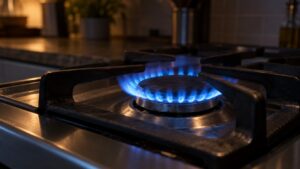
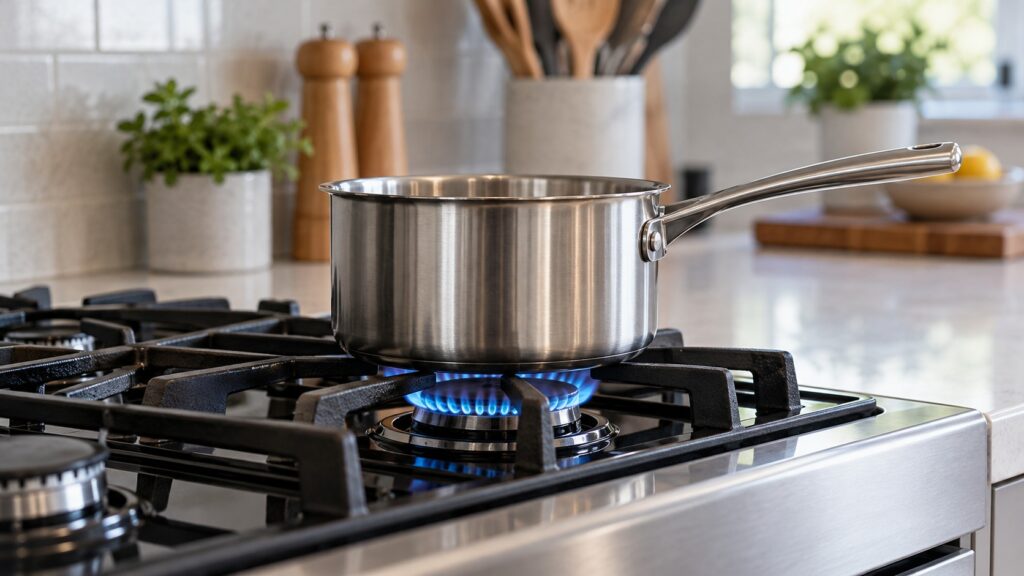
A healthy flame is steady and mostly blue, and it sits evenly around the burner. A flame that is yellow, lazy or uneven, or that flickers on one side, tells you something is partly blocked: a spill in the ports, a cap that is not seated or a burner head that is dirty. Turn the burner off and let it cool before you look. Do not use a pin or a toothpick to dig at the burner ports while it is on or still hot.
The flame also tells you how much heat the pan gets. As a rule, the flame should stay under the base of the pan and not curl up its sides. A flame that wraps around the side wastes heat, scorches handles and can burn your hand. Turn it down, or move the pan to a larger burner.
Which pans work best on a gas cooktop?
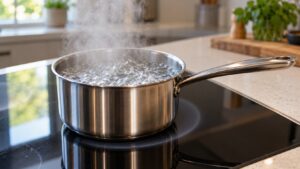
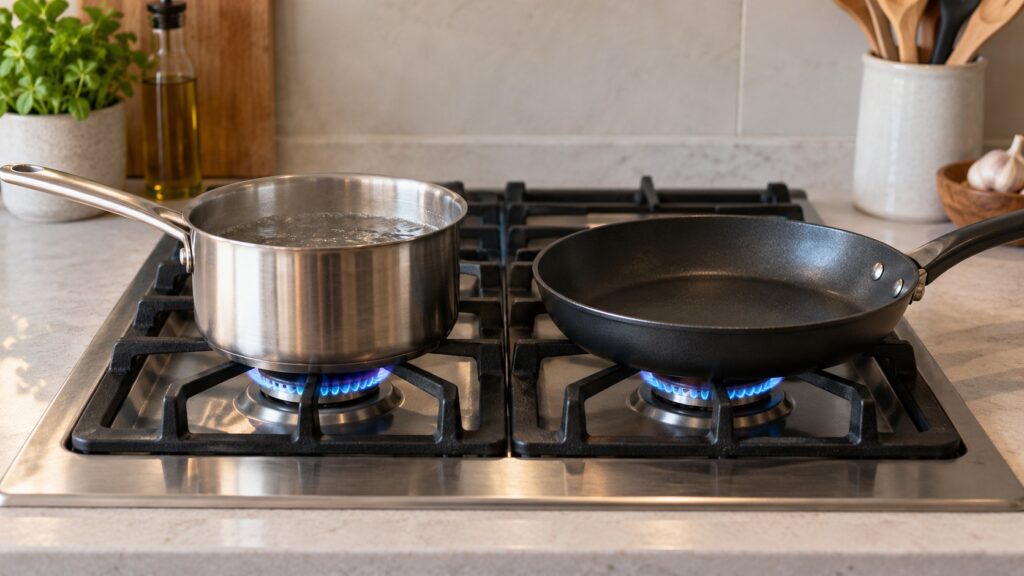
Flat-bottomed pans that sit evenly on the grate work best, because they take the heat across the whole base. Match the pan to the burner: a small saucepan on a large burner leaves flame spilling up the sides, and a very large pan on a small burner heats only its center. Keep the pan steady on the grate, turn handles inward so they do not hang over the front or over a neighboring flame, and use a lid when you want water to heat faster. A warped pan rocks and heats unevenly, and it is easy to knock over. Dry the base of the pan before you set it on the grate, since water on the underside spits and hisses.
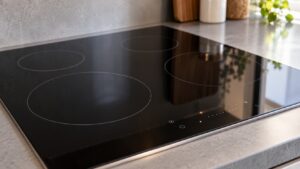
If you also cook on induction elsewhere, remember that the rules are different. Our guide on gas versus induction cooktops compares the two.
How do you keep the burners working well?
Wipe up spills when the cooktop is cool, before they bake onto the caps and the ports. When you clean, put every cap and ring back in its place, because a cap that is shifted or sitting crooked can give a weak, lopsided flame or stop a burner from lighting. Make sure parts are dry before you refit them. Never spray liquid near the igniter or push water into the burner ports. If a flame lights and goes out again as soon as you let go of the knob, read our page on a gas flame that goes out. Do not rely on your cooktop having a device that shuts the gas off if a flame goes out; whether yours has one is in your owner’s manual. Treat a flame that dies as a reason to turn the knob off and stop.
What if you smell gas or a pan catches fire?
If you smell gas, do not light anything, do not switch any light or appliance on or off and do not use a phone in the kitchen. Leave the house and call the gas company or 911 from outside. Do not try to find the leak yourself, and do not test with soapy water. A gas supply fault or a leak at a connection is a job for a qualified professional, never for the owner.
If grease in a pan catches fire, slide a lid over the pan, turn the burner off and leave the lid in place. Do not carry the pan, do not pour water on it and do not turn the range hood on. If the fire spreads, leave and call 911. If water gets onto the cooktop and you notice sparks or a burning smell, switch the breaker off at the panel while standing on a dry floor.
We are an independent repair company, not the manufacturer. If a burner will not light, the flame behaves oddly or something about the gas side worries you, our cooktop repair page explains how a visit works, and you can schedule a visit online.