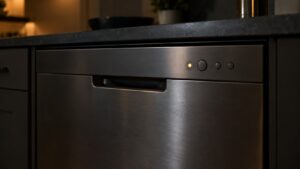
Fisher Paykel dishwasher drawer loading comes down to a few habits that follow from how the machine works. Each DishDrawer is a complete washing machine with a lid that has to seal, a spray that has to reach every surface and, on many models, a sensor that reads how dirty the water is. Load it so the lid can close, so the spray has a clear path and so the sensor is not fooled, and the results improve straight away. The exact rack layout and extras, such as a cutlery basket or folding tines, differ by model, so read your owner’s manual alongside these tips.
Why does the drawer edge matter so much?
Because a DishDrawer cannot start until its lid closes and seals. Our DishDrawer glossary says a drawer that will not seal is usually grit on the sealing face or one tall item standing proud of the drawer edge, such as a tall glass or a spatula handle holding the lid off. Before you close the drawer, look across the top at eye level. If anything sticks up, lay it flat or move it to the other drawer. This one check prevents more “will not start” complaints than anything else, and it protects the seal from being squeezed on a handle.
Should you rinse dishes first?
No, and this matters most on models with PrecisionWash. Our guide on how PrecisionWash works explains that a sensor reads how cloudy the wash water gets and adjusts the temperature and cycle length, so rinsed plates make clear water, read as a light load and get a shorter, cooler cycle than the food that survived the rinse needs. Scrape food into the trash, leave the film that remains, and let the machine do the cleaning. Our dishwasher loading mistakes guide makes the same point and lists others. Which of your models have the sensor is in your manual.
How should you arrange plates, bowls and cups?
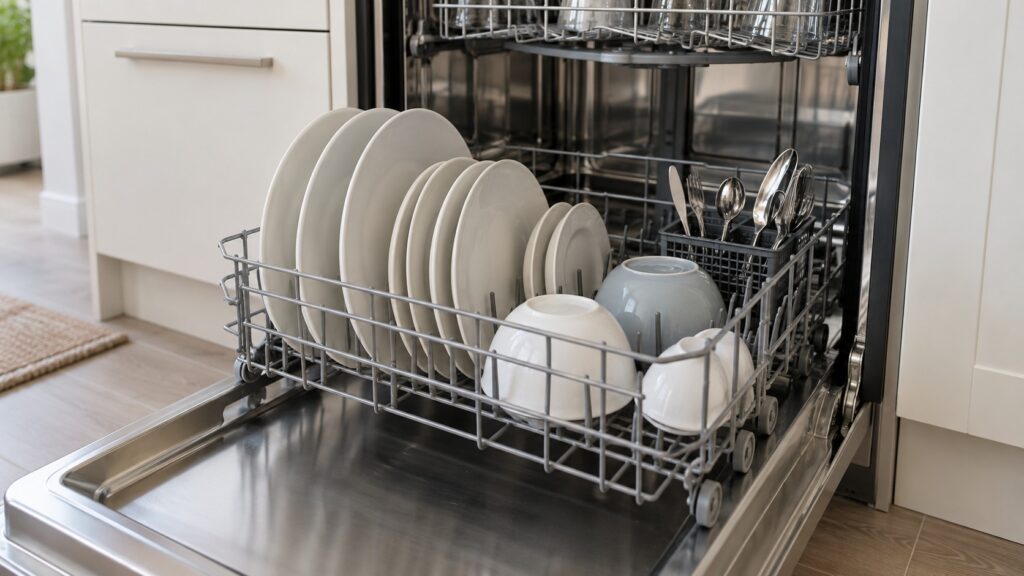
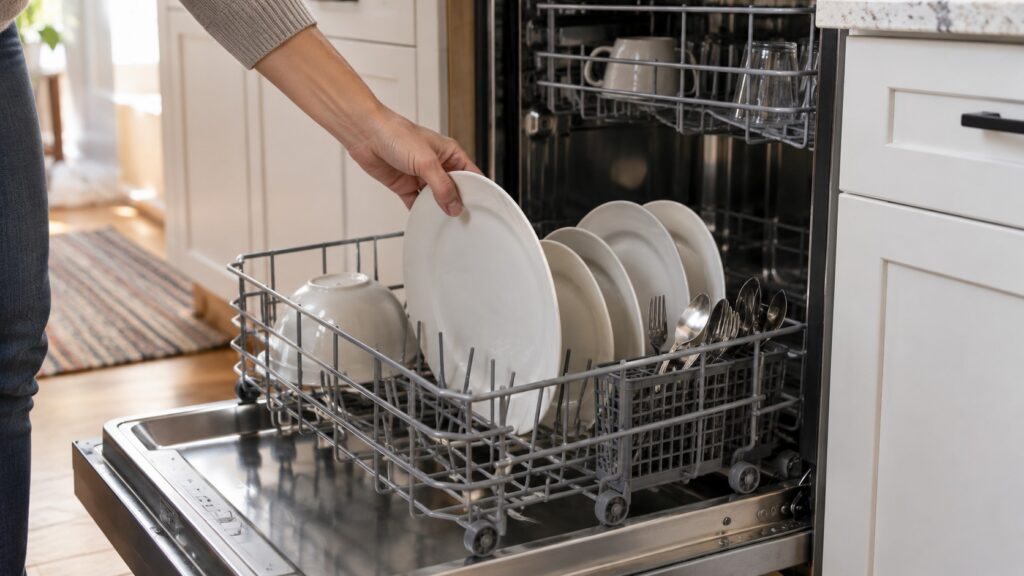
Keep items separate and facing the spray. Put dinner plates in the lower basket in a row with gaps between them, angled so the sprays reach the face. Place bowls and cups face down and tilted so water runs off instead of pooling in the base. Avoid nesting spoons and bowls, since nested surfaces touch and stay dirty, and do not let items lean against each other. Put delicate and lighter items in the upper basket if your drawer has one, and heavy pots and pans in the lower one. If you cannot see gaps between the items, you have overloaded the drawer, and two properly loaded cycles clean better than one crammed one.
Which drawer should hold what?
That is the advantage of two drawers. Many households run the top drawer daily for light loads and the bottom drawer less often, and our DishDrawer vs dishwasher guide says the drawer that gets the dirty pans needs its filter cleaned far more often than its neighbor. Use one drawer for glasses and everyday items on a gentler cycle, and the other for pans and heavy soil on a stronger one. Running two different cycles at once is a feature, not a quirk. Tall items are the real limit on a drawer, so measure your biggest pan before you assume it fits, and wash by hand anything that does not fit the depth of a drawer.
What about detergent, rinse aid and cycles?
Use dishwasher detergent in the amount the manufacturer recommends, not extra, because too much detergent leaves film and can cause foaming; see our rinse aid dispenser guide for the rinse aid side. Choose the cycle that matches the soil, and our guide on dishwasher cycles and settings explains the common ones. The names and options of cycles differ by model, so check your manual. Do not mix hand-wash-only items, such as wooden handles or cast iron, into a load. Keep the filter clean, since a clogged filter leaves grit on dishes however well you load.
Why do plastics and cups come out wet?
Because many DishDrawers dry with residual heat, and plastics hold little of it. Put plastics in the upper basket and tilt them, give the machine time to finish the cycle before you open it and check your manual for any drying option on your model. Tall cups that trap water can drip when you pick them up, so angle them so water can drain. If everything is wet, not only plastics, tell a technician, because a heating fault also shows up as wet dishes.
How do you keep the drawer ready to give good results?
Loading well only works if the machine is in good shape. Clean the filter often, in the drawer that takes the dirtiest loads most of all, and see our filter cleaning guide. Wipe the seal and the tub rim regularly, as the seal care guide describes, so grit never builds up. Check the spray arms for blocked holes now and then; our spray arm maintenance guide explains how. If a drawer starts to leave residue even though you load carefully, the cause is usually one of these maintenance items before it is a fault.
If a problem remains after all of this, our Fisher & Paykel dishwasher repair page explains how a visit works. A clear description, such as which drawer, which cycle and what the dishes look like, makes the visit shorter.