

Fisher paykel precisionwash is the soil-sensing system built into many Fisher & Paykel dishwashers, and it changes how the machine decides what to do mid-cycle rather than just before it starts. A sensor in the wash tub reads how cloudy the water gets as the cycle runs, and the control uses that reading to adjust water temperature and cycle length on the fly. That is also why pre-rinsing dishes before loading them — a habit many people picked up from older machines — actually works against a PrecisionWash dishwasher instead of helping it.
What does a PrecisionWash sensor actually measure?
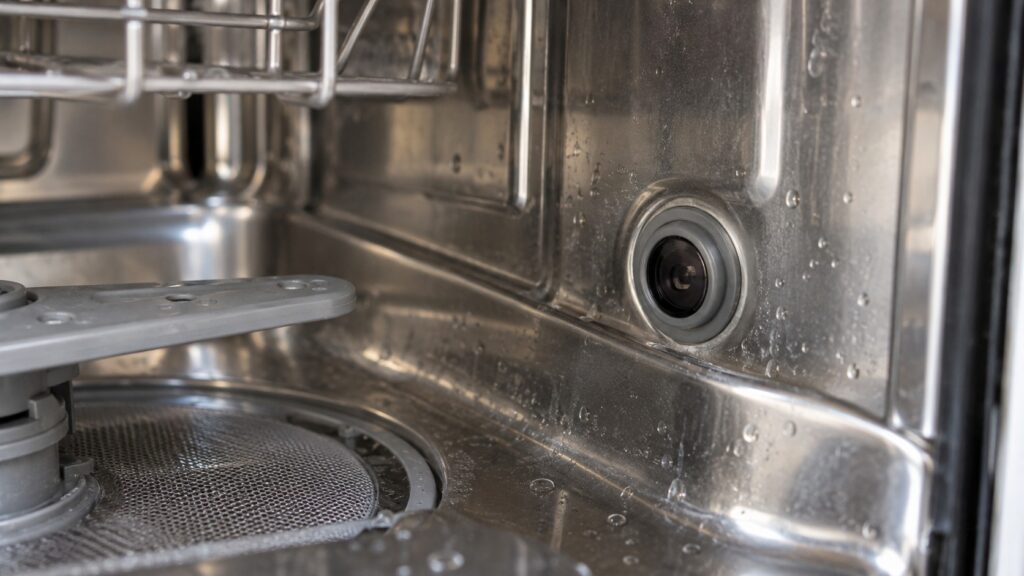
It measures turbidity — a physical measurement of how much light can pass through the wash water rather than being scattered by suspended food particles. Clear water reads as a light or finished load; cloudy water reads as a heavily soiled one still in progress. The sensor takes this reading repeatedly during the wash phase, not just once at the start, which is what lets the control respond to how the load is actually cleaning up rather than guessing from the cycle selected.
Why does pre-rinsing dishes make PrecisionWash work against you?
This is the detail that trips up the most careful loaders. A conventional timed cycle does not care how clean your dishes were going in — it runs the same length regardless. A PrecisionWash cycle does care, because its whole design is built around reading soil level and matching effort to it. Rinse the plates first and the water stays clear, the sensor reads a light load, and the machine shortens the cycle and lowers the temperature to match — sometimes below what is needed to finish off food that survived the rinse. Scraping plates into the trash before loading is still worth doing; rinsing them under the tap defeats the sensor that is supposed to be doing the work for you.
How is this different from a normal timed wash cycle?
A timed cycle is a fixed sequence: fill, wash for a set number of minutes, drain, rinse, dry. It runs the same length whether the load is barely dirty or caked with last night’s dinner. A PrecisionWash cycle uses the sensor reading to lengthen or shorten the wash phase and to raise or lower water temperature within the cycle, aiming to use just enough water, heat and time for the load in front of it rather than a fixed worst-case guess. The trade-off is that it needs an honest signal from the water to do that well — which is exactly what pre-rinsing removes.
Does a heavier load always mean a longer cycle?
Generally yes, but not in a straight line. A very lightly soiled load can finish faster than the cycle’s normal runtime because the sensor confirms the water cleared early. A heavily soiled load can run longer than expected because the sensor keeps reading cloudy water and the control keeps extending the wash phase to compensate. Either direction is the system doing what it is designed to do — matching effort to soil, not running a fixed clock regardless of what is actually in the tub. It is also why comparing two loads by their finish time alone tells you very little; the load that took longer may simply have started dirtier, not that the dishwasher is running slower than it used to.
What can make the sensor read a load incorrectly?
- Pre-rinsed dishes, as covered above — clear water reads as done even mid-cycle.
- A dirty sensor lens. Like any optical sensor, a film of grease or hard-water residue on the sensor window can skew its readings over time.
- Overloading the rack. Blocked spray patterns can trap soil in one area while the sensor reads relatively clear water elsewhere in the tub.
- Using rinse aid inconsistently. Rinse aid affects how water sheets and clears, which can shift how quickly the sensor reads the water as clean.
Does rinse aid change how the sensor behaves?
Indirectly. Rinse aid is designed to help water sheet off dishes and glassware instead of beading and drying into spots, and it does that by lowering the surface tension of the final rinse water. That has a side effect on turbidity readings too, since how water clears and sheets affects how quickly it reads as clean to an optical sensor. Running with the rinse aid dispenser empty for stretches, then refilling it, can produce a cycle that looks noticeably different in length and temperature purely because the water is behaving differently — not because anything mechanical has changed. Keeping the rinse aid level topped up consistently, rather than letting it run dry between refills, keeps this variable out of the picture.
Do all Fisher & Paykel dishwashers use PrecisionWash?
No. PrecisionWash appears across a range of Fisher & Paykel dishwasher models, but not every model in the lineup carries the turbidity sensor, and a base or older model may run on fixed timed cycles instead. Checking the model’s own feature list, or looking for a cycle that is described as adjusting automatically to load soil, is a more reliable way to confirm PrecisionWash is present than assuming it from the dishwasher’s size or finish alone. If a machine has always run a consistent cycle length regardless of how dirty the load was, that consistency itself is a sign it is running on fixed timing rather than the sensor-based system described here.
When is a PrecisionWash-related complaint actually a different problem?
Dishes coming out cloudy or gritty despite a normal-looking cycle is more often a spray-arm or filter issue than a sensor issue — see our spray arm maintenance guide and our filter cleaning guide before assuming the sensor itself has failed. A cycle that runs unusually long every single time, regardless of load, is worth a look at water fill and drain performance rather than the sensor — our water-filling guide and our drainage guide cover those symptoms directly.
Our technicians can test the turbidity sensor itself along with the rest of the wash system on-site. We are an independent repair company, not a factory service arm, and pricing starts from a diagnostic visit with the estimate confirmed before any work begins. If a PrecisionWash cycle is behaving oddly on your machine, our Fisher & Paykel dishwasher repair service covers it, and you can schedule a visit whenever it suits you.