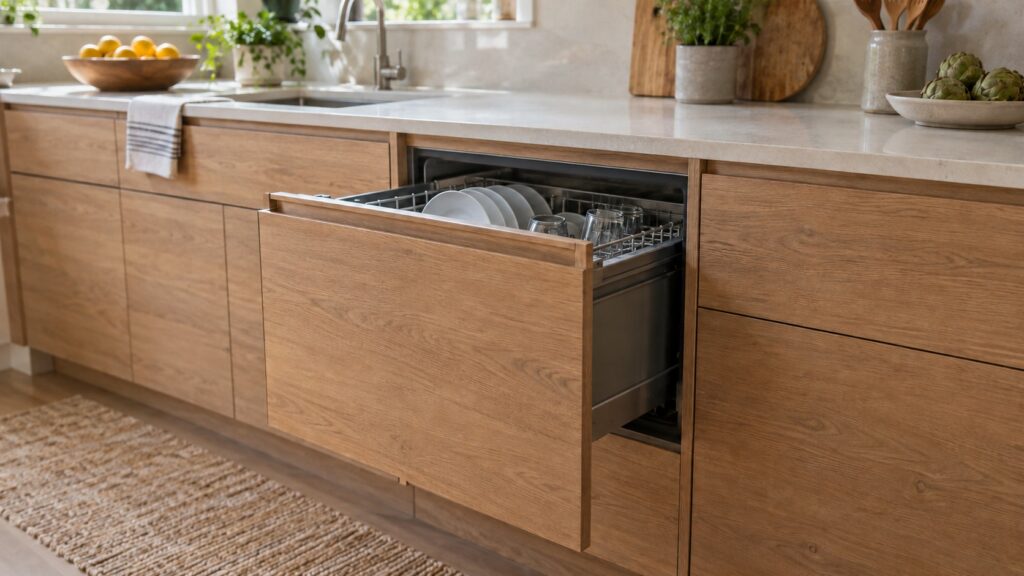
Fisher Paykel dishwasher drawer panel fitting is the job of attaching a cabinet-style panel to the front of a panel-ready DishDrawer so the dishwasher disappears into the kitchen. It sounds simple, but the panel becomes part of the moving drawer, so its size, weight and alignment decide whether the drawer opens smoothly, closes fully and seals. The exact panel dimensions, weight limits, mounting hardware and adjustment steps are given in the installation instructions for your model, and we do not list them because our site does not. This guide explains what is involved so you can plan it and check the result.
What does panel-ready mean for a DishDrawer?
A panel-ready DishDrawer has a front intended to carry a panel that matches your cabinets, instead of a stainless front. The drawer’s own mechanism is unchanged, so everything it does still has to happen with the added panel on the front: it must slide out smoothly, close fully and let the lid seal. The panel therefore has to be the right size and not too heavy, and it has to be fixed in a way that the drawer’s designer intended. Which models in our range are panel-ready and what their requirements are is in the specification and instructions for each model; our dishwasher series comparison explains how the series differ.
Why do panel weight and size matter?
Because the panel hangs on the front of a moving drawer. A panel that is too heavy strains the runners and can make the drawer drag or fail to close; one that is oversized can rub on the cabinets or the neighboring drawer. Our CoolDrawer guide makes a similar point about integrated drawers: installation quality, including panel weight, hinge adjustment and seal contact, affects how well the unit performs. For a DishDrawer, the installation instructions give the template and the limits. Do not guess, and do not add decorative extras to the panel that push it over the limit.
What should be done before the panel is fitted?
Have the DishDrawer installed, level and connected first, as our dishwasher installation requirements describe, with the opening, the electrical supply, the water and the drain all done by qualified people. Keep the drawer’s power and water off while a panel is fitted. Make sure the cabinet opening and the neighboring doors are finished, so the gaps can be set against real neighbors. Read the instructions for the model before the panel is cut, because the template, the hole positions and the mounting method are specific to it. A cabinetmaker should have the instructions before the panel is made.
How is the panel fixed and adjusted?
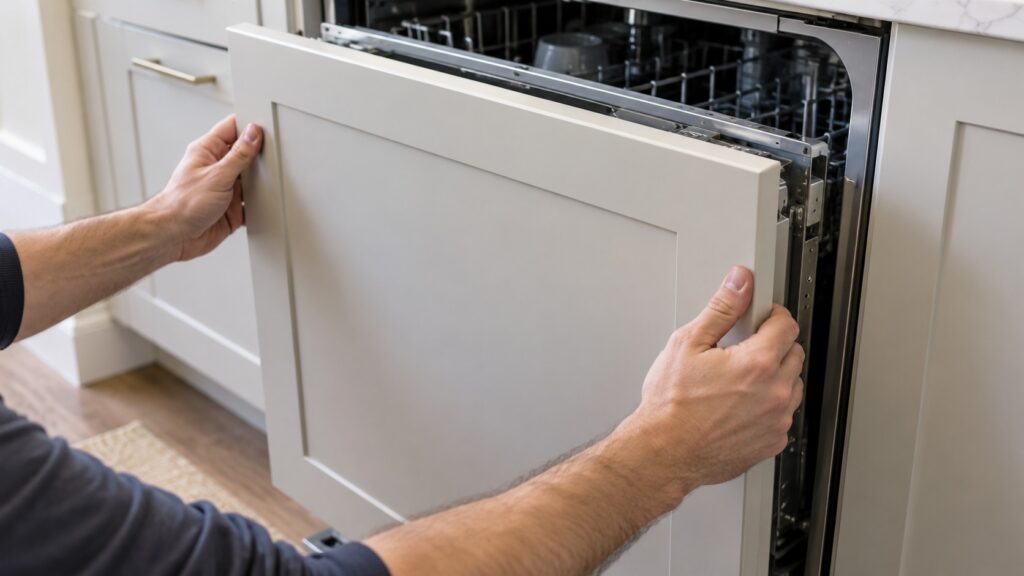
With the hardware and method that the instructions specify for the model. In general terms, a panel is fixed to the drawer front, then adjusted so that it is square, the gaps to neighboring doors are even and the drawer closes flush. The drawer front may have adjustment points for that. We do not describe the steps, since they differ by model and a wrong move can damage the drawer front or the runners. Work with a helper so the panel is supported while it is fixed, and do not force the drawer open or shut with the panel in an awkward position.
What should you check after fitting?
Open and close the drawer several times. It should glide, close fully without a slam and show an even gap all around. Check that the lid seals: a drawer that does not seal will not start, and our DishDrawer seal care guide explains what to look for, and the drawer won’t seal page covers the symptom. Run a short test cycle with nothing important in it, watch for leaks at the front and look at the floor of the cabinet afterward. If the panel sags, rubs or leaves an uneven gap, do not leave it: weight pulling on the runners causes wear.
What if the drawer will not close fully after the panel is on?
Take the load off the question: is the panel too heavy, is it catching on a neighbor, is it out of square or has a tall item stopped the lid? Empty the drawer and see whether it closes. If it does, the problem was loading; scrape rather than rinse and keep tall items below the drawer edge. If it still does not, the panel’s weight or alignment is the likely cause and the person who fitted it should adjust it. A drawer that is repeatedly forced shut can wear parts that are not cheap to replace, so do not use the dishwasher until it closes properly.
How should the cabinetmaker prepare the panel?
Work from the template and the limits in the installation instructions, and test the fit before any final finish is applied. Check the panel against the real neighbors, with the drawer closed, so the gaps line up with the doors and drawers either side. Protect the finish while the panel is handled, since a scratched face is hard to hide. Make sure the edges are square and that the panel is not warped, because a twisted panel will never sit flat on a drawer front. Finally, keep the panel supported while it is held in place, and pass the instructions on to the person who will adjust it, so the same limits are respected if the panel is ever replaced or refinished.
When should you call for help?
Ask a cabinetmaker or installer to correct the panel if the fit is wrong, and call a technician if the drawer misbehaves with the panel off or shows a code. Do not remove the drawer front or any panels behind it yourself. Our Fisher & Paykel dishwasher repair page explains how a visit works.