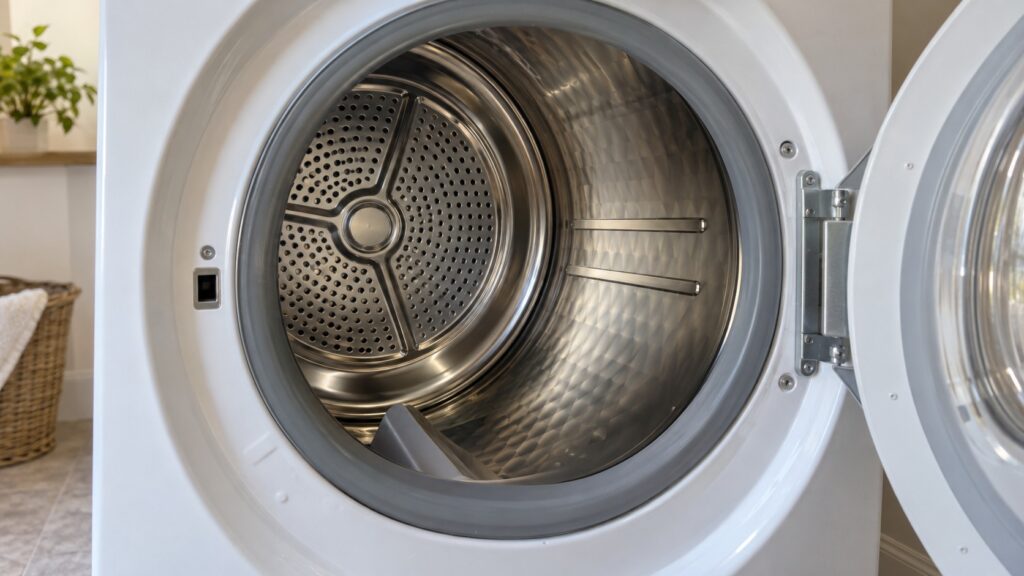
Fisher Paykel dryer sensor drying is how the dryer decides when to stop. Instead of running for a fixed time, a dryer with the AutoDry system reads how wet the clothes are and ends the cycle when they reach the dryness you chose. Our dryer guides describe the system as moisture sensors, two metal bars inside the drum, that detect when the clothes are dry. It works well when the bars are clean and the load is sensible, and it can be fooled by a coating of fabric softener residue, by a packed drum or by clothes that are not tumbling against the bars.
How does a moisture sensor tell that clothes are dry?
In general terms, wet fabric conducts electricity better than dry fabric. As wet clothes tumble against two metal bars in the drum, the dryer can read how easily a tiny signal passes between them, and as the clothes dry, that changes. The control uses the reading to decide when the load has reached the dryness level you selected and then ends the cycle. The exact electronics and the thresholds are not published on our site, so we describe the idea, not the numbers. The result is that the same program can run for a short time on a light load and a long time on a heavy one, which is why the time displayed is only an estimate.
How is this different from the temperature sensor?
A dryer has two separate jobs: it has to keep the air at a suitable temperature, and it has to know when the clothes are dry. Our NTC sensor glossary explains that temperature sensors measure and regulate temperature in Fisher & Paykel appliances, including dryers. Those sensors watch the air, not the clothes. The moisture bars watch the clothes. A fault in one shows up differently from a fault in the other: a dryer that will not heat is a temperature or heating problem, while a dryer that stops early or runs on is more often a moisture-sensing, airflow or loading problem. See our dryer not heating guide for the heating side.
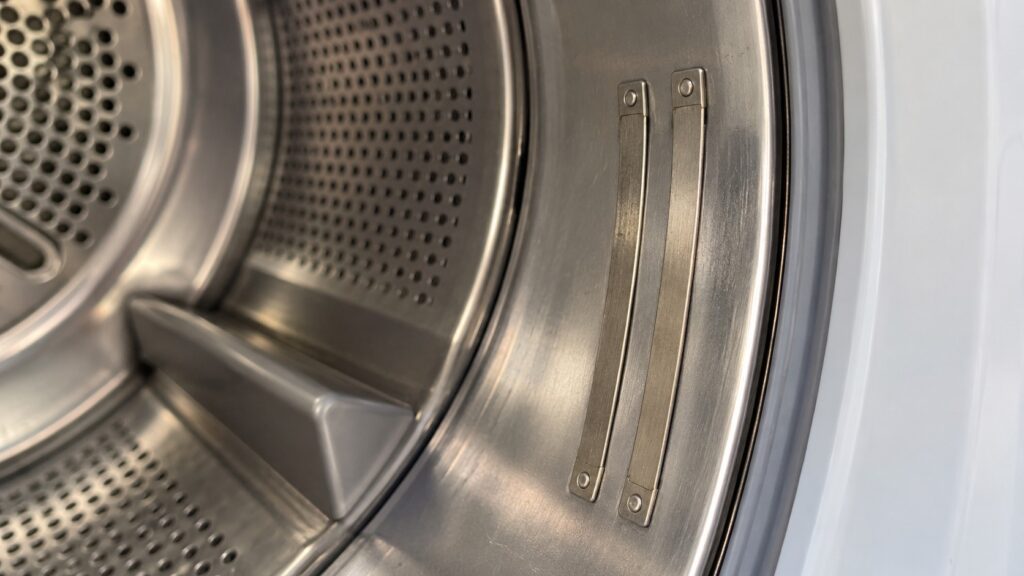
What fools the AutoDry sensor?
Residue is the first suspect. Our guide on a dryer that takes too long says that if the sensor bars are coated with fabric softener residue they cannot read moisture accurately and may stop the cycle too early, leaving clothes damp, or too late, wasting energy. The second is loading: a drum packed so tightly that clothes do not tumble against the bars gives poor readings, as does a load of items that stick together. The third is airflow: a clogged lint filter or a restricted vent slows drying whatever the sensor reads. The fourth is a washer that did not spin the load properly, so the clothes arrive too wet.
How do you clean the sensor bars?
With the dryer switched off, cool and empty, wipe the metal bars with a soft cloth dampened with water. A damp cloth alone is the gentle place to start; for a coating from fabric softener, use white vinegar on the cloth only if your owner’s manual allows it. Do not use abrasive pads, scrapers or solvents, which can scratch the bars, and do not spray liquid into the drum or around the door. Dry the bars afterward. If you use dryer sheets or liquid softener often, clean the bars more often, since the coating builds up quietly. Do not take the drum or any panels apart to reach the sensor.
What does it mean if the dryer stops too early or runs too long?
A dryer that stops early and leaves clothes damp is usually reading a load as dry when it is not, so check the bars for residue and the load for packing. A dryer that runs on far beyond the time you expect, with clothes dry long before the end, may be reading them as wet, or may be struggling for airflow. Compare with our guide on heat pump dryers, where long cycles are normal, before deciding there is a fault. The long dry times and not drying pages list the symptoms.
How can you get the best results from the sensor?
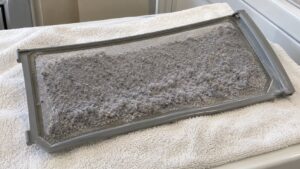
Treat it as a partner. Load the drum loosely, sort by weight so a heavy item does not hide a damp one, and choose the dryness level that suits the fabric. Clean the lint filter before every load so air moves freely, and wipe the sensor bars when you see a film on them or notice the dryer misjudging loads. Use less fabric softener if you can, since it is the usual cause of residue. If you dry a single item, such as one towel, add a few dry items so the load tumbles properly against the bars; a very small load can give poor readings. These simple habits keep the dryer’s decisions accurate and spare you extra cycles.
When should you call a technician?
Call if clothes are damp or the dryer misjudges the cycle even with clean bars, a clear filter and a sensible load, or if it shows a code. A technician can check the sensing circuit and the airflow. Our Fisher & Paykel dryer repair page explains how a visit works. Have the model number, the program you used and what the clothes were like at the end.