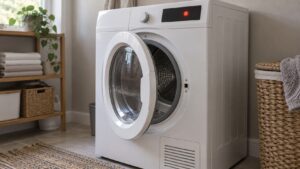

This guide covers fisher-paykel dryer takes too long to dry, separating the normal slow pace of heat-pump drying from a genuine problem you should act on. Fisher & Paykel Series 9 heat pump dryers operate at lower temperatures than conventional dryers — around 150°F versus 180°F+. This is by design: lower heat protects fabrics and uses less energy. But it means cycle times are inherently longer (often 90-120 minutes for a full load). If your cycles are exceeding two hours or clothes come out damp, something else is going on.
Check the basics first
- Load size — Overloading is the number one cause. Fisher & Paykel dryers need room for air to circulate through the drum. Fill to about 75% capacity, not more.
- Spin speed on washer — If your Fisher & Paykel washer isn’t spinning at full speed, clothes enter the dryer too wet. Check for washer drain or spin issues first.
- Lint filter — A clogged lint filter restricts airflow dramatically. Clean it before every load. See our dryer vent cleaning guide for the complete process.
Condenser and heat exchanger
Fisher & Paykel heat pump dryers recirculate air through a condenser that removes moisture. Over time, fine lint passes through the main filter and accumulates on the condenser fins. Most Series 9 models have a self-cleaning condenser, but the system isn’t perfect. If the condenser is partially blocked, drying efficiency drops significantly. Access the condenser through the lower panel and rinse with water if your model allows manual cleaning.
Moisture sensors
The AutoDry system uses moisture sensors (two metal bars inside the drum) to detect when clothes are dry. If these sensors are coated with fabric softener residue, they can’t accurately read moisture levels and may stop the cycle too early (leaving clothes damp) or too late (wasting energy). Clean the sensor bars with a damp cloth and white vinegar once a month.
Exhaust vent (vented models)
If you have a vented Fisher & Paykel dryer (not a heat pump model), a restricted or kinked exhaust duct is the most common cause of long drying times. Disconnect the duct from the back of the dryer and run a test cycle. If performance improves dramatically, the duct needs cleaning or replacement. Flexible foil ducts kink easily — rigid metal duct is always better.
Heat pump component failure
If the compressor, fan motor, or refrigerant charge in the heat pump circuit has failed, the dryer will tumble but barely warm the air. You’ll notice the cycle runs to maximum time and clothes are still wet. This is a sealed-system repair — book an experienced Fisher & Paykel technician with heat pump diagnostic equipment.
Fisher & Paykel dryer takes too long to dry: key takeaways
Slow drying almost always traces back to airflow or moisture sensing long before it points to the sealed heat-pump system, so resist the urge to assume the worst. Start with load size and a clean lint filter, confirm the washer is spinning clothes dry, then move on to the condenser and the AutoDry sensor bars. Reserve a service call for the symptom that none of those fixes touch: a drum that tumbles but never gets warm. When that happens, schedule professional service for a sealed-system diagnosis.
Why a fisher-paykel dryer takes too long to dry over time
The heat-pump and AutoDry hardware in Fisher & Paykel AeroCare dryers rewards a few minutes of routine attention: empty the lint filter every load, wipe the moisture sensor bars monthly, and rinse the condenser whenever your model permits. Skipping these is what quietly stretches a 90-minute cycle into a three-hour one and puts extra strain on the compressor. Jot down the model and serial from the rating plate behind the door before reaching out, so a specialist technician can confirm whether yours is a heat-pump or vented unit and bring the right test gear. Independent repair using parts from trusted suppliers, covered by a 30-day labor warranty, begins from $129 for a dryer diagnostic.