A Fisher Paykel dryer noise usually comes from one of five places: something loose or stuck in the drum, a machine that is not level, lint restricting the airflow, a worn part that supports or turns the drum, or the blower. The sound tells you where to look first. A thump or rattle in time with the drum points to an object or a flat spot, a squeal or squeak, or a rumble or growl, can point to a worn moving part that a technician should look at, and a whistle or roar points to airflow. This guide helps you sort the sound, do the safe checks, and know when to stop.
Why is my Fisher Paykel dryer making noise?
Describe the sound before you search for a fix. Is it a single bang when it starts, a rhythmic thump, a high squeal that rises with the drum speed, or a constant roar? Does it happen with an empty drum as well as a full one? Does it change when you press the door or the side? Those questions matter more than the brand. A noise that only happens with a load is often the load. A noise that happens empty is the machine. Write the answers down, because they are exactly what a technician will ask.
Stop using the dryer if the noise comes with a burning smell, smoke or the drum stopping. Our guide to a Fisher Paykel dryer burning smell explains why that combination is not one to test.
Is something stuck in the drum?
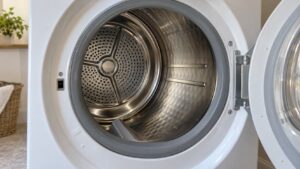
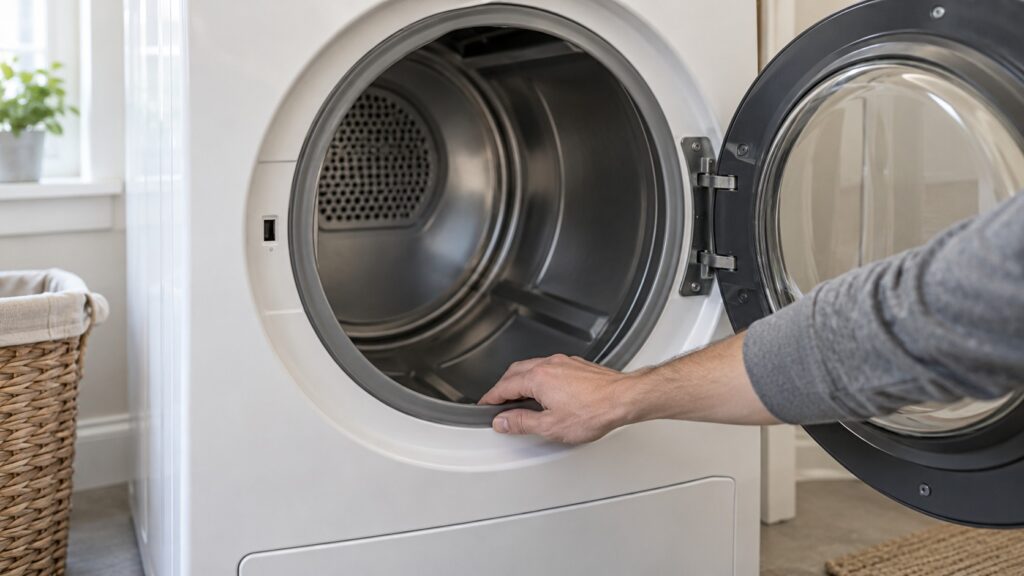
This is the simplest cause and the first to rule out. Switch the dryer off and unplug it, then empty the drum and feel inside for coins, buttons, hairpins, zippers or a small item caught in the drum seal at the front or back edge. Turn the drum slowly by hand and listen. A dragging or scraping sound with the empty drum means something is rubbing, and a light clicking means a loose object. Also check pockets before washing, because a coin that spins in a dryer sounds like a mechanical fault. Do not take the cabinet apart to look for the object. If you cannot find it, a technician can.
Is the dryer level and stable?
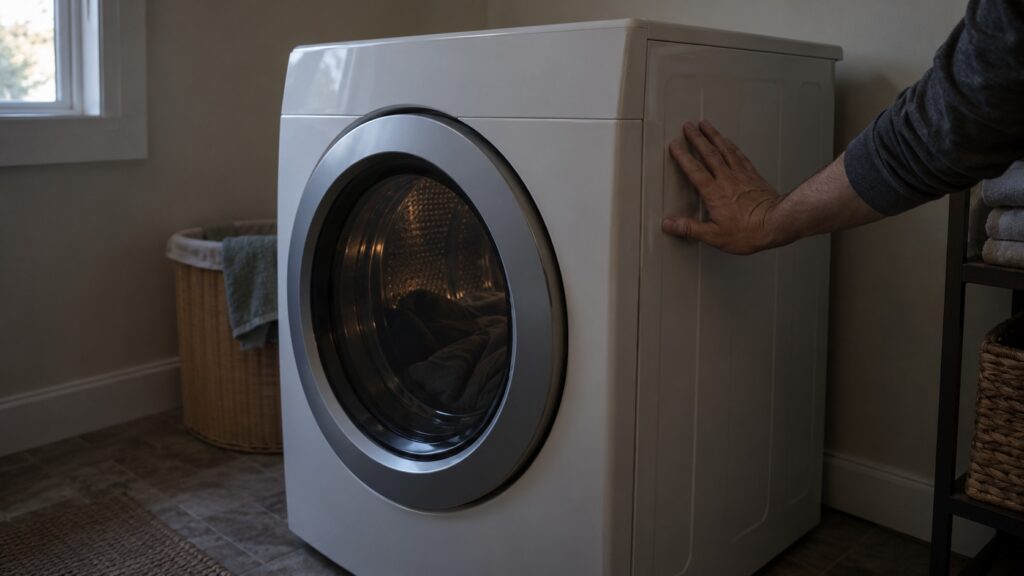
A dryer that rocks sends every vibration into the cabinet and magnifies it into a thump or a rattle. Push gently on each top corner. If it rocks, adjust the feet until all four are firm on the floor, and check that it sits flat on a solid surface. A dryer that is stacked on a washer relies on the bracket to hold it still, and our guide to washer and dryer stack installation explains why the bracket matters. A loose panel or a vent duct touching the wall can also buzz, and a quick wiggle test with the dryer off will often find it.
Could restricted airflow be the cause?
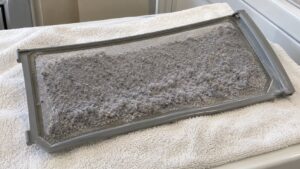
A packed vent makes a dryer louder as well as slower, because the blower works against a blockage and the sound changes to a roar or a whistle. If clothes take longer to dry as well, suspect the vent. Clean the lint screen, check that the vent flap outside opens, and read our dryer vent cleaning guide. Our page on restricted airflow explains how the dryer itself reports the condition. A restricted vent is also a fire risk, so do not leave it. If dry times have crept up, our guide to a dryer that takes too long to dry ties the symptoms together.
What do squeals and grinding mean?
A squeal or squeak that rises with the drum speed can mean a worn moving part inside the dryer, and grinding or a deep rumble can mean a worn part or the motor. Which part it is depends on how your model is built, and finding out involves opening the cabinet, which is a job for a technician. We do not publish a part-by-part description for each model here, because a guess could send you after the wrong part. Run the dryer as little as possible while it makes these sounds, because a worn part can get worse with use.
One practical test helps. If the noise stops when you pause the cycle and the drum stops turning, the source is in the drum path. If it continues with the drum stopped, the source is the blower or motor. Tell the technician which.
Is a heat pump or ventless dryer noise normal?
Some sounds are normal for the design. A ventless condensing dryer or a heat pump dryer sounds different from a vented one, and your owner’s manual describes what is normal for your model. What is not normal is a new rattle, a metallic scrape or a sound that gets louder over weeks. The maintenance routine in our heat pump dryer maintenance tips includes cleaning filters, which keeps the airflow, and the noise, in check.
When should you call a technician?
Call when a squeal, grinding or rumble continues after you have checked the drum, the level and the vent, when the drum stops or stutters, or when there is any burning smell. Switch the dryer off and unplug it before you call. A technician can inspect the drum, the motor and the blower and replace the worn part. A part swap is usually far cheaper than a new dryer, and our Fisher Paykel dryer repair page explains how a visit works. If your dryer is gas, do not try to disconnect or move it yourself, and if you ever smell gas, leave the house and call the gas company or 911 from outside.