A Fisher Paykel oven repair or replace decision should follow the fault, not the age alone. A failed igniter, element, sensor, fan, door seal or control module in an oven that is otherwise sound is usually worth repairing, because a part swap is typically far cheaper than a new built-in oven. Replacement starts to make sense when several major parts are failing at once, the cavity is damaged, or the oven has been repaired repeatedly for the same problem.
When is a Fisher Paykel oven worth repairing?
An oven is built from a few large, durable pieces and a handful of replaceable parts around them. The cavity, the door frame and the insulation rarely wear out in normal use, while elements, sensors, fans, seals and electronics do. When one of those parts fails and the structure is sound, the repair is clean and the oven returns to full service. That is the usual picture for a cavity that no longer heats evenly, a fan that has gone noisy or a door that no longer seals.
A temperature complaint is a good example. If the oven runs hot or cold, the cause is often a drifting sensor or a worn element, and both are modest parts. Before you decide anything, try our guide on how to calibrate your Fisher Paykel oven temperature, which separates a settings drift from a real fault.
How do error codes change the decision?
Fisher Paykel ovens report faults as F-codes from the control system, and the codes group into families that point at different areas. Some are simple, such as an overheat message that clears when the oven cools, while others point at a sensor circuit or a control module. Our guides to the F1, F2 and F3 oven error codes and to the F4, F5 and F7 oven error codes explain each family, using the meanings from the site’s own code pages.
A code that appears once after a power surge and never returns is a very different case from a code that returns every few days. A one-time code can be a glitch worth noting. A repeating code means the part behind it is failing, and the question becomes whether it is one part or the first of several. Record the exact code and the date each time, because that history is the best evidence for the decision.
What points toward replacing the oven?
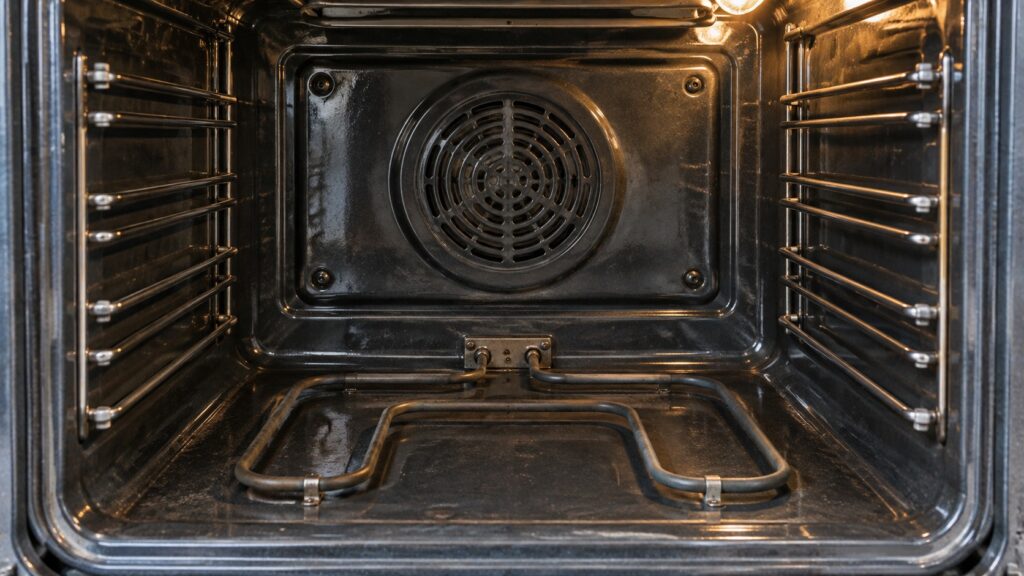
Replacement becomes the better choice when the problems are structural or when they stack up. A cracked or shattered inner door glass with failing electronics, a warped door that will not seal, rust or damage inside the cavity and a hardwired control that has failed repeatedly all point the same way. So does a pattern where each repair is followed by a new failure within months, since that suggests the oven is wearing out as a whole.
Age matters most as a signal about parts. A relatively new oven with one failed part is almost always a repair. An older oven is a repair candidate too, if the part is available and the rest of the oven is sound, but a long list of worn items is a reason to think about replacing it. Ask what else is likely to go next. If the honest answer is several more things, a replacement may serve you better.
How does the type of oven affect the choice?
Single wall ovens, double wall ovens and ovens in ranges behave differently when it comes to replacement. A built-in wall oven sits in a cabinet cutout, so a replacement must fit that opening, and an unusual size can limit choices or require cabinet work. A range oven is part of a larger appliance, which means replacing it replaces the cooktop too. Our guide to Fisher Paykel single vs double wall oven covers the fit and layout questions.
The cost of replacement includes more than the oven itself, because installation, a new trim kit or cabinet changes can add up. That is one reason a repair is often the better value when the cavity and door are in good condition. Keep the whole project in view when you compare, not only the price of the appliance.
What should you do before deciding?
Gather the model number, the age, the exact code or symptom, and when it started. Check the basics a technician will ask about: the breaker, the clock, the door latch and whether the oven is in a self-clean or lockout state. Then get a diagnosis rather than guessing. A technician visit makes sense when the problem is intermittent, involves the hardwired supply or the gas line, or has returned after a simple reset.
Our page on Fisher Paykel oven repair explains how a diagnostic visit works. Treat the estimate as a decision tool: if it is a small part and a short job on an otherwise sound oven, repair. If it is a large module on an old oven with other wear, a quote for a replacement belongs in the comparison. As a rough rule, a repair is worth weighing carefully against a new oven when the quote for the part and labor together approaches half the price of a comparable unit.