Choosing between a single and a double Fisher & Paykel wall oven comes down to how a household actually cooks, not just how much space the kitchen has available. A single oven gives one large cavity and the simplest installation; a double oven gives two independent cavities that can run at different temperatures at once, at the cost of a taller cutout and a higher price. Getting this decision right before the cabinetry is built saves a much larger correction later.
Who actually benefits from a double wall oven over a single?
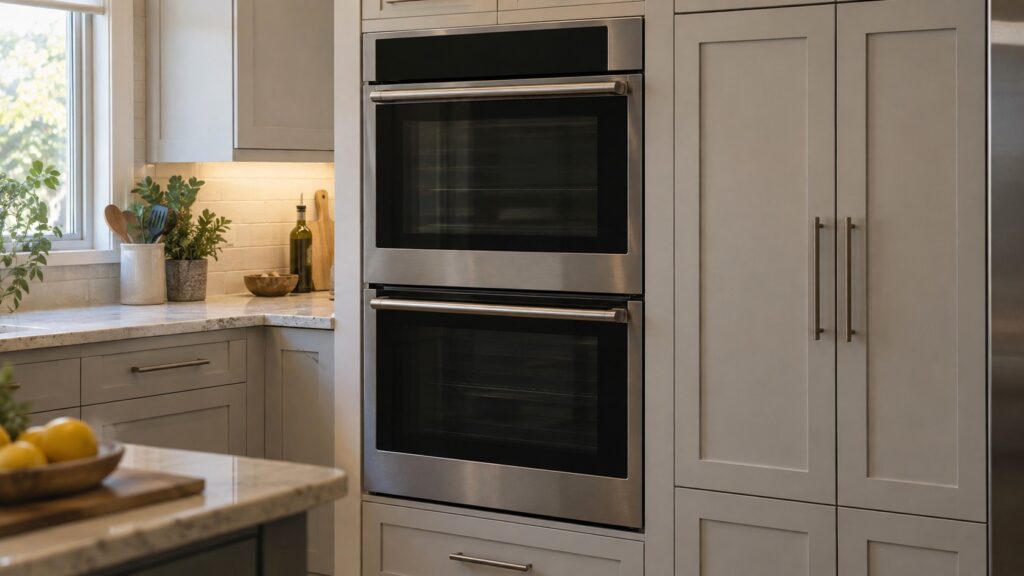
A double oven earns its extra cost and space for households that regularly cook two dishes needing different temperatures at the same time — a roast at a lower, steady temperature in one cavity while something else bakes hotter and faster in the other. It also suits anyone who entertains often enough that a single cavity becomes a bottleneck: one dish finishing while a second still needs another twenty minutes is a common frustration in a single-oven kitchen during a holiday meal.
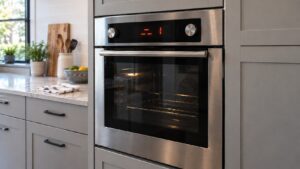
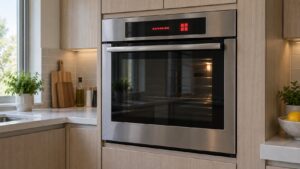
A single oven with strong overall capacity often serves a household better if most cooking happens one dish at a time, or in sequence rather than simultaneously. The larger single cavity in many single-oven models can outsize either individual cavity in a comparable double oven, which matters for a large roasting pan, a full sheet pan setup, or multiple racks of cookies that need to move through in batches rather than at once.
How much kitchen space does a double oven actually need?
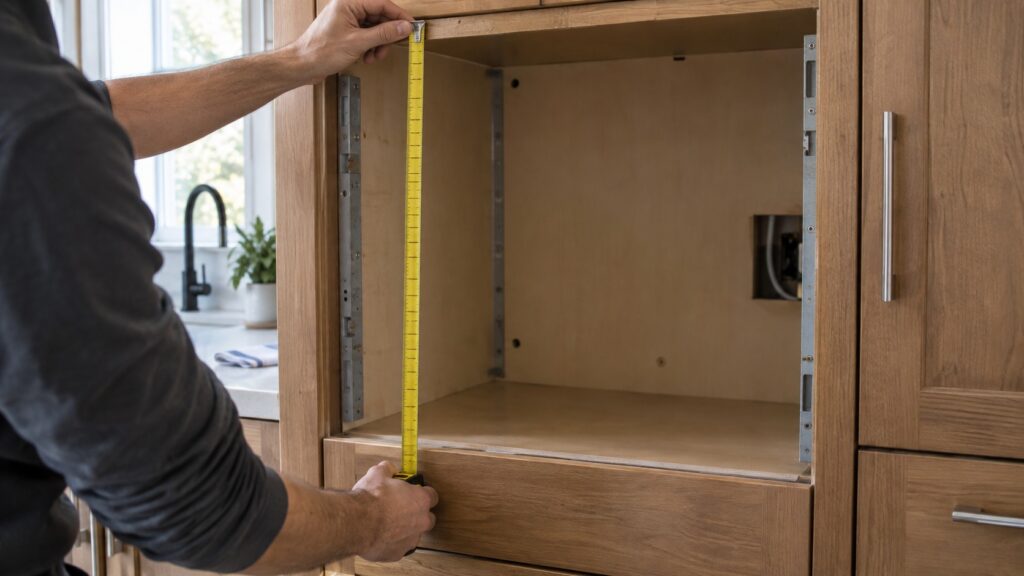
More than most buyers expect before checking the actual dimensions. A double wall oven’s cutout is significantly taller than a single oven’s, since it has to accommodate two full cavities plus the insulation and control hardware between and around them. Retrofitting a kitchen originally built for a single oven into a double-oven opening is a real cabinetry project, not a simple appliance swap — it often means rebuilding the surrounding cabinet box, not just widening a hole.
This is the single most common mistake in this buying decision: assuming a double oven can simply replace a single oven in the same footprint. Measure the actual cutout height required for the specific double oven model under consideration and compare it against the existing opening before assuming compatibility either way.
Does a double oven cook any differently than a single, or just offer more capacity?
Beyond the obvious benefit of two independent temperatures, a double oven changes cooking strategy in a subtler way: each cavity in a double oven is smaller than a comparable single oven’s cavity, so heat distribution and preheat time inside each individual cavity can behave slightly differently than in one large single cavity. A smaller cavity generally preheats faster and holds temperature more evenly for smaller items, which is a genuine advantage for baking that benefits from tight temperature control, even setting aside the ability to run two temperatures at once.
Some double oven configurations also offer a convection function on one or both cavities independently, letting a household run one cavity in standard bake mode and the other in convection for a different dish. Confirm which specific functions are available on each cavity of a given model, since not every double oven offers identical features on both sides.
What about a combination oven instead of a true double?
A combination oven splits the difference: a large primary cavity handles most regular cooking, and a smaller secondary cavity — sometimes with a microwave, steam, or speed-cook function rather than a duplicate conventional oven — adds flexibility without the full footprint and cost of two matched full-size cavities. This suits a household that wants some of the two-temperature flexibility of a double oven but does not need two full-size cavities running simultaneously on a regular basis.
The trade-off is that the secondary cavity in a combination unit is usually meaningfully smaller than either cavity in a true double oven, so it works well for a side dish or reheating but less well for a second full-size roast or a second sheet pan.
What should I measure and check before choosing between single and double?
- Measure the existing cutout height, width, and depth and compare against the specific model’s installation requirements — not a general single-versus-double assumption. Our wall oven installation requirements guide covers clearance and electrical needs in detail.
- Confirm the electrical circuit rating for the model under consideration; a double oven typically draws more power than a single and may need a dedicated higher-amperage circuit.
- Decide based on actual cooking habits, not aspiration. A household that rarely runs two dishes at once gains little from a double oven beyond the larger total capacity, which a well-sized single oven can also provide.
- Check each cavity’s individual capacity in any double oven under consideration — the combined total capacity figure can be misleading if either individual cavity is too small for a specific pan or dish the household regularly uses.
What if I already have one type and I am replacing it, or something has gone wrong with it?
Replacing a single oven with a double, or the reverse, at replacement time is worth reconsidering rather than defaulting to matching what was there before — a kitchen’s cooking habits often change over the years an original oven was in service. If the current oven is showing a fault rather than simply reaching end of life, it is worth confirming the specific problem before assuming replacement is necessary at all; our guide to Fisher & Paykel oven F4, F5, and F7 error codes and our guide to F1, F2, and F3 error codes cover the most common fault codes that get mistaken for a dying oven.
We are an independent repair company, not a factory service arm, and we install and service both single and double Fisher & Paykel wall ovens. Book Fisher & Paykel oven repair and installation or schedule a visit to confirm what your kitchen’s opening can actually accommodate before you buy.
A careful fisher paykel single vs double wall oven decision, made against real measurements and real cooking habits, is what keeps either choice from becoming a regret once the cabinetry is closed.