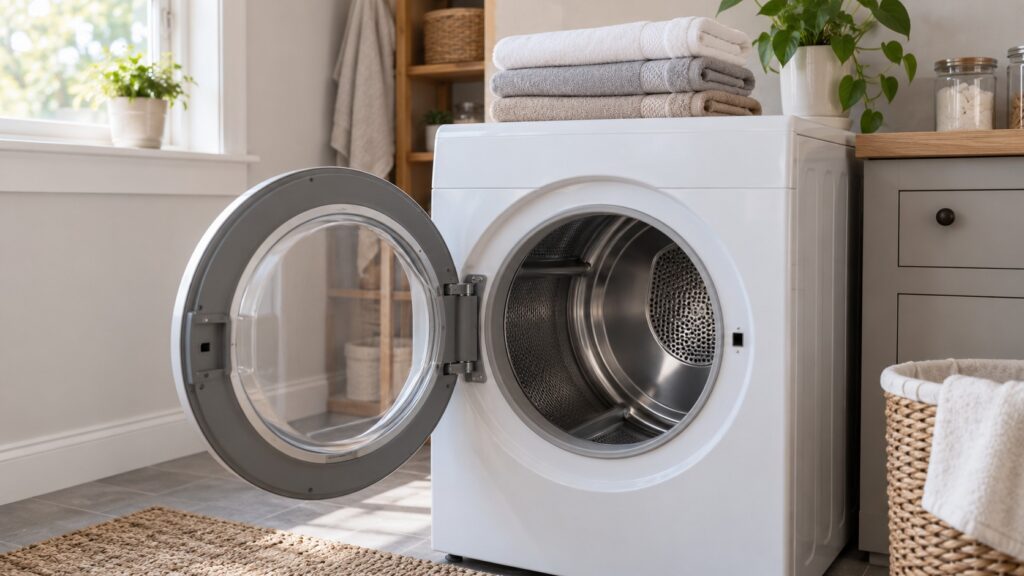
A Fisher Paykel gas vs electric dryer decision comes down to what your laundry room already has behind the wall, not to which machine dries better. If a gas line and a proper vent are already there, the gas dryer is a sensible fit. If the room has only a dedicated 240-volt outlet, the electric dryer is the straightforward choice. Both families on our model list, the DG7027 gas dryers and the DE7027 electric dryers, share the same cabinet idea and the same laundry-day purpose, so the hookup is the real difference.
What is the real difference between a Fisher Paykel gas and electric dryer?
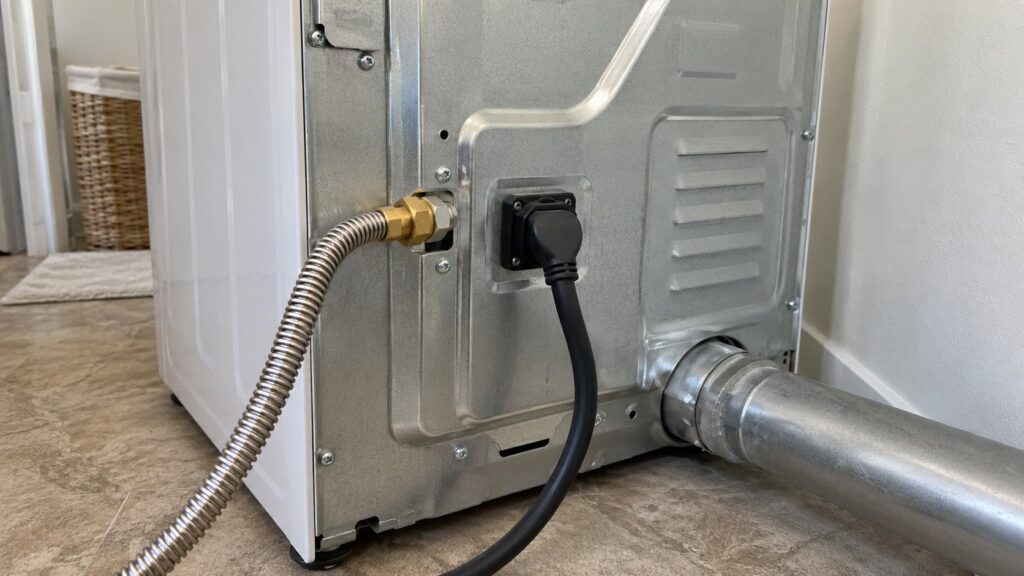
The difference is the heat source and everything that feeds it. A gas model burns gas to warm the air that passes through the drum, so it needs a gas supply with a shutoff valve and a flexible connector, plus a normal outlet for the motor, the controls and the igniter. An electric model uses a heating element, so it needs a dedicated high-voltage circuit instead of a gas line. The drum, the door, the lint filter and the sensors that decide when a load is dry work in much the same way in both.
On the model list, the DG7027 variants are the gas dryers and the DE7027 and DE4024 variants are the electric ones. The letters in the model number tell you the fuel, so read the rating plate or the carton label before you order, and match the model to your home rather than the other way around. Feature lists change between production years, so confirm the details for the exact number in your owner’s manual.
Which one suits your laundry room?
Look at the wall first. If there is already a capped gas stub or an older gas dryer in the space, a gas model slips into the existing setup. If there is a heavy, four-prong or three-prong high-voltage receptacle and no gas, an electric model is the natural fit. Adding a new gas line or a new high-voltage circuit is a real project that needs a licensed professional and often a permit, so it usually decides the question on its own.
Think about the rest of the house too. If your range or water heater already runs on gas, the line is probably close, and extending it may be reasonable. If the home is all electric, bringing in gas just for a dryer rarely makes sense. Our guide to Fisher Paykel washer and dryer stack installation covers the clearances to check if you plan to stack a matching washer above the dryer.
How do running costs and drying performance compare?
Running costs depend on your local utility rates, and the gap between gas and electricity varies by region, so there is no single winner. In many areas gas is cheaper per load, while electricity has the advantage of simpler installation. Instead of chasing a small difference in monthly cost, compare how long a typical load takes, how well the machine copes with towels and bedding, and how gentle it is on delicate fabrics.
Drying performance is far more affected by airflow than by fuel. A short, smooth, correctly sized duct lets either model dry efficiently, while a crushed or overlong duct makes both run long cycles and work harder. That is why we ask about the vent before we ask about the fuel. If a dryer you already own is slow, our Fisher Paykel dryer vent cleaning guide is the first place to look.
What safety points apply to each type?
Gas dryers add a gas connection, and that connection should be made and checked by a qualified person using the correct flexible connector and a leak test of every joint. If you ever smell gas near a dryer, stop, leave the area, shut off the supply only if it is safe to reach, and call your gas utility. Do not run the dryer or flip light switches while you are unsure.
Electric dryers add a high-voltage cord and a dedicated circuit, and they must be wired to match the receptacle on the wall. A cord that does not fit the outlet should be changed by a professional, not forced or adapted. For both fuels, an undamaged vent that runs outdoors is a fire-safety item, because lint buildup is the common cause of dryer fires. A burning smell is always a reason to stop the dryer and unplug it, and our guide to a Fisher Paykel dryer burning smell explains what to check.
What will service look like later on?
Both families are straightforward machines to maintain. On a gas model, the parts that tend to matter are the gas valve and the igniter, and a dryer that tumbles but never gets warm is the typical symptom. On an electric model, the heating element and its thermal fuse are the usual suspects for the same symptom. In either case the first checks are the same: a clean lint filter, a clear vent and a correct power or gas supply.
Because gas work is regulated, we always recommend leaving valve and burner work to a technician. If you are weighing an older machine against a new purchase, our guide on whether to repair or replace a dryer lays out the logic. A part swap is usually far cheaper than a new unit, but age and the overall condition of the drum, bearings and controls matter just as much.