
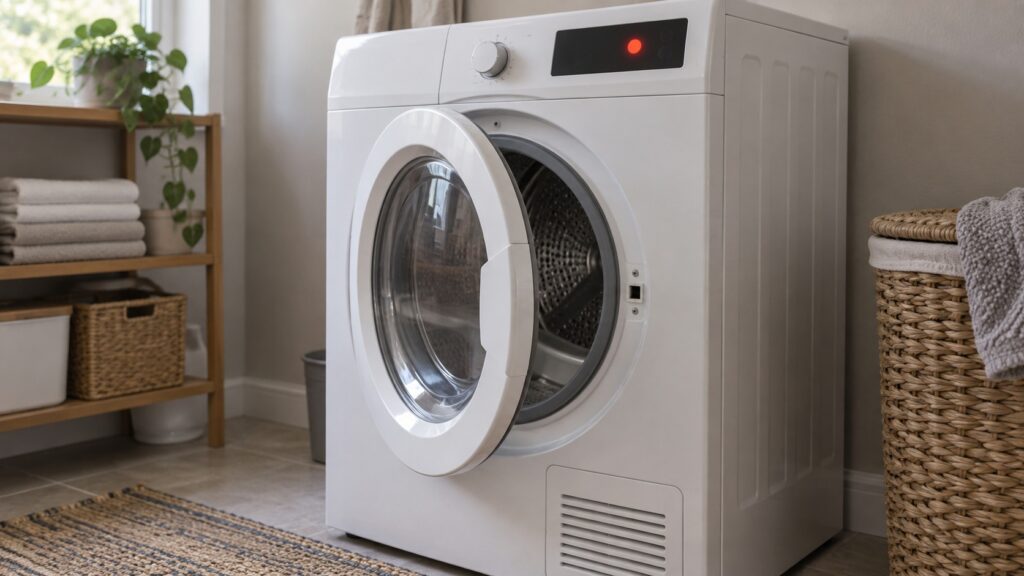
A Fisher Paykel dryer not starting is usually a door problem, not a motor problem. These machines will not run until the control confirms the door is shut and the lock has driven home, and six of the fault codes in the dryer list describe that one small assembly. If the drum is silent when you press start, the door circuit is where to look first.
Why will a dryer refuse to start over the door?
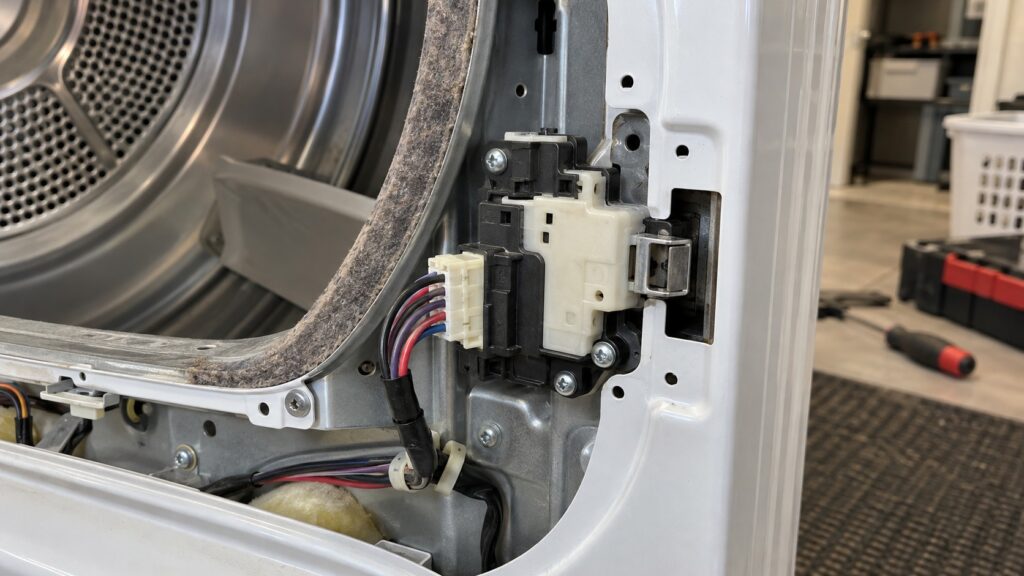
Every heated drum appliance needs to know the door is closed before it does anything, and on these dryers the confirmation is active rather than passive. It is not a simple switch that closes when the door touches it. An actuator drives a lock, and the board waits for the lock to report that it arrived. If that report never comes, the cycle never begins, and the machine looks dead even though nothing in the drive or heat circuit is wrong.
That design is why the codes come in pairs of opposites. Some say the lock could not move; others say the lock is electrically absent. Code 20 and code 21 are mechanical complaints — the actuator tried. Codes 11 and 22 are electrical ones — the actuator was never there to try. Code 12 is the control side of the same circuit failing instead. Knowing which half of that split you are in decides whether the fix is a two-minute clearance job or a harness trace.
What is the difference between a jammed door and a failed lock?
Code 6 is the friendly end of the range. It means the door is jammed, and it is listed as owner-fixable for a good reason: the usual cause is a load pushed against the door, a towel corner caught in the seal, or a door that was closed onto something. Open the door, clear whatever is there, close it firmly, and the code generally goes.
Code 21 sits one step further along the same road. The actuator did move, but it had to be pushed harder than it should have been. That is a door out of alignment, a hinge that has sagged, a strike plate bent by someone pulling the door open mid-cycle, or debris packed into the lock throat. Left alone, a 21 turns into a 20 — an actuator that stalls completely — and eventually into a lock that has burned out.
Codes 11 and 22 are different in kind. They mean the circuit is open: a connector that was knocked loose when the dryer was moved, a wire chafed through where the harness passes the cabinet edge, or a coil that has gone open internally. Nothing about the door itself is wrong, and cleaning the seal will not help. Our guide on dryer door seal and latch issues covers the mechanical side of the door in detail.
What should I check before anything else?
- Confirm the machine has power. A dark panel is a supply problem, not a door problem. Check the breaker and, on a stacked install, check that the dryer has its own circuit and that the outlet behind it is live.
- Close the door with deliberate force once. Not a slam — a firm, square push. A door that catches only when pushed at the latch corner is misaligned and is already halfway to a code 21.
- Look into the lock throat. With the power off, look at the slot the latch enters. Lint packs in there, and so does the occasional coin or button.
- Cut power for two minutes. These codes latch. A dryer that has already been fixed will keep showing the code until the board restarts.
- Watch what happens on the next start. A soft click from the door area means the actuator is moving; complete silence means it is not. That one sound separates the mechanical codes from the electrical ones.
Our page on a dryer that will not start covers the same checks from the symptom side, and if the drum does turn but the load stays damp, the problem is elsewhere entirely — start with a dryer that is not heating instead.
Where is the reset on a Fisher and Paykel dryer?
There is no dedicated reset button on these machines, and looking for one wastes time. The reset is the breaker. Switch the circuit off, wait two minutes so the board fully discharges, and switch it back on. Holding the power key only turns the panel off; it does not restart the control.
What a reset will and will not do is worth being clear about. It clears a latched code so you can see whether the fault is still live. It does not fix a jammed lock, a broken wire, or a stalled actuator. If the same code returns on the first start attempt after a reset, the condition is present right now, and repeating the reset simply delays the repair.
Could this be something other than the door?
Occasionally, yes. Code 1 is a communications error between the sensor module and the motor control module — the two halves of the control system are not talking, and the machine will not start for a reason that has nothing to do with the door. Code 16 is an airflow restriction, which usually stops a cycle rather than preventing a start, but on a heavily blocked exhaust it can end a program almost immediately and look like a failure to start. That one is worth ruling out with our dryer vent cleaning guide, because it is the single most neglected maintenance item on any dryer and a genuine fire risk besides.
Otherwise, treat a silent dryer with a closed door as a door-circuit problem until the codes say otherwise.
When does this become a technician’s job?
Stop at the point where the fix requires opening the cabinet. The lock actuator is mounted in the front panel beside mains wiring, the harness runs past sheet-metal edges that will cut it and you, and a door that needs its hinges reset has to be supported while the fixings come out. An open-circuit code confirmed by a reset is a meter-and-wiring-diagram job, not a guesswork job.
We are an independent repair company, not a factory service arm. Pricing starts from a diagnostic visit — from $129 — with the estimate confirmed before work begins. Fisher Paykel dryer repair covers door locks, actuators, harnesses and control modules on vented, condenser and heat-pump models, and you can schedule a visit online. Have the code number ready and say whether you heard the lock click: those two facts point straight at the part.