Small habits add up fast on a utility bill, which is exactly why these fisher-paykel appliance energy saving tips focus on how you run your machines rather than which ones you own. Fisher & Paykel already ranks its dishwashers, refrigerators, and laundry pairs among the more efficient options in each category, but the way you load, set, and time them often matters more than the badge on the door. The room-by-room suggestions below come from what our experienced technicians notice during service visits, and none of them ask you to change the way you actually live.
Dishwasher
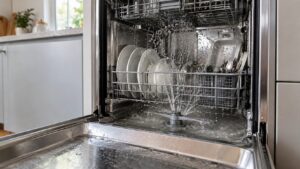
- Skip the heated dry — If your model has a heated dry option, turn it off. Open the door after the cycle to let dishes air dry. This saves 15-50% of the cycle’s energy.
- Run full loads only — A full load uses the same water and energy as a half load. Wait until the dishwasher is full.
- Use the Eco cycle — It runs longer but uses less water and lower temperatures. The extended time compensates with more mechanical cleaning action.
- Connect to hot water — Fisher & Paykel dishwashers heat water internally, but starting with hot water from your water heater reduces the energy the dishwasher uses to reach wash temperature.
Refrigerator
- Set correct temperatures — 37°F fresh food, 0°F freezer. Every degree colder uses 2-3% more energy. See our temperature settings guide.
- Clean condenser coils — Dirty coils increase energy consumption by up to 30%. Clean quarterly.
- Check door seals — A leaking door seal forces the compressor to work overtime. Do the dollar bill test monthly.
- Keep it stocked — A full refrigerator retains cold better than an empty one. The mass of cold food acts as thermal ballast. If it’s mostly empty, fill space with water bottles.
- Let hot food cool — Placing hot containers directly in the fridge forces the compressor to work harder. Let food cool to room temperature first (within food safety limits — no more than 2 hours).
Washer
- Wash in cold water — Modern HE detergents work effectively at all temperatures. Cold water cycles use 90% less energy than hot. Reserve hot for heavily soiled items, bedding, and towels.
- Use the highest spin speed — Faster spinning extracts more water, reducing dryer time and energy. The SmartDrive on Fisher & Paykel washers makes high-speed spin quieter than competitors.
- Full loads only — Same principle as the dishwasher. A half load uses nearly as much energy.
Dryer
- Clean the lint filter every load — A clogged filter restricts airflow and increases drying time by 30%+.
- Use moisture sensor drying (AutoDry) — Let the sensors stop the cycle when clothes are dry, rather than running timed cycles that overdry.
- Consider a heat pump model — Fisher & Paykel Series 9 heat pump dryers use 28% less energy than conventional. See our heat pump dryer guide.
- Don’t overdry — Overdrying wastes energy and damages fabrics. Use “Damp Dry” for items going directly to the iron.
Oven and Range
- Use convection — Convection cooks at 25°F lower and 25% faster than conventional. Less time at lower temperature = less energy.
- Don’t preheat for everything — Casseroles, roasts, and stews don’t need a preheated oven. Save preheating for baking where precise starting temperature matters.
- Use the right burner size — A small pot on a large burner wastes energy heating air around the pot. Match pot size to burner size.
- Keep the oven door closed — Each time you open the oven door, temperature drops 25-50°F. Use the oven light and window instead.
fisher-paykel appliance energy saving tips: key takeaways
Stacked together, these fisher-paykel appliance energy saving tips trim consumption across the whole kitchen and laundry without asking you to buy anything new — cold washes, full loads, clean coils, and convection cooking do most of the heavy lifting. Adopt a couple of habits per room and the savings compound month after month. If an appliance keeps drawing more power or running longer cycles than it should despite efficient use, that often signals a failing seal, element, or sensor, and you can schedule professional service to pin it down.
Sustaining your Fisher & Paykel efficiency long-term
Efficiency erodes quietly as gaskets stiffen, coils gather dust, and ActiveSmart sensors drift, so a seasonal once-over keeps each machine running as lean as the day it was installed. Fisher & Paykel builds its compressors, SmartDrive motors, and elements to strict durability standards, but environment and daily use still wear components over the years. Jot down the model and serial numbers from each appliance’s rating plate so our specialist technicians can match the correct part from trusted suppliers without delay, every repair carries a 30-day labor warranty, and a diagnostic visit starts from a small fee that you can apply toward the work — final cost always depends on the diagnosis.