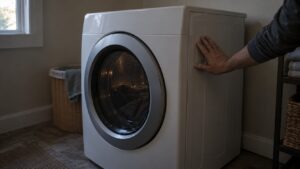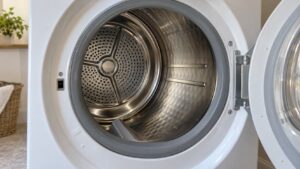
To clean a Fisher Paykel dryer lint filter, pull the filter out, wipe the lint off the screen with your fingers or a soft brush, check that it is clear and push it back until it seats. Do this after every load. The lint filter is the first thing that catches fluff from your clothes, and a clogged one restricts airflow, makes the dryer run longer and hotter and can hide a bigger problem further down the line. This guide covers the habit, the deeper clean the filter needs now and then, how to tell when the screen is damaged and when a long drying time points somewhere else. Where the filter sits on your exact model is in your owner’s manual.
How do you remove and clean the lint filter?
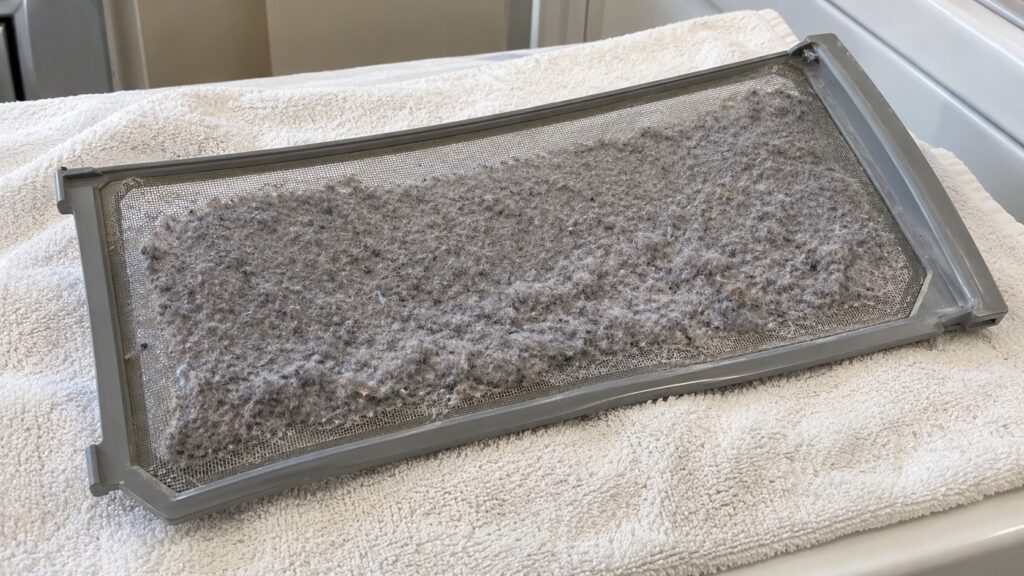
Open the dryer door and look for the filter. Where it sits and how it comes out depend on the model, so follow the picture in your owner’s manual. Most filters slide or lift out. Hold the filter over a bin and roll the lint off the mesh with your fingers; a soft brush works for the edges. Look through the mesh against the light. You should see light through it, with no gray film. Then check the slot the filter came from and remove any lint you can see and reach, and push the filter back until it seats. A filter that is not fully seated lets lint past it.
Make this part of the routine. Our dryer vent cleaning guide recommends cleaning the screen after every load, because lint that escapes the screen settles in the duct. If you clean the filter first, the rest of the airflow path stays cleaner for longer.
Why does the filter need a deeper clean?
The lint you can see is not the only thing on the screen. Fabric softener sheets, liquid softener residue and detergent can leave a thin film across the mesh, and the film blocks air even when the screen looks clean of lint. A simple test is to hold the filter under a gentle stream of warm water: if the water pools on the mesh instead of passing through, the film is the problem. Washing it gently with warm water and a little dish soap and a soft brush usually clears it. Check your owner’s manual first, because it tells you whether your filter may be washed. If you wash it, let it dry completely before you put it back, since a wet filter holds lint and can leave the next load damp.
The film builds slowly, so a deeper clean now and then is usually enough, and a household that uses softener sheets may need it more often than one that does not.
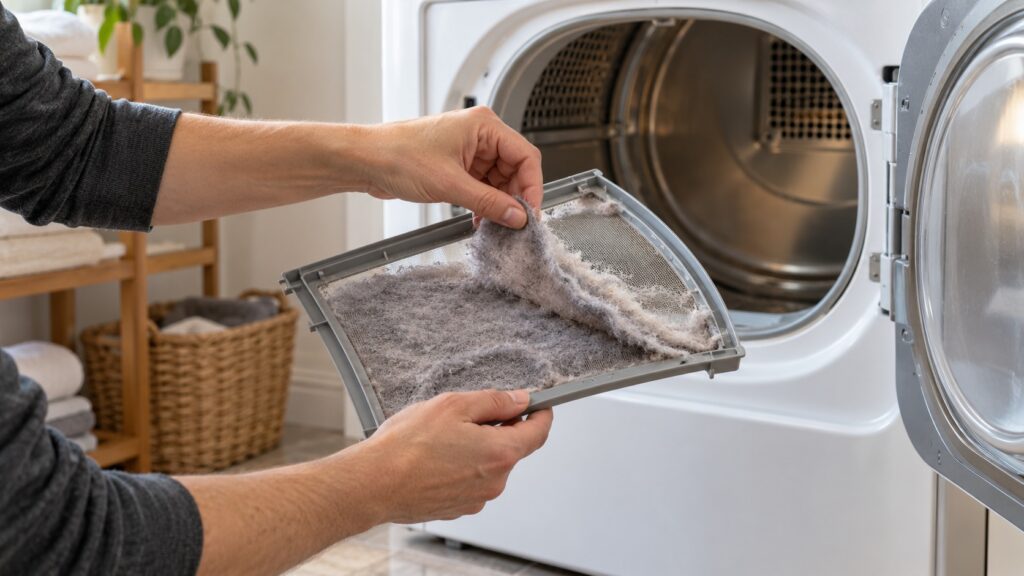
When is the filter damaged?
Look at the mesh as well as the lint. A tear, a hole or a gap along the frame lets lint pass into the dryer, where it builds up on parts you cannot reach with your hand. A warped frame also leaves a gap. If the filter is damaged, do not use the dryer without it and do not patch it with tape. Order the correct filter for your model, using the model information from the rating label. Replace it as soon as you can.
Do not reach into the filter slot with a tool or a vacuum nozzle deeper than you can see. A gentle pass of a vacuum hose at the opening to pick up lint is fine, but anything that means opening a panel is a job for a technician. Our page on a dryer burning smell explains why lint buildup is taken seriously and what to do if you notice a smell.
What if the dryer still takes too long?
A clean filter should improve drying times. If it does not, the filter was probably not the only cause. Check the load size first, because an overloaded drum does not let air circulate, and check that the washer is spinning clothes well before they enter the dryer. Our guide on a dryer that takes too long to dry separates the normal slower pace of heat pump drying from a real problem. If your dryer vents outside, the duct is the next suspect; our airflow restricted page explains the symptom. If you have a heat pump dryer, there are more parts to look after, and our heat pump dryer maintenance tips cover them.
When should you call a technician?
Call when the dryer still dries slowly after the filter is clean and the load is sensible, when the laundry room or the dryer feels unusually hot, or when you smell burning. If you smell something burning, stop the cycle and switch the breaker off at the panel while standing on a dry floor, and leave the door closed. Do not open panels or reach into the dryer to clear lint; that is a technician’s job. We are an independent repair company, not the manufacturer. Our dryer repair page explains how a visit works, and you can schedule a visit online.