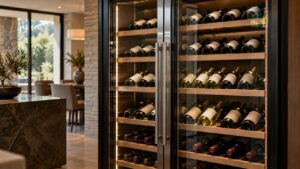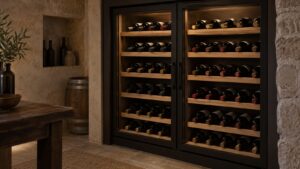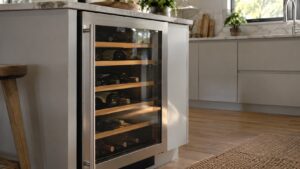
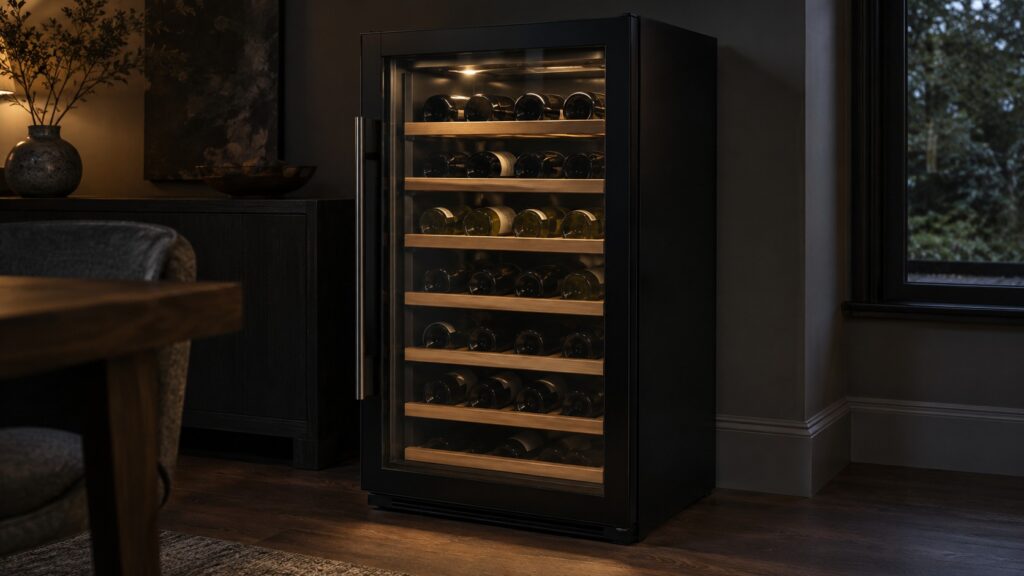
The Fisher Paykel wine fridge repair or replace question starts with what the cabinet is doing. A wine cabinet that is not cooling, that swings in temperature, that runs all the time or that shows an alarm is often suffering from something around it: blocked vents, a warm room, a worn door seal or overfilling. Those are cheap to fix. The next layer is a repair: a sensor, a fan, a thermoelectric or cooling module, or a control. Replacement makes sense mainly when the sealed refrigeration system has failed in an older cabinet, when faults keep returning or when the cabinet no longer suits your collection.
What should you rule out before paying for a repair?
Our wine cabinet not cooling guide says the cause is frequently environmental or a sealing issue rather than a refrigeration failure. Check that the ventilation grilles are clear and that there is the clearance your model needs, that the room is within the cabinet’s rated range and not a hot garage or next to an oven, that the door closes squarely and the seal is intact, and that the cabinet is not overfilled so air cannot circulate. Confirm the set temperature and any zone settings, since a changed setting can look like a fault. Our wine refrigerator maintenance guide covers vacuuming the grille and cleaning the gasket.
What does a repair usually involve?
If the basics are fine and the cabinet still drifts, the sensor, the fan, the cooling module or the controls may need service. Our wine cooler guides explain that performance depends on the sensor, the fan and the cooling module working together, and that problems usually trace to one of those parts. Wine cabinets use either a compressor or a thermoelectric system, and which yours uses depends on the model. A technician can confirm the true temperature inside, test the parts and tell you what failed. Do not open panels or touch wiring yourself. The panel alarms are explained in our wine cabinet codes and alarms guide.
When does replacement make sense?
When the sealed refrigeration system has failed and the cabinet is old enough that the repair estimate approaches the price of a new one; when the same fault returns after repair; when the cabinet is damaged, corroded or has a cracked door; or when your collection has outgrown it or you want dual zones. Think about the installation, too: a built-in cabinet has to fit its opening and ventilation, so a replacement needs the same clearance, level floor and dedicated circuit that our wine refrigerator installation requirements describe. If you want something different, our guide to single vs dual zone wine coolers helps you choose.
How do you protect the wine while you decide?
Wine tolerates a range of serving temperatures but not constant change, as our temperature settings guide explains: stability matters more than the exact number. If the cabinet cannot hold a stable temperature, move valuable bottles to a cooler place, such as an insulated box in a cool room or a second cabinet, until the problem is fixed. Do not leave bottles in a cabinet that is running hot. Keep the bottles off direct heat and avoid frequent moves, because vibration disturbs sediment. A short period in a stable cool place is better than a long period in a cabinet that is swinging.
What should you ask a technician?
Ask what failed, whether it is the cooling system or a part around it, and whether the cabinet is likely to be reliable after repair. Ask whether the fault could have been caused by placement, such as heat or blocked vents, and how to prevent it recurring. Ask for a written estimate before work begins and compare it with a new cabinet of the right size, including delivery, installation and any changes to the opening. A technician who sees the cabinet in its setting can usually tell you honestly whether a repair is worth doing. Our Fisher & Paykel wine refrigerator repair page explains how a visit works.
How does the cabinet’s age and use change the answer?
A wine cabinet runs continuously, so its fan, seal and cooling parts accumulate wear in step with the years. A cabinet that has been kept in a cool room, with clean vents and a good seal, tends to last better than one that has spent years in a hot space or been crammed full. Think about how much the collection is worth and how reliable you need the cabinet to be: for a valuable collection, a cabinet that has had repeated faults deserves less trust, and replacing it, or adding a second cabinet as a backup, may be the more sensible way to protect the wine. For a modest collection and a single fault, repair is nearly always the sensible choice.
Finally, remember that location matters as much as the machine. If the cabinet failed because it sat next to an oven, in direct sun or in a garage that gets very hot, a repair or a replacement will fail again in the same place. Fix the placement, clear the vents and keep the seal clean, and whichever way you decide, the new or repaired cabinet will have a far better chance of lasting.