A Fisher & Paykel wine refrigerator installation comes down to three things a spec sheet cannot fix after the cabinetry is built: airflow, a level floor, and a dedicated electrical circuit. Get any one of those wrong before the unit goes in and you are looking at a callback that involves pulling the appliance back out, not a quick adjustment. This guide covers what to check before the unit arrives, whether it is going into a built-in opening under a counter or standing freestanding against a wall.
Does a built-in wine refrigerator need different clearance than a freestanding one?
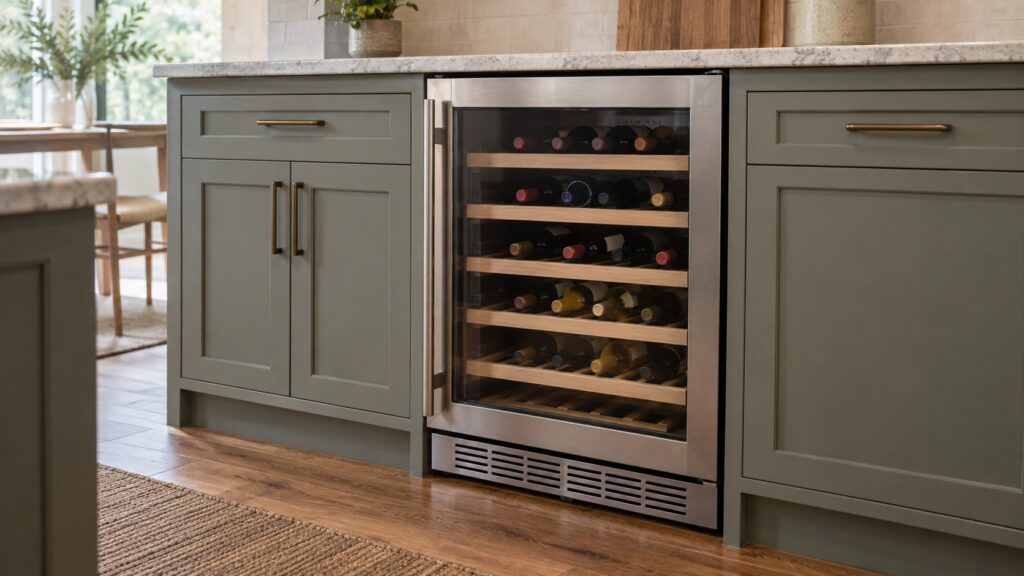
Yes, and this is the single most common installation mistake. A built-in model is designed to vent heat out the front, through the grille below the door, precisely so it can sit flush in a cabinet run with no side or rear clearance. A freestanding model vents from the sides or rear instead, and boxing it into a cabinet opening designed for a built-in unit traps heat around the compressor. Confirm which type you have from the model number and the installation instructions before the surrounding cabinetry is finished — a freestanding unit forced into a built-in opening will run hot and short-cycle even when everything else is correct.
Why does a level floor matter this much for a wine refrigerator?
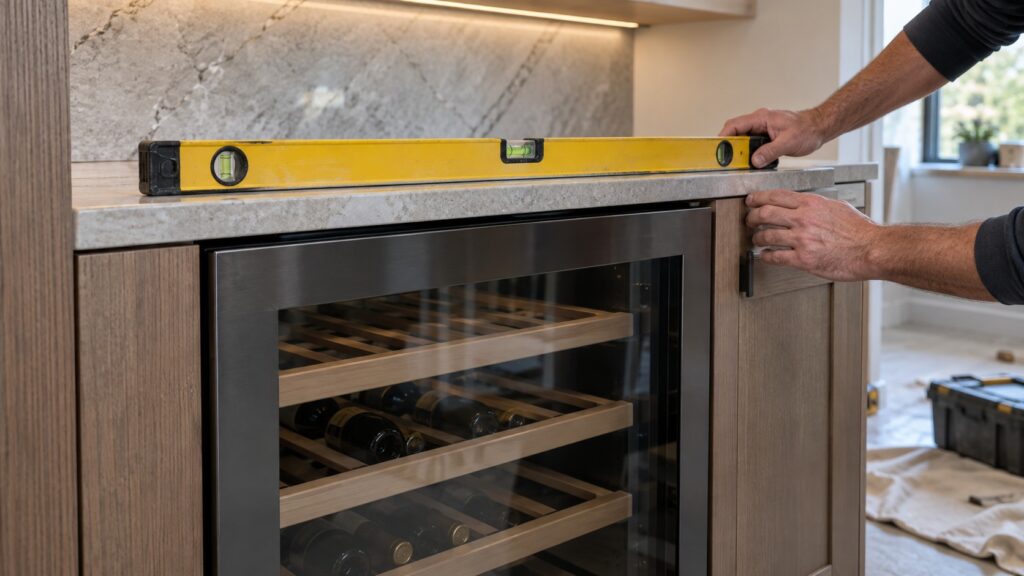
An unlevel cabinet puts uneven stress on the door hinge and the door seal, and a wine refrigerator’s door seal has to hold a tighter, more stable internal temperature and humidity than a refrigerator door does. A door that sits slightly open on one side because the cabinet leans lets warm air in continuously, and the compressor runs longer trying to compensate. Use a level across the top of the cabinet in both directions, and adjust the leveling feet — most units have them — until the appliance sits genuinely flat, not just close.
Does a wine refrigerator need its own electrical circuit?
It should have a dedicated, properly grounded outlet on its own circuit, not one shared with other kitchen appliances on the same run. Wine refrigerators run their compressor for long stretches to hold a stable temperature, and sharing a circuit with a microwave, a coffee maker or other intermittent loads risks nuisance trips that cut power to the unit — which, unlike a fridge that recovers fast, can let a wine collection drift out of its target range for hours before anyone notices. Confirm the circuit and outlet before the cabinetry closes around the unit, since running new wiring afterward means opening the cabinet back up.
What temperature range does the surrounding space need to stay in?
Every model has a rated ambient operating range printed in its installation instructions, and it is narrower than most people expect — a compressor sized for a temperature-controlled kitchen struggles in a garage that swings from near-freezing in winter to well over 90°F in summer. If the intended location is a garage, a sunroom, or any uninsulated space, check the rated range against what that space actually reaches across the year before committing to the location, not just on install day.
What should be confirmed before the unit is delivered?
- Opening dimensions that match the exact model, with the clearance type — front-vent or side-vent — confirmed from the installation instructions.
- A level sub-floor or cabinet base, checked with an actual level, not by eye.
- A dedicated circuit already run to the location, tested and confirmed live before the appliance arrives.
- Full door swing clearance, including any adjacent cabinetry or an island that could block the door at its widest point.
How does a fisher paykel wine refrigerator installation differ from a standard fridge install?
A standard kitchen refrigerator is fairly forgiving of a slightly tight opening or an outlet on a shared circuit, because its compressor cycles on and off and its internal temperature swing is wide enough to absorb minor inefficiencies. A wine refrigerator is not built with that same margin. It is designed to hold a narrower, more stable temperature and, on dual-zone models, two different temperatures in one cabinet at once, which means its compressor and its door seal are both working with less tolerance for a poor installation. The clearance, leveling and electrical requirements above are not general good practice carried over from other appliances — they are specific to how little slack this appliance has to absorb an installation shortcut.
What if the unit is already installed and running warm or noisy?
An installation issue does not always show up on day one — a unit boxed in without proper venting can run fine for weeks before heat buildup starts pushing internal temperature up or the compressor starts cycling more than it should. If a wine refrigerator that was recently installed is running warmer than its set point or cycling noticeably more often, check the clearance around it before assuming a component has failed; see our wine refrigerator maintenance guide and our temperature settings guide for what a correctly running unit should look like day to day.
Our technicians can check clearance, leveling and the electrical supply as part of a service visit if a newly installed unit is not holding its temperature. We are an independent repair company, not a factory service arm, and pricing starts from a diagnostic visit with the estimate confirmed before any work begins. If you are choosing between a single-zone and dual-zone model before installation, our buying guide covers that decision, and our wine refrigeration repair service is there if something needs a closer look — schedule a visit whenever it suits you.