Fisher Paykel wine cabinet terms are easier to follow once you know what the words on the spec sheet and the panel actually refer to. A wine cabinet is not a small kitchen refrigerator. It is built to hold a steady, moderate environment for bottles, so the vocabulary is about stability, zones, airflow and the door, not about fast cooling. This glossary explains the terms you are most likely to meet when you shop for a cabinet, set one up or describe a problem to a technician, and it keeps the claims general. What a given word means on your exact model is in your owner’s manual.
What is a zone in a wine cabinet?
A zone is a part of the interior that is held at its own temperature. In a single-zone cabinet the whole interior is at one temperature, which suits one style of wine or long-term storage. In a dual-zone cabinet you can keep two different temperatures at once, for example for whites and reds. Our single versus dual zone buying guide helps you choose between them. Do not assume that every wine drawer or cabinet offers two independent zones; the specification sheet for your model says how many zones it has.
What do set point, stability and humidity mean?
The set point is the temperature you choose. Stability is how closely the cabinet keeps to it. For wine, stability matters more than a perfect number, because frequent swings are harder on bottles than a steady temperature that is a little off. Humidity is the moisture in the air. A wine cabinet is meant to keep gentler conditions than a food refrigerator so that corks do not dry out; how a given model manages humidity is in its manual. Our guide on how wine coolers control temperature and humidity explains the idea, and our page on temperature settings covers the settings. Which temperatures suit your wine is for you and your owner’s manual to decide, not for a glossary.
What is the difference between a compressor and a thermoelectric cabinet?
Wine cabinets use either a compressor or a thermoelectric system, and which one yours uses depends on the model. A compressor system works like a refrigerator’s cooling circuit and runs in cycles. A thermoelectric system moves heat with a solid-state module and has no compressor. The practical consequence is placement and sound: either kind needs free air around the cabinet to shed heat, and neither should be boxed in. Check the specification sheet for your model before you assume which type you have.
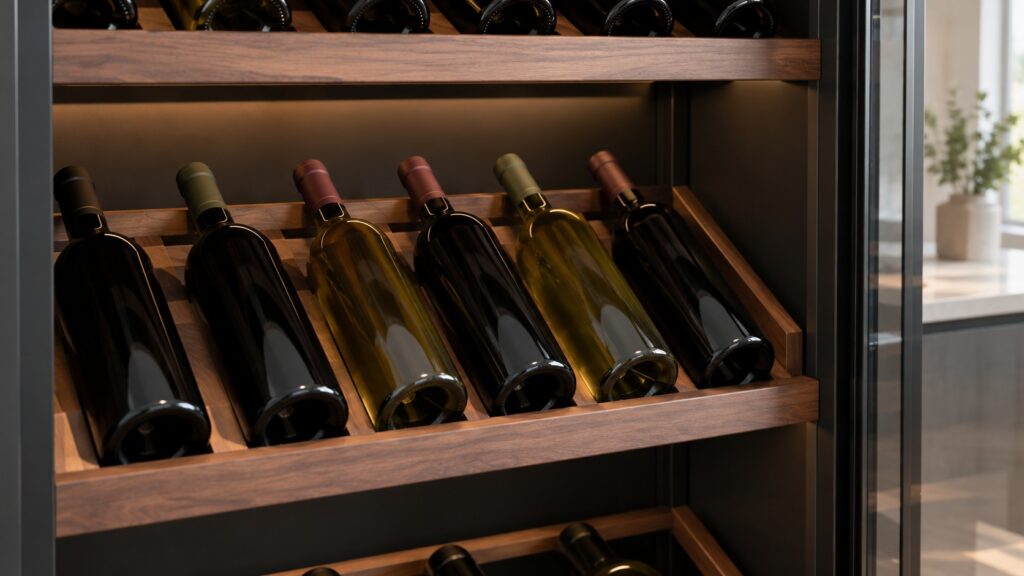
What are vibration, ventilation and the gasket?
Vibration is movement that reaches the bottles. Wine is stored lying down or at rest, and lasting vibration is considered unhelpful, so a cabinet is designed to run quietly and to hold bottles steady. A rattling shelf, a loose bottle or a cabinet that is not level can all add noise. Ventilation is the air a cabinet needs around it to shed heat. A built-in cabinet with blocked ventilation can struggle regardless of its settings, so keep the vents and the space around it clear. The gasket is the rubber seal around the door. A gasket that is dirty, folded or damaged lets warm air in, which makes the cabinet work harder. Our wine refrigerator maintenance guide includes a gasket check you can repeat from time to time.
Two more words come up when people describe a cabinet: built-in and freestanding. A built-in cabinet is installed in a cutout and relies on the ventilation its design provides, while a freestanding cabinet stands on its own with space around it. The word shelf also deserves a note, because a loaded shelf that touches the back wall or another shelf can carry vibration and block the air that circulates inside. Leave small gaps, and load new bottles in stages so the temperature has time to settle.
What do the door alarm and the panel code mean?
A door alarm means the cabinet has noticed the door open or not sealing. It is the most common alarm and the easiest to fix: close the door fully, look for a bottle neck, a label or a shelf corner holding it open and wipe the gasket. A panel code is different. Fisher Paykel does not publish a numbered meaning table for wine cabinet codes, so a number you find on a forum may belong to a different brand or product. Write down the exact code, note whether the alarm sounded and pass it to a technician if it returns. Our guide to wine cabinet codes and alarms shows the steps in order, and the guide on a cabinet that is not cooling covers warm bottles.
When do these terms mean you need a technician?
If a code returns after the door and the airflow are checked, if the cabinet will not hold its set point, or if you hear something unusual from the cooling system, stop adjusting and book a visit. Do not open panels or reach into the cooling components; that is a technician’s job. If you see water near an outlet, smell something burning or notice sparks, switch the breaker off at the panel while standing on a dry floor and do not pull the plug from a wet outlet. We are an independent repair company, not the manufacturer. Our wine refrigeration repair page explains how a visit works, and you can schedule a visit online.