
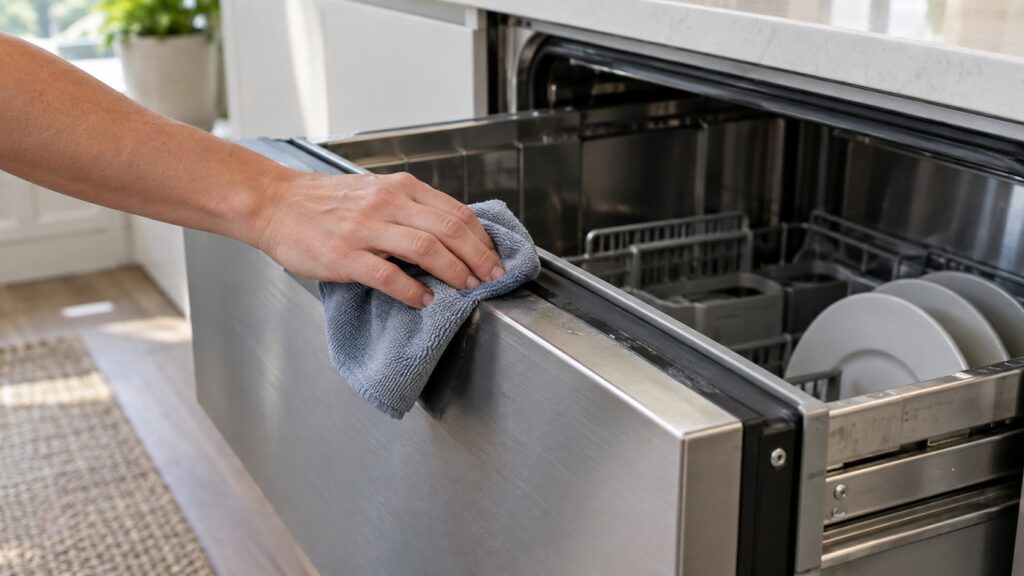
A Fisher Paykel DishDrawer seal is the rubber lip that closes the gap between the drawer and the tub, and keeping it clean is the cheapest way to prevent a drawer that will not seal, a damp cabinet floor and a cycle that stops early. Wipe the seal and the tub rim every week or two, remove trapped debris before it hardens, and check the lip for tears or flattening a few times a year.
What does the DishDrawer seal actually do?
When you push a DishDrawer shut, the drawer settles against the tub and the seal compresses to keep the wash water and steam inside. Without a good seal, spray escapes onto the floor of the cabinet and the machine may refuse to start because the drawer does not register as closed. The seal does not carry any weight and it does not move on its own, which is why a small amount of cleaning goes a long way.
Because each drawer has its own seal, a double DishDrawer can have one drawer that seals well and another that does not. That is one reason a single-drawer complaint is worth investigating separately, as we describe in our guide to a Fisher Paykel DishDrawer with one drawer not working.
How do you clean a DishDrawer seal safely?
Make sure the dishwasher is idle, then pull the drawer fully open. Wipe the seal with a soft cloth dampened with warm water and a drop of mild dish soap, working along the lip and into each fold. Do the tub rim the drawer closes against with the same cloth. Rinse the cloth and wipe again to remove soap, then dry the seal with a clean towel so water does not sit in the folds.
Use a soft brush, such as an old toothbrush, for stubborn residue in a crease. Avoid scrapers, steel wool and abrasive pads, which can nick the rubber and create a leak path. Skip bleach soaks and harsh solvents as well, since they can dry and crack the rubber over time. If a smell lingers, a gentle wipe with diluted white vinegar on a cloth usually handles it, and our guide to cleaning your Fisher Paykel dishwasher filter covers the other common source of odor.
What debris causes a drawer to stop sealing?
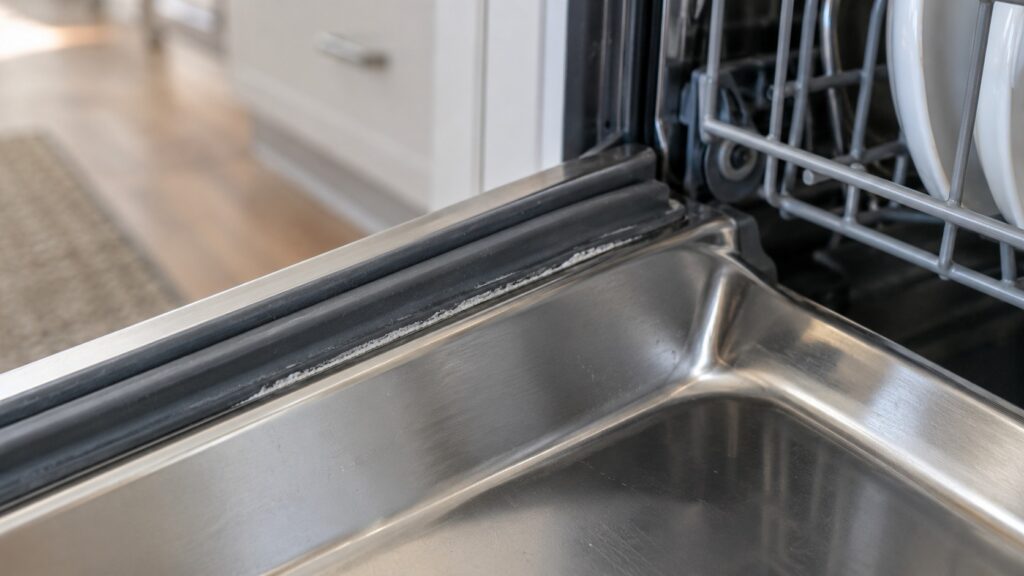
The usual culprits are small and ordinary: a grain of rice, a piece of label, a cracked glass chip, a hardened streak of detergent or a thin film of grease. Any of these sitting between the seal and the rim can keep the lip from compressing evenly, so the drawer looks closed while a hairline gap remains. A film of residue builds slowly, which is why the drawer may seem fine for months and then start refusing to close.
Check the tub rim as well as the seal. Detergent crust or a mineral ring on the rim can be as troublesome as debris on the seal. After you clean, close the drawer slowly and listen for the soft latch. If the drawer still does not seat, the cause may be the latch or an obstruction in the drawer path, which we cover in the Fisher Paykel dishwasher door latch problems guide.
How can you tell the seal itself has worn out?
A worn seal looks different from a dirty one. Cleaning will not restore a seal that is cracked, torn or permanently flattened, and a seal that has slipped out of its groove can look intact but fail to compress. Run a fingertip gently along the lip: you want an even, springy profile, with no splits and no hard patches. Staining alone is cosmetic, but a split or a gap along the length is a leak waiting to happen.
Signs that a seal is failing include water on the cabinet floor after a cycle, damp or swollen panels beside the machine, a drawer that needs a firm push to latch and cycles that stop with the drawer apparently closed. If you see any of these after a good cleaning, a replacement part may be needed. Fitting depends on the model, so it is best done by a technician who can check that the new seal is seated evenly.
What habits protect the seal between cleanings?
Scrape plates before loading and keep sharp items from touching the rim when you slide dishes in. Use the detergent amount on the label, since an excess leaves a film on the seal. Leave the drawer ajar for a short while after the cycle ends if you notice the seal staying damp, which helps it dry and limits mildew. Avoid hanging heavy items over the front of the drawer, because a pinched seal can take a permanent set.
A quick check as part of your regular dishwasher care keeps this simple. If you are tuning your wash habits, our guide to understanding Fisher Paykel dishwasher cycles and settings shows how to choose a cycle that suits the load without overusing detergent.