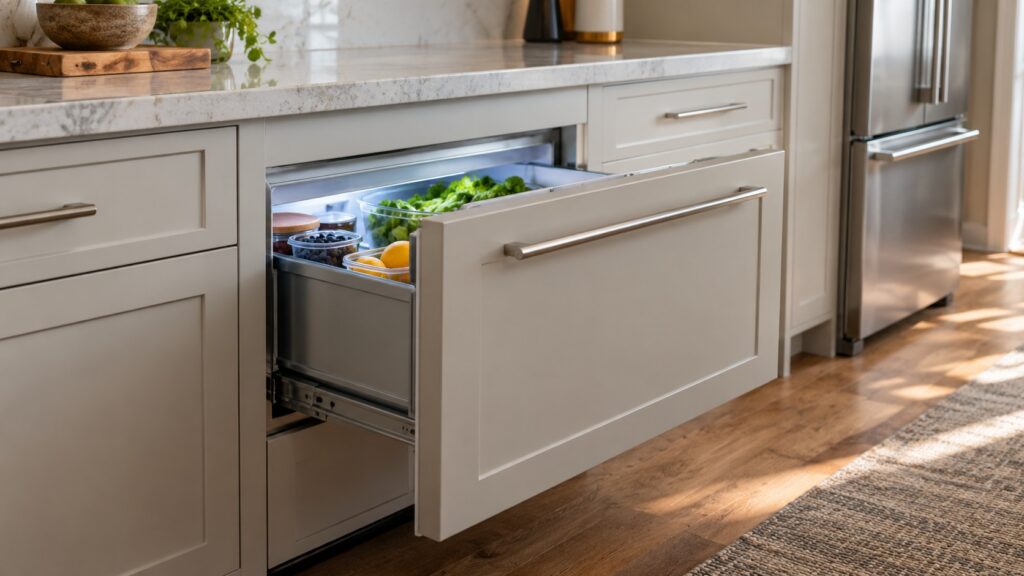
A Fisher Paykel cool drawer installation is a planning job as much as a fitting job. The CoolDrawer is a built-in drawer that can run as a freezer, a chiller, a refrigerator or a pantry or wine drawer, and it sits in your cabinetry, often behind a matching panel. Its performance depends on how it is installed: the opening, the airflow around it, a level base, power and, where a panel is fitted, the panel’s weight and alignment. The exact dimensions, clearances and electrical requirements are in the installation instructions for your model, so we do not quote them. This guide lists what to plan and check.
What is a CoolDrawer, and why does installation matter?
Our guide on how a CoolDrawer works describes a sealed refrigeration circuit, a fan moving air across a cold surface, an airflow path, a sensor and a control that knows the recipe for each mode. It also notes that on integrated installations it sits behind a cabinet panel, which is why installation quality, including panel weight, hinge adjustment and seal contact, affects how well it holds temperature. A drawer that sits unevenly, is starved of airflow or is dragged down by a heavy panel will run harder, hold temperature less well and may not close fully.
What should you plan for the opening?
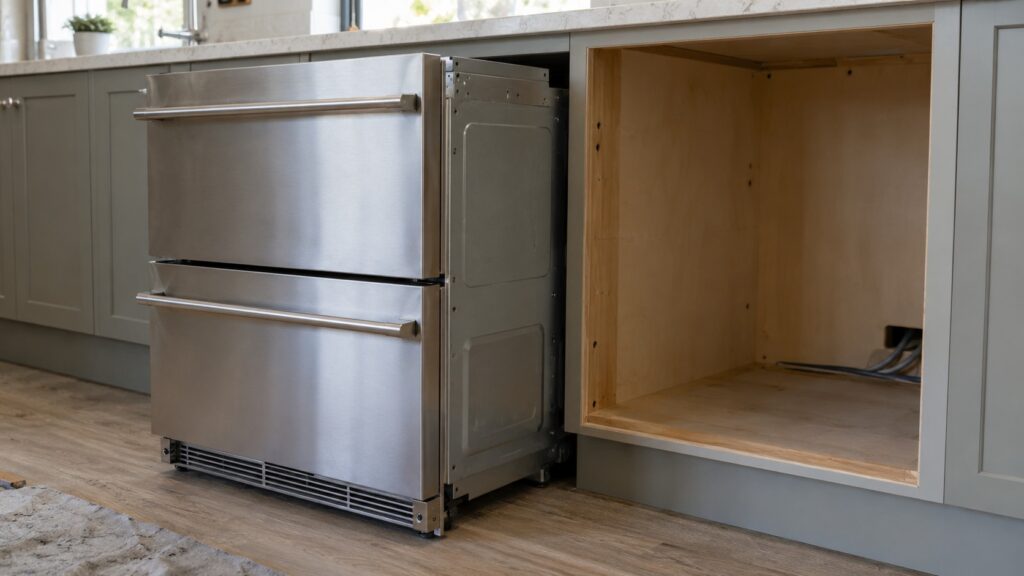
Get the installation instructions for the exact model before the cabinetry is built, and build the opening to them. Decide where the drawer will sit, since a CoolDrawer is often placed under a counter or in an island, and check that the surrounding cabinets, the counter overhang and the drawers next to it leave room for it to open fully. Think about where the electrical supply will come from and how it can be reached. Plan the ventilation path, because the drawer needs to shed heat. Our refrigerator installation guide explains the general logic of clearances, power and leveling for Fisher & Paykel cooling appliances.
Why do ventilation and a level base matter?
Like our wine cabinets, built-in cooling products shed heat to the surrounding space, and blocked airflow makes them run warm and work harder. Our wine refrigerator installation requirements explain that a built-in model vents through the front grille so it can sit flush in a cabinet run, and that an unlevel unit strains the door seal and the mounts. The same principles apply to a drawer: keep the vent path open, do not box the unit in with trim that covers a grille and make sure the base is level and solid. Check the exact requirements for your model in its instructions.
What about the power supply?
The drawer needs the electrical supply specified for the model, and in a kitchen that means a correctly protected circuit. Do not use an extension cord or a multi-outlet strip to power a refrigeration appliance, and do not share a circuit that is already heavily loaded unless the instructions allow it. Our refrigerator guide says the manufacturer prohibits extension cords because of the fire and undervoltage risk. A qualified electrician should install or check the supply. Never open the drawer’s panels or work on its wiring yourself.
How do panel-ready models change the job?
A panel-ready CoolDrawer has a front made to take a matching cabinet panel. The panel adds weight and a new alignment to a moving drawer, so it has to be within the limits the instructions give, fixed in the way they describe and adjusted so the gaps are even and the drawer glides and closes. A heavy or misaligned panel strains the mechanism and stops the seal making full contact, which is what lets warm air in. Ask the cabinetmaker to read the instructions before the panel is made, and ask the installer to adjust it after fitting.
What should you check after installation?
Open and close the drawer several times: it should glide, close fully and sit flush. Look at the gaps to the neighboring cabinets. Switch it on, set the mode you want, and give it time to settle before you load it, since our usage guide says a mode change takes time to stabilize. Check the temperature with a separate thermometer after it has settled. Check that nothing blocks the vent path. Our CoolDrawer usage tips explain how to use the modes once it is running. If it runs warm or noisy, call us; our Fisher & Paykel refrigerator repair page explains how a visit works.
What mistakes cause the most callbacks?
The common ones are all planning errors. Building the opening before reading the instructions leaves it the wrong size. Boxing the drawer in with trim that covers its vent path makes it run warm. Fitting a panel heavier than the limit strains the runners and spoils the seal. Placing the drawer beside a heat source such as an oven or in a sunny spot adds load. Installing on an uneven base leaves the drawer out of square. Each of these costs far less to fix on paper than after the stone and the panels are in place, so share the instructions with the cabinetmaker, the electrician and the installer early.
Keep the paperwork too. The installation instructions, the model number and the installer’s notes tell a technician what was done, and they are useful if you later move the drawer or sell the home. If you plan to change the mode of the drawer regularly, choose a position that is easy to reach and look at, so you can check the mode before you load it.