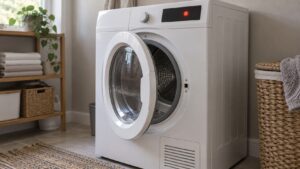
To understand how fisher-paykel heat pump dryers work, picture an air conditioner running in reverse. Fisher & Paykel Series 9 dryers skip the conventional heating element that turns electricity straight into heat and then blows hot, damp air out a vent. Instead, they recycle warmth in a sealed loop, moving heat around rather than burning energy to create it. The payoff is roughly 28% less energy use and no external vent at all, which is what makes these dryers so flexible to install.
The refrigeration cycle in your dryer
A heat pump dryer contains a small refrigeration circuit with four components: a compressor, a condenser, an expansion valve, and an evaporator. Here’s how they work together:
- Warm air enters the drum — The condenser heats air to approximately 150°F (65°C), lower than the 180°F+ in conventional dryers. This air passes through the tumbling clothes and absorbs moisture.
- Moist air hits the evaporator — The warm, humid air passes over the evaporator coil (the cold side of the heat pump). Moisture condenses on the cold coil, just like water forming on a cold glass. The water drains into a collection tank or drain hose.
- Dehumidified air is reheated — The now-dry air passes over the condenser coil (the hot side) and is warmed again. The cycle repeats.
- The compressor drives the cycle — Refrigerant circulates between the evaporator and condenser, transferring heat rather than generating it. This is why heat pump dryers use less energy — they move heat instead of creating it from scratch.
Why the lower temperature matters
Conventional dryers blast clothes with 180-210°F air. Heat pump dryers use 130-150°F. The benefits:
- Fabric protection — Less heat means less fiber damage. Clothes retain color, shape, and elasticity longer. Delicates and synthetics are particularly benefited.
- Reduced shrinkage — Lower temperatures significantly reduce cotton shrinkage compared to high-heat conventional drying.
- Longer dryer lifespan — Lower operating temperatures mean less stress on drum seals, bearings, and electronics.
The tradeoff: longer cycle times. A full load takes 90-120 minutes vs. 45-60 minutes in a conventional dryer. Fisher & Paykel considers this acceptable given the energy and fabric-care advantages.
Self-cleaning condenser
Lint that passes through the main filter can accumulate on the heat exchanger fins. Fisher & Paykel Series 9 models include an automatic condenser cleaning system that rinses the condenser with condensation water periodically during the cycle. This maintains efficiency without manual cleaning.
Drainage options
The condensed water has to go somewhere:
- Collection tank — A removable tank in the upper left of the dryer. Empty it after every 1-2 loads. The dryer pauses and displays a “drain tank” indicator when it’s full.
- Direct drain — Connect the drain hose to a standpipe or laundry sink. Once connected, the tank never fills and you never have to empty it. This is the recommended setup for permanent installations.
Maintenance implications
Heat pump dryers have more components than conventional dryers — specifically the compressor and refrigerant system. These components rarely fail but when they do, repair costs are higher. See our heat pump dryer maintenance guide and dryer repair cost guide for details.
How fisher-paykel heat pump dryers work: the practical upshot
Once you grasp that the machine is dehumidifying air in a closed loop rather than venting it, the rest of its behavior makes sense. Longer cycles aren’t a flaw; they’re the price of gentler, cooler drying that protects fabric and internal parts alike. The absence of a vent isn’t a corner cut; it’s why you can drop a Series 9 into a closet or apartment that could never accommodate a conventional unit. Read the drain-tank indicator and condenser prompts as part of normal operation, and the dryer will reward you with years of efficient, low-stress service.
Keeping a heat pump dryer at peak efficiency
The AeroCare system does a lot on its own, but a few habits keep it running at its rated 28% energy savings. Clear the lint filter after every load so airflow over the evaporator stays unrestricted, rinse the secondary condenser filter on the schedule the control prompts, and choose the direct-drain setup if you’d rather never empty the tank. Neglected filters force the compressor to work harder, which is the one component you genuinely want to baby.
If your Series 9 ever stops mid-cycle or flashes a problem, our error code reference explains the message before you assume the worst about the compressor. When a repair is genuinely needed, our experienced technicians diagnose the refrigerant system properly, fit parts from trusted suppliers, and quote work starting from $99, backed by a 30-day labor warranty.