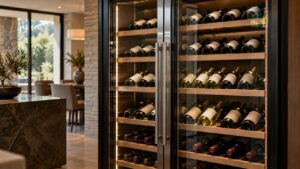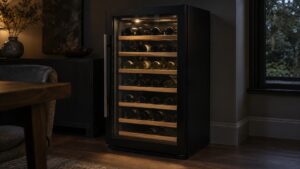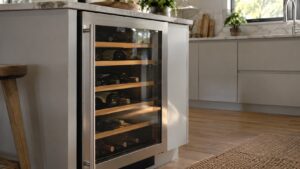
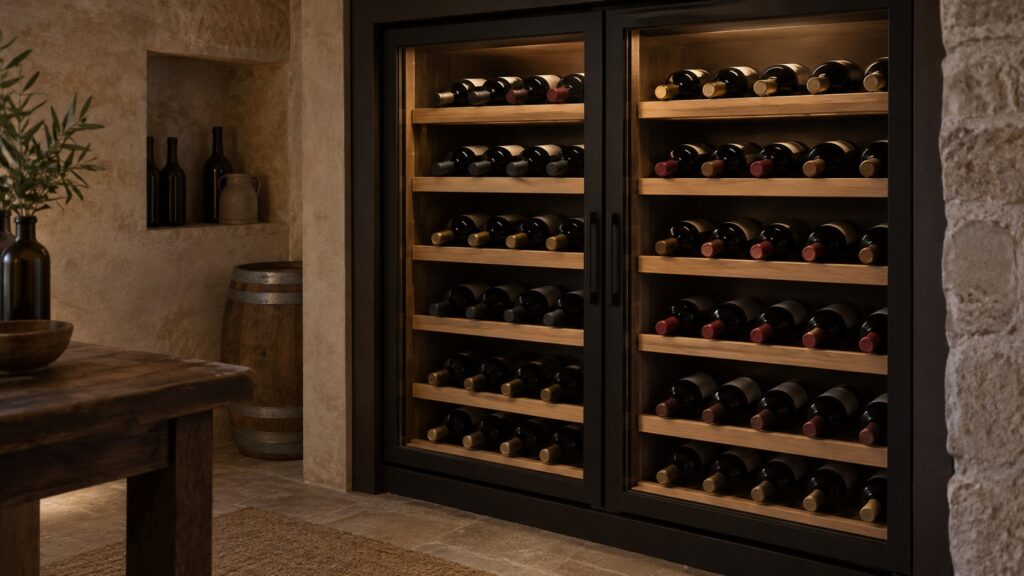
Fisher Paykel wine fridge loading bottles is about two things: letting air move and keeping the cabinet steady. A wine cabinet is not a refrigerator, and it does not try to be as cold as one. It holds a narrow temperature band with gentle conditions so corks stay supple, and it relies on a circulation fan and free airflow to keep the temperature even from top to bottom. Pack it too tightly, or move bottles in and out all day, and it works harder and holds less steadily. These tips cover how to arrange bottles, how to load a big batch and what to avoid.
How should you arrange the shelves?
Use the shelves the way they were designed. Wine cabinets have shelves built to hold bottles lying down, usually on wood, so the wine keeps the cork moist, and some shelves are for standing bottles or for display. Load from the back to the front, keep bottles from touching the back wall or pushing against the glass, and leave a gap at the sides so air can flow around them. Our guide on how wine coolers control temperature and humidity explains that a circulation fan distributes the cooled air so the top and bottom shelves stay close in temperature, and a blocked path defeats it. How many bottles your model holds and how they fit are in the specification for your cabinet.
Should you fill the cabinet or leave it part empty?
Neither extreme. A cabinet with some thermal mass, meaning plenty of bottles, holds its temperature better and recovers faster after a door opening than a nearly empty one. But a cabinet crammed so tightly that bottles touch each other and the back wall restricts airflow. Our wine cabinet not cooling guide lists overfilling that restricts internal airflow among the common causes of a warm cabinet. Aim for a sensible load with air around the bottles, and keep a few spaces so you can move bottles without handling many.
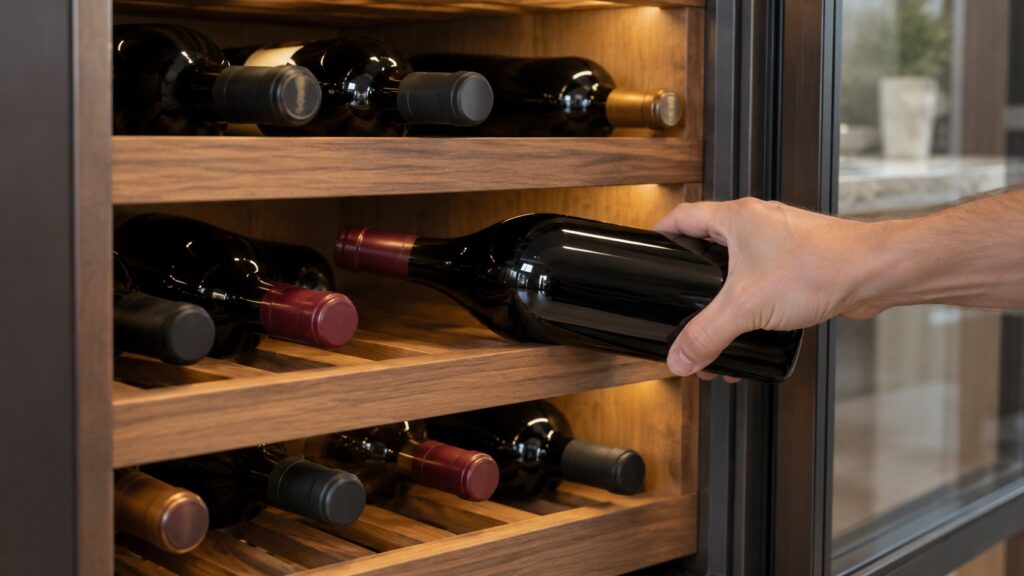
How do you load a batch of new bottles?
New bottles arrive at room temperature or warmer, and a big batch raises the cabinet temperature for a while. Load in stages if you can, and give the cabinet time to settle between them. Do not rely on the cabinet to chill bottles quickly: a wine cabinet is designed to hold a temperature, not to bring warm bottles down in an hour, and our temperature settings guide says to let the cabinet settle for a day after any adjustment. Set the temperature you want, load, and then leave it alone. Do not keep changing the setting because the first bottles are not at the right temperature yet.
Does it matter which bottles go where?
It can. In a single-zone cabinet the whole interior is at one temperature, so it suits one style of wine or long-term storage, whereas in a dual-zone cabinet you can hold whites and reds at their own temperatures. Our single vs dual zone guide explains the choice. In a dual-zone cabinet, put the bottles you plan to serve soon in the zone set for serving temperature and the long-term bottles in the steadier zone. Keep the bottles you will reach for most within easy reach, so you open the door briefly and do not rummage.
What should you avoid?
Avoid storing other items in the cabinet that are not wine, such as strong-smelling food, since a wine cabinet is not designed for it. Avoid blocking the vents with boxes or placing the cabinet next to a heat source or in direct sun. Avoid frequent, long door openings, which let in warm air, and avoid moving bottles often, since vibration disturbs sediment over time, as our maintenance guide notes. Keep humidity moderate so corks do not dry out. Do not put hot or very warm items in. If the cabinet is full and still runs warm, clean the vents and check the seal before you assume a fault.
What if the temperature will not stay steady?
If the cabinet drifts despite sensible loading, a clear grille and a good seal, the thermostat, fan or cooling module may need service. Move valuable bottles somewhere cool and stable while you arrange a visit. Our Fisher & Paykel wine refrigerator repair page explains how a visit works, and the wine cabinet not cooling page lists the symptoms.
How should you look after the cabinet itself?
Loading is only half the story. Every few months, vacuum the ventilation grille, wipe the door gasket and check that the cabinet is level so the door closes by itself, as our maintenance guide suggests. Wipe the interior with a mild, odor-free solution a few times a year, and, if your model has a carbon filter, replace it as your owner’s manual describes so the interior stays free of odors. Keep the cabinet out of direct sun and away from heat sources, and allow the clearance your model needs around the vents. These small habits let the cabinet hold temperature without strain, which is what protects the collection in the long run.
When you buy bottles in volume, plan the space before they arrive. Decide which shelves will take the new wines, which bottles will be drunk first and which will go into long-term storage, so the cabinet does not need to be reshuffled. A tidy layout means fewer door openings and less handling, and the wine rests undisturbed.