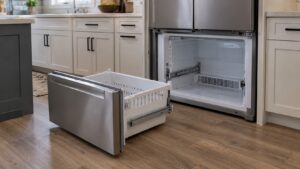

Fisher Paykel freezer installation leveling is the part of a column install that most affects how the freezer behaves afterward. Our buying guide describes the US freezer line as integrated column freezers, tall built-in units that sit flush with cabinetry and pair with a matching column refrigerator. They are heavy, they need airflow to shed heat and their doors are meant to close by themselves, which only works if the cabinet is level and square. The exact dimensions, clearances and supply requirements are in the installation instructions for your model, so we do not quote them here; this guide shows what to plan and check.
What should you plan before the freezer arrives?
Our integrated column freezer buying guide says columns need the right cabinetry depth, ventilation clearance and, if ice and water is fitted, a water line, and that professional installation helps the panel align and the door self-close. Get the instructions for the exact model first. Check the opening and the floor, plan where the power will come from and how it can be reached, and decide whether the column will pair with a matching refrigerator column. Plan the route into the house too: a tall, heavy column has to get through doors and around corners, and the delivery crew should know where it goes.
Why does ventilation matter?
A freezer sheds heat to the air around it, and the buying guide says to allow the specified airflow clearance so the cooling system can shed heat efficiently. If vents are covered by trim, or the space around the unit is sealed, it runs warm, runs constantly and wears faster. Our refrigerator installation guide explains why pushing a unit tight against a wall is the most common installation mistake. Follow your instructions for the clearances, and keep the grille clear when the kitchen is finished. Do not let a cabinetmaker enclose a vent without checking the instructions.
How do you level a column freezer?
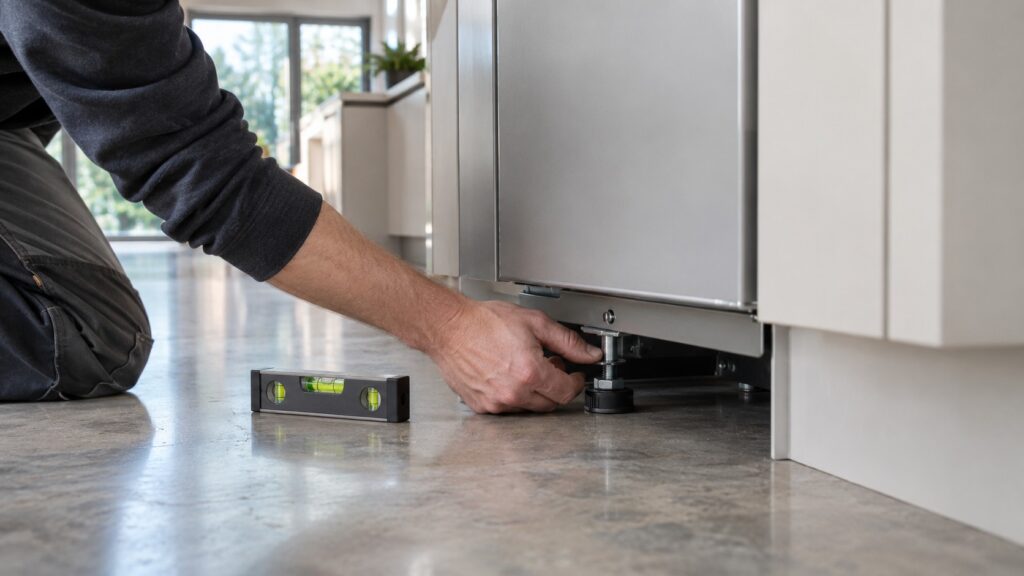
The unit stands on adjustable feet, and the instructions for your model describe how to adjust them. In general terms, you check the level front to back and side to side with a level placed on the unit, adjust the feet until it is level and steady, and check that it does not rock. Leave the adjustment to the installer if you are not sure. The unit should be square in the opening with even gaps to the cabinets on each side, so that the door swings freely and does not rub. Do not wedge shims under it and do not tilt the unit to move it.
Why does level matter for the door?
Because the door is meant to close by itself, and the seal has to meet the cabinet evenly. A unit that leans away from the door leaves it hanging open slightly, so warm air flows in and frost builds up; one that leans the wrong way makes the door swing shut too hard. Our defrost and maintenance guide treats frost as something to look into when it keeps building, and a door that does not close fully is a common cause. After leveling, open the door halfway and let go: it should move toward closed without being pushed. Check the seal with a strip of paper at several points.
What about power and water?
The freezer needs the supply specified for the model, on a correctly protected circuit, and an extension cord is not a substitute. Our refrigerator guide says the manufacturer prohibits extension cords, and the same sense applies to a freezer. If ice and water is fitted, a water line is needed; use a dedicated shutoff valve and a line of the type the instructions specify, and flush it as the manual describes. Electrical and plumbing connections should be made by qualified people. Do not turn the freezer on until the instructions say it is safe to do so.
What should you check after installation?
Look at the gaps, check that the door closes by itself and that the panel (if fitted) is aligned. Switch the freezer on and set the temperature as described in our freezer temperature settings guide, then let it settle before loading it with food. Check the temperature with a separate thermometer after it has stabilized. If it shows a high temperature alarm, see the high temperature alarm guide. Do not load a lot of warm food at once. If anything is out of square or the freezer runs warm, call us; our Fisher & Paykel freezer repair page explains how a visit works.
A few practical points round this out. Keep the instructions and the installer’s notes with your other home documents, since they tell a technician how the unit was fitted. If you move a column unit for floor work or cleaning behind it, have the level rechecked afterward. Do not store items on top of the freezer that cover a vent, and do not lean on an open door, since a heavy column with a loaded door can be pulled out of level. If you notice the unit has started to rock or the door no longer closes by itself, treat it as an installation problem first.