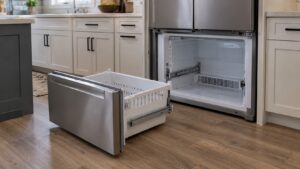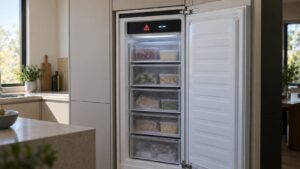
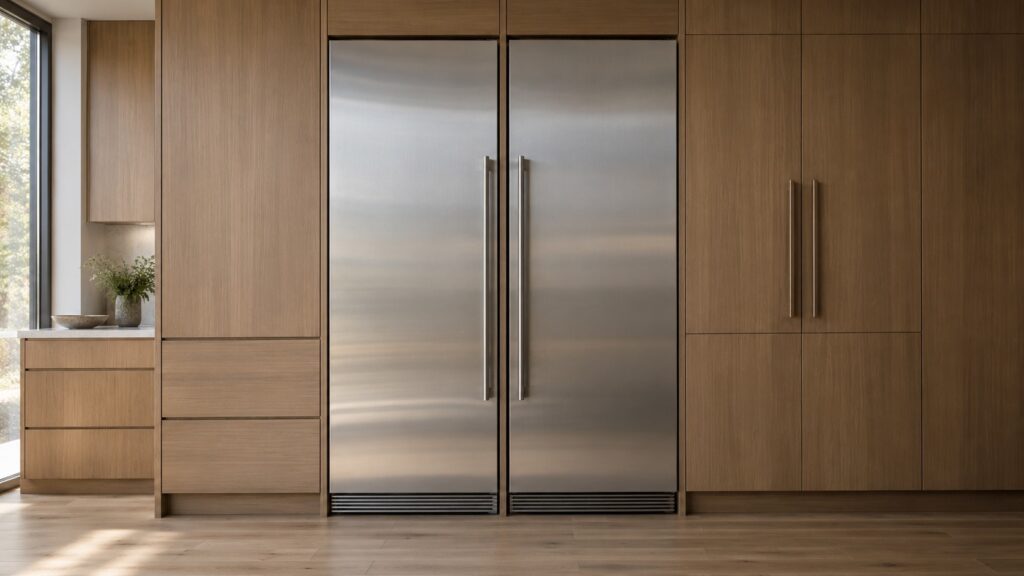
For a Fisher Paykel freezer repair or replace decision, the short answer is to repair when the fault is a part such as a fan, a sensor, a defrost component, an ice maker or a door seal, and to think about replacing only when the sealed cooling system has failed, the cabinet is damaged, or repairs keep returning on an old unit. The freezers on our model list are integrated RS columns, 18, 24 and 30 inches wide, built into cabinetry and paired with a matching refrigerator column. That built-in design changes the math, because replacing one is rarely a simple swap.
Why is a built-in freezer harder to replace than a standalone one?
A freestanding freezer can be wheeled out and another wheeled in. An integrated column is built into a run of cabinets, usually finished with a custom or stainless panel and sized to the opening. Replacing it means matching the width, the hinge side and the panel, and often the paired refrigerator column so the two still look like one wall. If the replacement is a different size or style, a cabinet maker may have to modify the surround, and that cost can outweigh the price of the freezer itself.
That is why a repair that restores a healthy cabinet is usually the better first move. Our integrated column freezer buying guide explains the sizes and the pairing, which helps you see what a replacement would involve before you decide.
Which freezer faults are usually worth repairing?
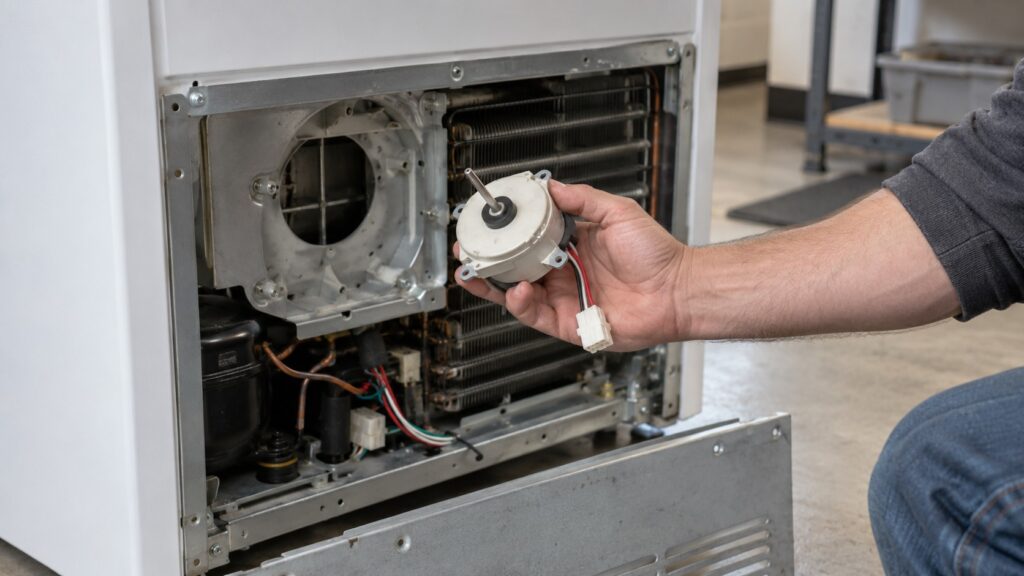
Most freezer problems are parts, not the cabinet. A failed evaporator fan is a classic: code 17 on an ActiveSmart column means the fan is drawing less current than expected, and the usual signs are warm spots, fan noise and weak freezing. Defrost components, which melt the frost from the cooling coil, can fail and let an ice wall form. Sensors can misread, ice makers can jam, and a worn door gasket can let humid air in. Each of these is a contained repair with a clear cure.
If the freezer is not freezing, do not assume the worst. Our page on the freezer not freezing condition shows how the causes are separated, and the guide to troubleshooting a freezer that is not freezing goes through the checks. A technician can usually tell fan, defrost and sensor problems from a sealed-system problem in a single visit.
When does replacing make more sense?
The balance tips toward replacement when the failure is in the sealed refrigeration system: a failed compressor, a refrigerant leak or a blocked line. Those repairs are specialized and expensive, and on an older unit they can approach the cost of a new one. Replacement is also worth thinking about when the liner is cracked or the cabinet is damaged, when the freezer has needed several unrelated repairs in a short time, or when its age is already at the far end of what the family expects.
Age alone is not a verdict. A well-kept freezer past ten years can still be a good machine, and a newer unit with a recurring fault can be worse value than an older one that has been steady. Our appliance lifespan guide gives general ranges to help you judge where yours sits.
How do repair and replacement costs compare in words?
A part swap is usually far cheaper than a new unit, and on a built-in column the gap is wider because replacement can pull in carpentry, a new panel and sometimes the matching refrigerator column. A reasonable rule of thumb is to compare the repair estimate with what a replacement would cost all in, including installation and any work on the surround, rather than with the sticker price of the freezer alone. If the repair is a small fraction of that total, repair wins on money and on disruption.
Do not forget what a failing freezer already costs you: spoiled food, ice maker problems and the stress of watching the temperature. If the freezer holds temperature again after a repair and the cabinet is sound, you have solved the problem for far less than a new built-in. If you are unsure, ask for the diagnosis first, because naming the failed part is what makes the decision clear.
What should you do before deciding?
Write down the symptoms, the display codes and the model and serial numbers, which are on a plate inside the cabinet. Move food to another freezer or cooler if the temperature is climbing. Check the simple things: the door closes fully, the gasket is intact, the vents are not blocked by packed food and the unit is not too close to a heat source. Try the two-minute unplug-and-reset that the owner is allowed to do, and note whether the code comes back.
Then have it diagnosed. A technician can test the fan, the defrost parts and the sensors, and tell you whether the sealed system is involved. For a hands-on look, see Fisher Paykel freezer repair, and keep our guide to the freezer high temperature alarm handy if the alarm sounds before anyone arrives.