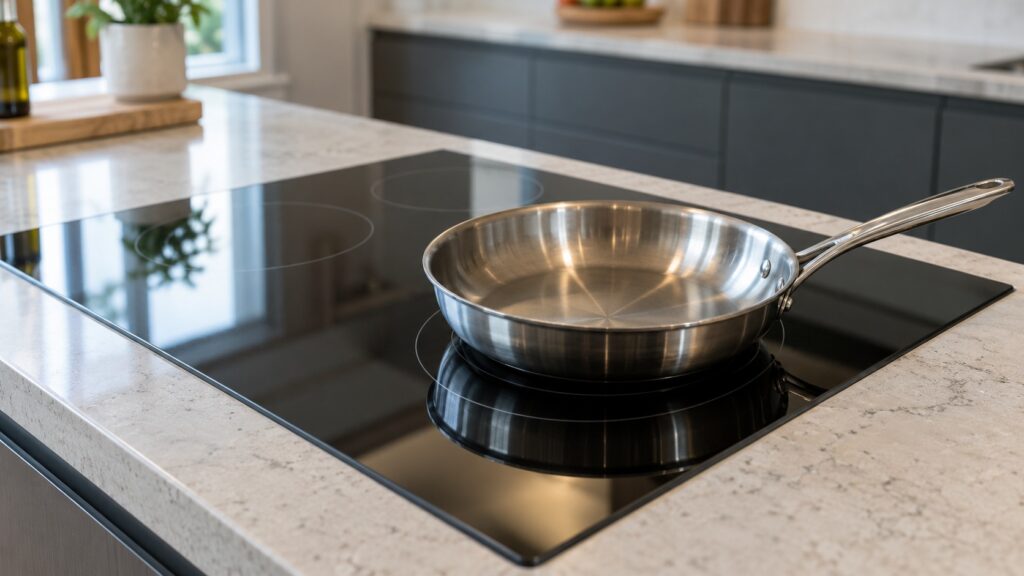
The Fisher Paykel induction cooktop 30 vs 36 inch question comes down to how many pots you cook with at once and how much counter you can give up. On the model list the CI304 family is the 30-inch cooktop with four zones, and the CI365 family is the 36-inch cooktop with five. Both are drop-in electric induction cooktops with touch controls and a smooth glass top, so the width, the zone layout and the circuit behind the cabinet decide the purchase far more than the technology does.
What is the real difference between the 30-inch and 36-inch models?
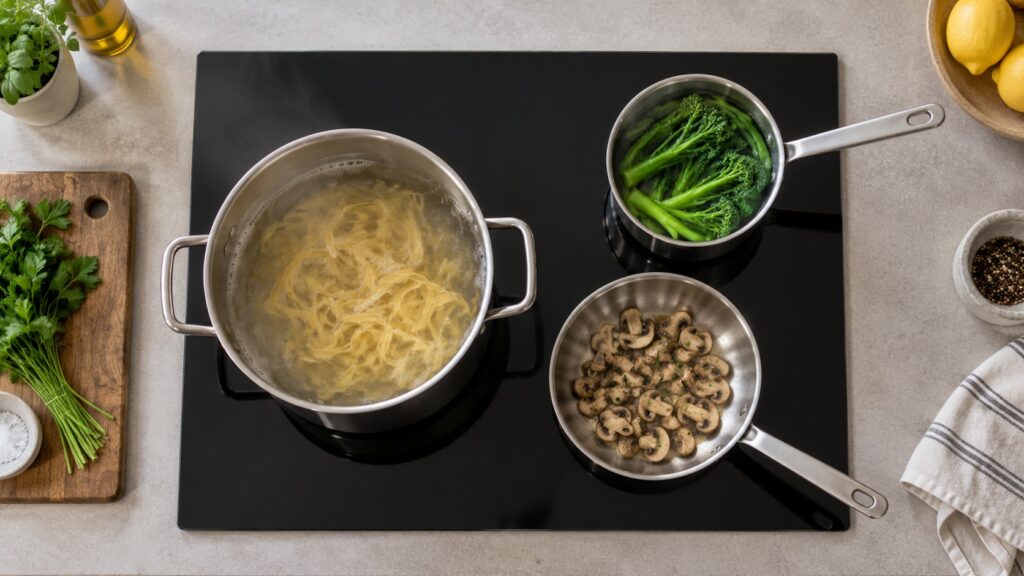
The width is the obvious difference, but the practical one is the number of zones. A 30-inch CI304 gives you four cooking zones, which covers a household that usually cooks one main dish with a side or two. A 36-inch CI365 gives you five zones and more room between them, so a large stockpot, a wide skillet and a small saucepan can sit on the glass together without crowding each other’s controls.
The rest of the experience is the same family idea. Heat is made in the pan itself by a magnetic field, the glass stays cooler than a radiant surface, and the touch controls adjust each zone separately. If you want the background on how that works, our guide to how Fisher Paykel induction cooktops work explains it in plain terms. Series and trim names change the look and some features, so always confirm what your exact number includes in the owner’s manual.
Which model families sit inside each width?
The 30-inch group on our model list includes CI304DTB2, CI304DTB4, CI304DTTB1 and CI304PTX4. The CI304DTB2 is a Series 9 cooktop with PowerBoost, the CI304DTB4 is the Series 9 four-zone layout, the CI304DTTB1 is the minimal-style version with a SmartZone, and the CI304PTX4 is a Series 7 four-zone cooktop. The 36-inch group includes CI365DTB2, CI365DTB4, CI365DTTB1 and CI365PTX4. The CI365DTB2 is a Series 9 five-zone cooktop with PowerBoost, the CI365DTB4 is a Series 7 five-zone version with a SmartZone, the CI365DTTB1 is a minimal-style touchscreen model, and the CI365PTX4 is a Series 7 five-zone cooktop with two SmartZones.
Do you need the extra zone and the SmartZone?
A SmartZone is a flexible cooking area, meant for large or oddly shaped cookware such as a griddle plate or a roasting pan that would not sit on a single round zone. If you own cookware like that, or you entertain often, a model with one or two SmartZones is worth looking for in either width. If you mostly use round pans, the plain four-zone layout is simpler and does everything you need. Our tips on Fisher Paykel SmartZone cooking show how people use the flexible area day to day.
PowerBoost is the other feature worth noticing. It appears on the Series 9 versions in both widths and gives a single zone extra power for jobs like bringing a large pot of water to a boil. It is a convenience, not a requirement, and it is one more reason to read the exact model description rather than assuming every cooktop of that width behaves the same.
What does each width need from your kitchen?
Start with the cutout, because it is the one thing you cannot change after the countertop is cut. A 36-inch model needs a wider opening and more clear space on both sides, and swapping a 30-inch cooktop for a 36-inch one usually means modifying the counter. Going the other way leaves gaps that need a new countertop section. Take the dimensions from the installation sheet for your exact model, and read Fisher Paykel cooktop installation requirements before anyone cuts stone.
The electrical supply matters as much. Every induction cooktop needs a dedicated high-voltage circuit, and larger or more powerful models can call for a bigger circuit than smaller ones. Have an electrician confirm the circuit against the rating on the installation sheet, and do not adapt a cord to a receptacle that does not match. Also check the space below: induction cooktops need airflow underneath for their cooling fans, so a drawer or oven placed too close can cause overheating shutdowns.
Will your cookware work on either size?
Both widths need magnetic cookware. A simple test is to hold a magnet to the base of each pan: if it grips firmly, the pan will work. Cast iron and many stainless steel pans pass, while aluminum, copper and glass pans on their own do not. A cooktop that cannot sense a pan will not heat the zone, which is the most common reason owners think a new induction cooktop is faulty. If you are replacing a gas cooktop, plan to check every pan you own before you commit to either width.
Pan size matters too. A small pan on a very large zone may be detected poorly, and a pan that overhangs its zone heats unevenly. The five-zone layout of the wider cooktop often includes zones of different sizes, which helps when you cook with a mix of small and large pans.
What should you know about service and repair later?
The two widths share the same display codes: E2 or EH points to a zone that overheated and shut itself off, E6 and the Er-class codes point to electronic or sensing faults. Those codes and what to do about them are covered in our guide to Fisher Paykel cooktop error codes. A wider cooktop has more zones and more electronics under the glass, which is part of why a cracked top or a failed power board deserves a careful look before you repair.
If you are still deciding between fuels, our guide on gas versus induction cooktops covers that earlier question. For help with an installed unit, see Fisher Paykel cooktop repair.