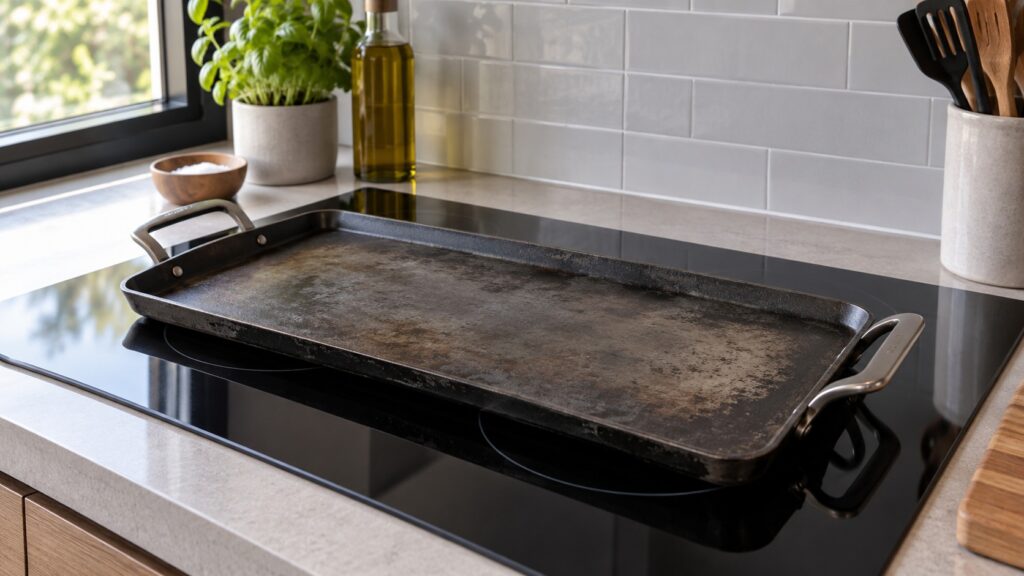
Fisher Paykel SmartZone is the feature that lets two induction zones behave as one long cooking area, and it is the one most owners under-use because nothing on the surface explains when it helps. Used well it turns an awkward pan into an easy one; used carelessly it produces uneven results and gets blamed on the cooktop. These tips cover what it actually does, when to reach for it, and what to check when it does not behave.
Reach for it when the pan is long, not when it is big
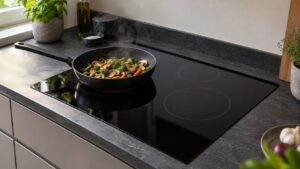
The clearest case is a rectangular pan: a griddle plate across two zones, a fish kettle, a roasting pan used on the surface for a sauce after the meat comes out. A single round zone heats the middle of those pans and leaves the ends cold; a combined area heats along their length.
A large round pan is a different story. A wide stockpot usually does better on the largest single zone, where the coil is sized for a circle, than straddling two. Judge by shape rather than by size.
Cookware decides the result
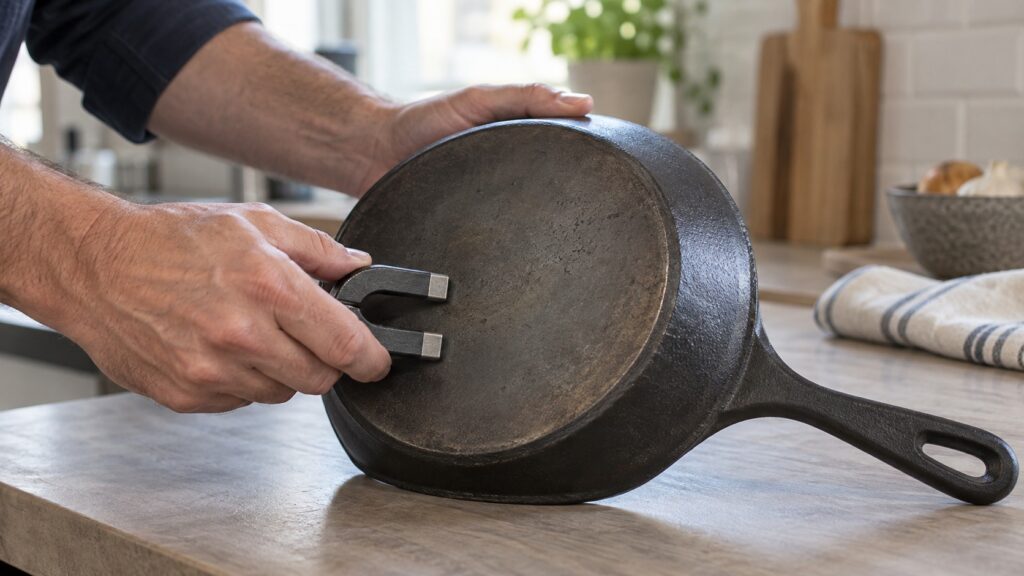
Induction only heats cookware the magnetic field can act on, so the first test is a magnet: if it grips the base firmly, the pan will work. A weak grip means weak, slow heating and a surface that may not detect the pan at all — which is the most common reason for a zone that appears not to work.
Flatness matters more in a combined area than anywhere else. A base that rocks or has warped in the middle makes contact in some places and not others, and the result is a pan that scorches at one end and simmers at the other. Cheap thin bases warp; heavy clad bases do not. If a griddle is going to live on this cooktop, it is worth buying one built for it.
Placement, and why a few inches matter
Put the pan down squarely, covering both zones, and centered between them. A pan pushed too far to one side gives the detection system a half-covered zone to think about, and the surface will either drop power or shut the uncovered half down. If a combined area keeps dropping out, look at where the pan actually sits before assuming a fault.
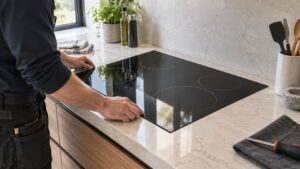
Leave the control area clear as well. Wet cloths and spilled liquids across touch controls make a cooktop behave as if it has a mind of its own — the classic case of a surface that “changes settings by itself” while a damp towel lies across it.
Cooking with a long heated area
Where a surface offers a power-boost mode, remember it borrows capacity from its neighbor: the surface manages a total budget across the whole cooktop, so boosting one area can quietly reduce what is available elsewhere. That is designed behavior and not a fault, and knowing it explains a lot of “why did that zone slow down” moments.
Noise is worth a word too, because a combined area makes more of it. Induction hums, buzzes faintly and sometimes clicks as power is shared between coils, and a large pan spanning two zones amplifies all of that. Light cookware rattles; heavy clad pans sit quietly. A surface that has always hummed at high power and still cooks correctly is behaving normally — a new noise that arrives with poor performance is the one worth reporting.
When the surface says no
An induction cooktop that shuts a zone off mid-cook is usually protecting itself or telling you about the pan. Check three things in order: the pan (magnetic, flat, big enough), the placement (squarely across both zones), and the ventilation under the counter (nothing blocking the airflow the electronics need). Only then start thinking about the appliance.
If a zone stops detecting pans that used to work, or if the same zone drops out repeatedly with good cookware, the coil or its sensing is the suspect — and our guide on an induction cooktop that is not heating covers those checks. The codes this surface can display are collected in our guide on cooktop error codes.
Cleaning without spoiling the glass
Wipe spills as soon as the surface is cool enough to touch, especially sugar — sugary boilovers etch glass if they are left to bake on. Use a cream cleaner made for ceramic glass and a soft pad, and keep abrasives and steel wool away entirely. The full routine is in our guide on cleaning an induction cooktop.
If you are buying cookware for this cooktop, buy it once and buy it flat. Heavy clad bases and good cast iron stay flat through years of heat cycles; thin stamped pans warp, and a warped base on induction is worse than on gas because contact with the glass is what transfers the heat. Take a magnet to the shop, and set the pan on a genuinely flat surface to check it does not rock before it goes in the basket.
When to call
Call when a zone will not detect suitable cookware, when a combined area cuts out with a correctly placed pan, when the surface resets or trips a breaker under load, or when controls respond erratically with a clean, dry panel. Induction coils and generators are not owner-serviceable, and the glass is unforgiving of amateur disassembly.
We are an independent repair company, not a factory service arm. Pricing starts from a diagnostic visit — from $129 — with the estimate confirmed before work begins. Fisher Paykel cooktop repair covers coils, generators, touch controls and sensors, and you can schedule a visit online.