A Fisher Paykel cooktop installation goes wrong in two places far more often than anywhere else: the electrical supply on an induction surface, and the gas type on a gas one. Both are decided before the cooktop is unpacked, both are expensive to change afterwards, and neither shows up as a problem until the appliance is in the counter and somebody is cooking on it. This guide covers what each type needs, in the order the decisions have to be made.
Induction: the supply is the whole story
An induction surface is a substantial electrical load, and it must land on a dedicated circuit sized for the rating plate on that specific model. A 36-inch surface and a 30-inch surface are not the same load, and a circuit that was fine for the old radiant cooktop is not automatically fine for the new induction one.
Symptoms of an undersized or shared supply are easy to mistake for a faulty appliance: zones that cut out under load, a surface that resets when the oven below it starts, or a breaker that trips only when two large zones run together. Before anyone blames the cooktop, the circuit deserves a look — our guide on how induction cooktops work explains why the demand is so concentrated.
Gas: the orifices decide the fuel
A gas cooktop leaves the factory set for one fuel. Running it on the other without changing orifices gives either a lazy yellow flame that soots pans or an aggressive flame that damages burners, and neither is adjustable away with the knob. If the house is on propane, the conversion must be done by someone qualified, with the correct kit for that model.
High-output burners deserve their own line here. A wok burner rated at 20,000 BTU is not just a bigger flame — it is a bigger demand on the gas supply, and it wants a supply line and regulator that can feed it while other appliances are running. A burner that goes lazy only when the furnace fires is a supply problem, not a burner problem.
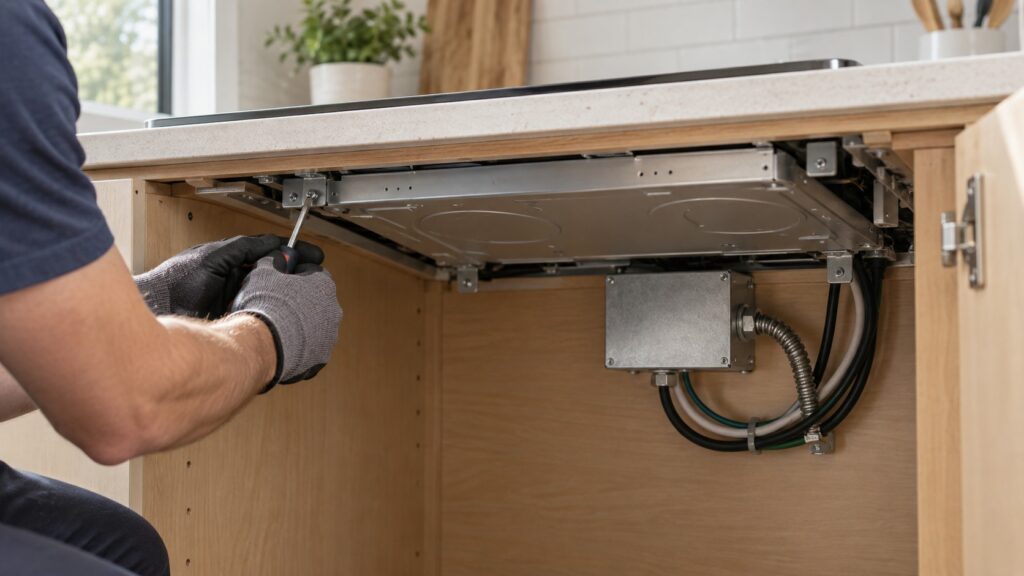
The hole in the counter
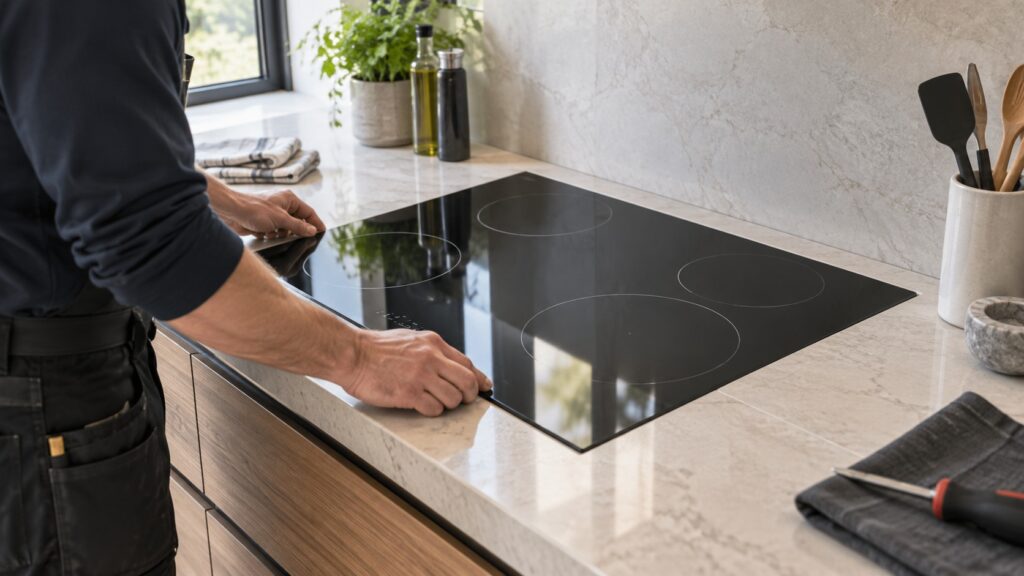
Cut to the dimensions in the installation manual for that model, not to the dimensions of the old appliance. Support the cut edges in stone and engineered surfaces — a long unsupported span in front of a cutout is where cracks start, usually months later and never under warranty.
Check the depth as well as the outline. Induction surfaces carry electronics under the glass, and there has to be room for them along with the specified clearance to whatever sits below, whether that is a drawer, an oven or a cabinet floor. A drawer that touches the underside of the appliance is not an inconvenience — it is a heat problem waiting for a summer.
Ventilation and the cabinet below
Overheating protection on an induction cooktop is real and it works: a surface that shuts a zone down mid-cook, then recovers a few minutes later, is often being smothered rather than failing. That behavior is listed among the codes and states described in our guide on cooktop error codes.
Downdraft and hood planning belongs in the same conversation as the cutout, because both compete for the same space. A hood needs its duct run decided before the cabinetry is built, and a cooktop sited under a window or on an island changes what is possible. Deciding that on installation day is how kitchens end up with a beautiful surface and nowhere for the steam to go.
Commissioning: twenty minutes that prevent a call-out
On an induction surface: run every zone to a high setting with a suitable pan, one at a time and then two together, and check that nothing trips. Confirm the zones detect a pan promptly and that the controls respond to a dry finger. On a bridged or combined cooking area, test it in bridged mode too, because that is the heaviest single load the surface can present.
On a gas surface: light every burner, check each flame is blue and stable at high and at the lowest simmer, and confirm each burner relights promptly. Check for smell at every joint with leak solution, never a flame. Then load a heavy pan onto each grate and make sure nothing rocks.
Write the model and serial number somewhere safe before the cabinet doors go back on. Half of all first service calls start with fifteen minutes of hunting for a rating plate that is now behind a drawer.
Finally, know who signs off on the work. A gas connection and a dedicated circuit are both trades that carry local requirements, and in many jurisdictions the work is inspected. Keep the paperwork — the electrician’s certificate, the gas fitter’s details, the appliance manual with the installation date — inside a kitchen cabinet. It costs nothing at the time and it answers three questions on the first service call, on a resale inspection, and on any warranty conversation later.
When to call
Call when a newly installed induction surface trips a breaker or drops zones under load, when a gas burner will not hold a low flame after installation, when a zone shuts itself off repeatedly, or when you would rather have the supply confirmed before a new appliance is fitted. Gas conversions and dedicated circuits are work for qualified trades, and a cooktop is the wrong place to learn.
We are an independent repair company, not a factory service arm. Pricing starts from a diagnostic visit — from $129 — with the estimate confirmed before work begins. Fisher Paykel cooktop repair covers induction coils and generators, electrodes, igniters, valves and controls, and you can schedule a visit online.