
Why Heat Pump Dryers Need Special Maintenance
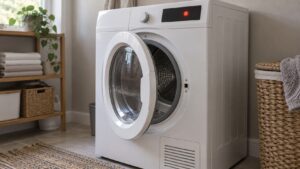
Good fisher-paykel heat pump dryer maintenance comes down to one idea: nothing leaves the machine, so everything has to be cleaned out by hand. Unlike a vented dryer that blows lint and moisture outdoors, a Fisher & Paykel heat pump model recirculates warm air in a sealed loop, condensing the moisture and reusing the heat. That efficiency is why it sips energy — but it also means lint, mineral scale, and condensate stay inside until you remove them. The steps below keep the heat pump system breathing freely.
Clean the Lint Filters After Every Load
Fisher & Paykel heat pump dryers have two lint filters — the standard door filter and a secondary filter in the lower access panel. Both should be cleaned after every load or at minimum every other load. A clogged filter reduces airflow, extends drying time, and makes the heat pump work harder.
Clean the Heat Exchanger Monthly
The heat exchanger is the core component of the heat pump system. On most Fisher & Paykel models, it’s accessible behind a lower access panel on the front of the dryer.
- Open the lower access panel
- Release the heat exchanger cover latches and remove the cover
- Gently pull out the heat exchanger filter/screen
- Rinse it under running water to remove lint and mineral deposits
- Let it dry completely before reinserting
- Use a vacuum to clean any lint from the heat exchanger compartment
- Replace the cover and close the panel
Empty the Condensate Tank
Heat pump dryers collect moisture in a condensate tank rather than venting it outside. Empty this tank after every load or at least every other load. If the tank overflows, the dryer will pause mid-cycle and display a “tank full” indicator. If you have a floor drain nearby, you can connect the dryer’s condensate drain hose directly to it, eliminating the need to empty the tank manually.
Run the Self-Cleaning Condenser Cycle
Some Fisher & Paykel heat pump models have an automatic condenser cleaning function that rinses the heat exchanger with condensed water. If your model has this feature, it runs automatically — but it’s not a substitute for monthly manual cleaning of the lint filters.
General Care
- Don’t overload the dryer — heat pump dryers need space for air circulation. Fill to about 75% of rated capacity for best results.
- Shake out items before loading to remove loose lint and debris
- Leave the door slightly open between loads to prevent musty odors
- Wipe the drum and door seal with a damp cloth monthly
- Check the drum for small items (coins, buttons) that fell through the lint filter
Drying Taking Longer Than Expected?
If drying times have increased despite cleaning the filters:
- Check that the room temperature is above 60°F — heat pump dryers are less efficient in cold environments
- Ensure adequate ventilation in the laundry room — the dryer needs to exchange air with the room
- The heat exchanger may have mineral buildup that requires professional cleaning
If basic maintenance doesn’t resolve extended drying times, schedule a service visit. Our technicians can deep-clean the heat exchanger and test the heat pump refrigerant system.
fisher-paykel heat pump dryer maintenance: a simple rhythm
Build fisher-paykel heat pump dryer maintenance into your laundry habits and the machine rewards you with steady, low-cost cycles for years. Filters after each load, heat exchanger once a month, condensate tank emptied before it backs up — that cadence handles the vast majority of slow-drying complaints. When performance still lags after a full clean, the sealed refrigerant circuit is sealed for a reason and needs a technician with the right gauges; heat pump dryer service starts from $99 depending on the diagnosis.
Sourcing Parts When Something Wears Out
Even a meticulously maintained heat pump dryer eventually needs a replacement filter screen, drum seal, or sensor. Before reaching out, note the model and serial number from the rating plate — on these units it’s usually inside the door opening or behind the lower access panel. Passing those numbers along lets the correct part be matched through trusted suppliers ahead of time, so the repair gets done in a single visit rather than two.