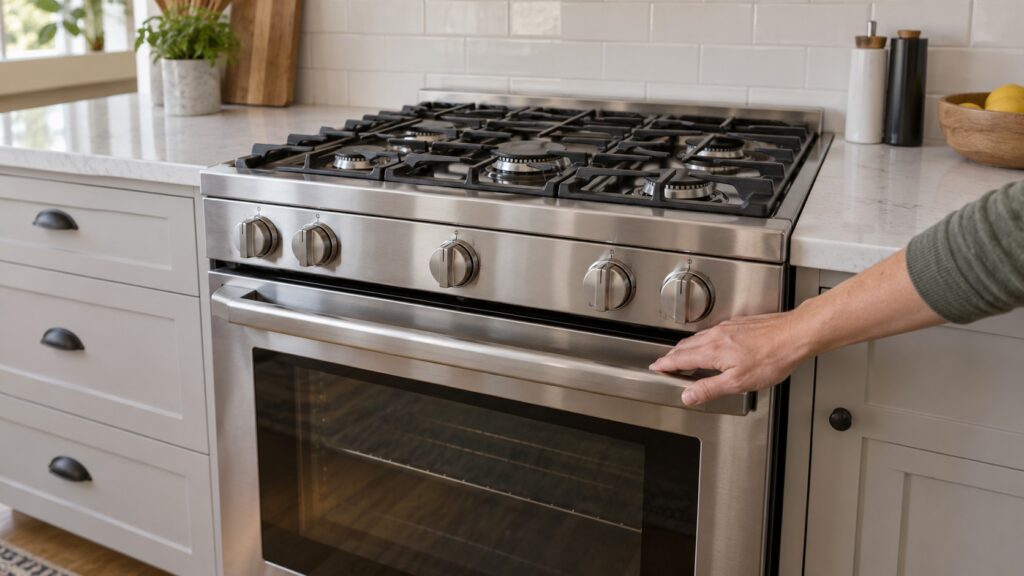
A Fisher Paykel range repair or replace decision should follow the fault, not the age alone. A range is an oven and a cooktop in one cabinet, and each half is built from a few durable pieces and a handful of replaceable parts: igniters and electrodes, burners and valves, elements, sensors, fans, seals and electronics. When one of those fails and the range is otherwise sound, repair returns it to full service for far less than a new range plus installation. Replacement starts to make sense when several major parts fail together, when the cavity, door or cooktop is damaged, or when the same fault keeps returning.
Is the problem the cooktop, the oven or both?
That is the first question, because the two halves fail for different reasons and are repaired separately. A burner that will not light or goes out is a cooktop problem; our burner not igniting guide says the cause narrows to the igniter electrode, the spark module, the cap alignment or the gas supply, and that gas valves need professional diagnosis. An oven that does not heat or holds the wrong temperature is an oven problem; see our oven heating problems guide and the range oven won’t heat page. If both halves are affected at once, check the power and the supply first.
When is a range worth repairing?
Our oven repair or replace guide explains that a failed igniter, element, sensor, fan, door seal or control module in an otherwise sound oven is usually worth repairing, because a part swap is typically far cheaper than a new built-in oven, and the same logic applies to a range. The cavity, the door frame and the cooktop body rarely wear out in normal use, while igniters, electrodes, seals and electronics do. If the range is in good condition, a single fault is almost always a repair. Many problems also turn out to be maintenance, such as a wet cap or clogged ports, which a clean fixes; see our range cleaning guide.
Does the fuel type change the answer?
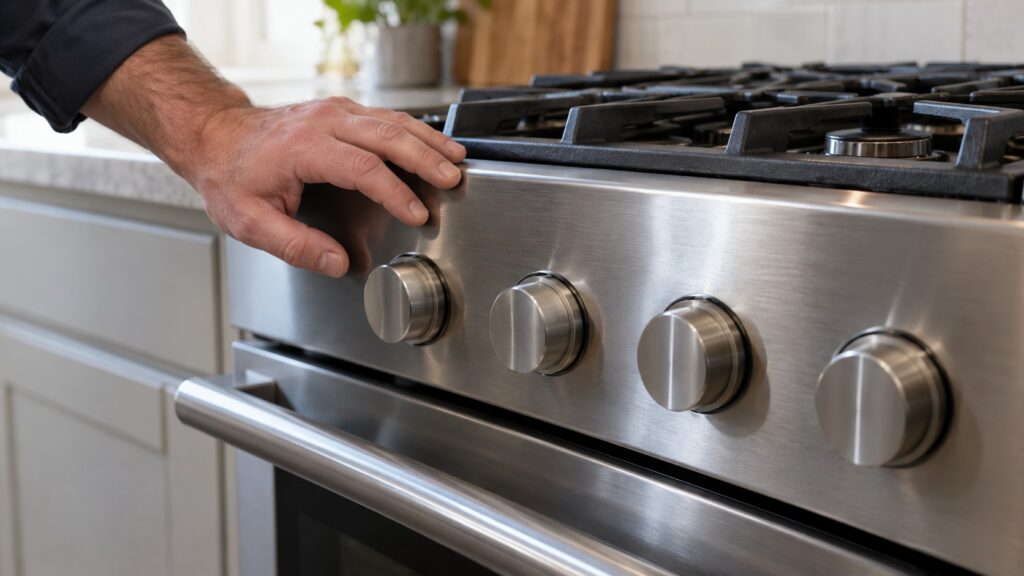
Yes, in what can be repaired and by whom. Our pages describe gas and dual-fuel ranges, and a gas range involves gas valves and connections that only a qualified technician should touch. Electric heating elements and sensors are simpler parts. Our gas vs electric range guide explains the differences, and our range installation checklist is worth reading before any replacement, since a different fuel type or size changes the installation. A replacement range that needs a different gas or electrical setup adds cost and work.
What points toward replacing the range?
Several major systems failing at once, such as a failing oven control together with a damaged cooktop and corroded burners; a cracked glass door with failing electronics; a warped door or rust in the cavity; repeated returns of the same fault after repair; or a repair estimate that approaches the cost of a new range. Think about the cutout and the cabinets too: a replacement has to fit the space, match the gas or electrical supply and the venting, and be installed by qualified people. Our oven and range repair cost guide explains how we handle estimates, and we do not quote figures here.
What should you gather before deciding?
Take the model number from the rating plate and note the age if you know it. Write down exactly what the range does and does not do, which burner or which oven function, and whether the problem is constant or only after a clean or a spill. Note any code on the display and what the oven does after a power cut. A clear description lets a technician diagnose faster, and it makes the comparison with a replacement meaningful. Our oven F1, F2 and F3 error codes guide explains the code families on the oven side.
When should you call a technician?
Call when a burner will not light after cleaning, when the oven does not heat or holds the wrong temperature, when a code returns, or when anything about the gas side looks wrong. If you smell gas, do not turn anything on or off, keep flames away, leave the house and call your gas company or 911 from outside. Our Fisher & Paykel range repair page explains how a visit works.
What should you ask a technician?
Ask which part failed and which half of the range it belongs to, whether the fault is likely to recur and whether the replacement part is one that fits your model. Ask what else was checked while the technician was there, such as the other burners, the oven seal and the igniters, and whether anything else looks near the end of its life. Ask for an estimate before work begins and compare it with a replacement range that includes delivery, installation and any gas or electrical changes. A written estimate turns a vague worry into a number, and a technician who has the range open can usually tell you honestly whether it is worth putting more money into it.
If the range is the heart of a kitchen you have built around it, the finish, the fit and the cutout are worth a lot. A replacement that does not match the opening can mean carpentry, new trim and a different supply. On the other hand, a range that has been repaired several times in a short period, or has a failing control and a damaged cooktop together, is a candidate for replacement. Be honest about which of those describes yours.