Fisher Paykel gas cooktop cleaning is mostly about the burners, because a dirty or wet burner is the most common reason for a flame that will not light, a weak flame or a burner that clicks and clicks. Our range maintenance guide describes the sealed burners on Fisher & Paykel gas ranges as a cap and base with an igniter electrode beside them. The job is simple: keep them clean, keep them dry and put the caps back flat. This guide explains the routine, the mistakes that cause trouble after cleaning and the point where a technician is the right answer.
How do you clean the burner caps and bases?
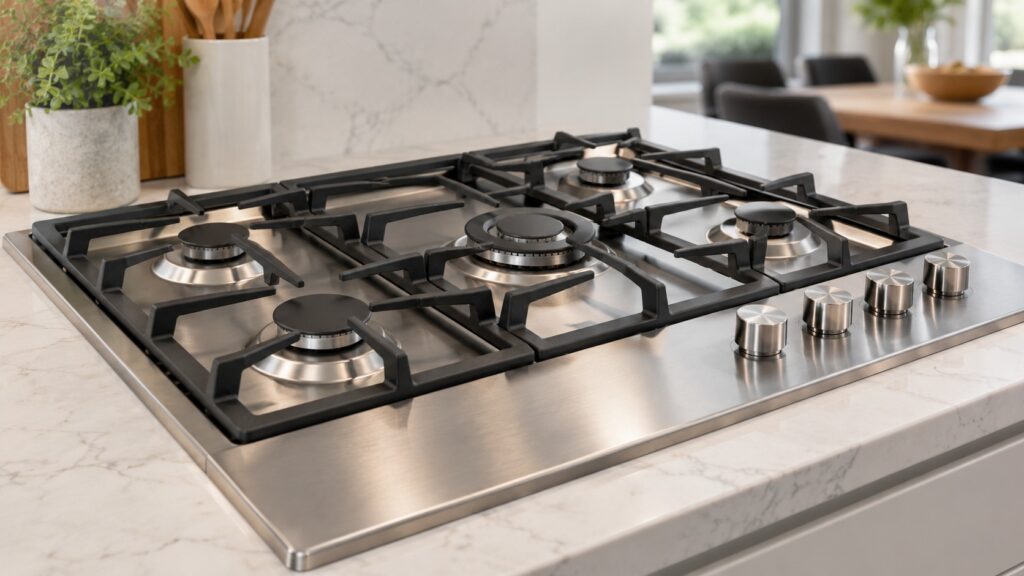
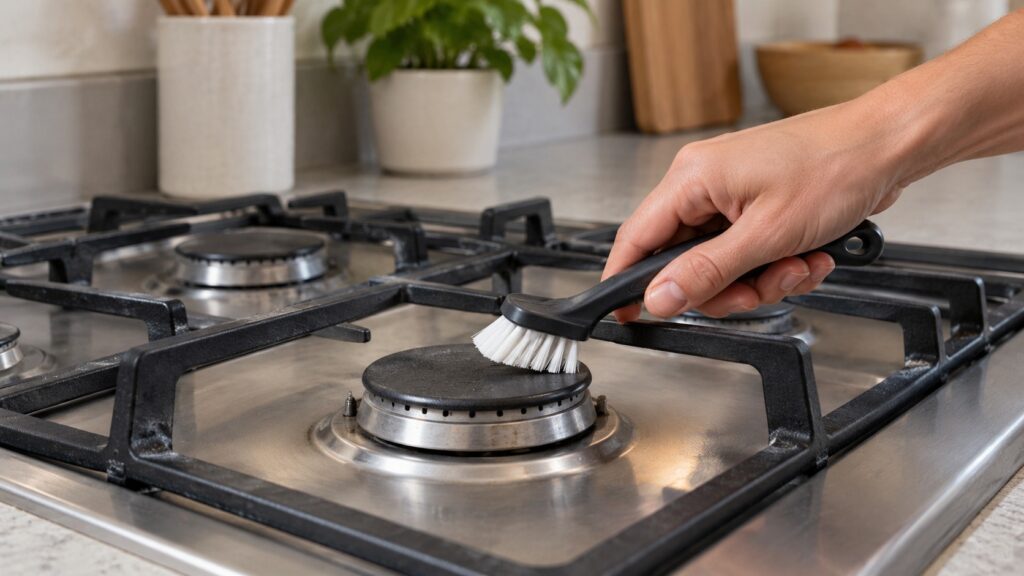
Switch off all the burners and wait until the cooktop is completely cool. Lift the grates away, then lift each burner cap straight off. Our range cleaning and maintenance guide says to clean the cap and the burner base with warm soapy water and a nylon brush after every major spill. Rinse the cap, shake off the water and dry it thoroughly, because a cap that goes back on wet can stop the burner igniting. Wipe the base with a damp cloth, taking care not to push water or debris into the openings. Do not use steel wool or abrasive pads on the caps, and do not put them in the dishwasher unless your manual says they can go.
How do you clear the ports without making things worse?
The small ports around the burner head let gas out, and boiled-over food and grease can block them. The range guide suggests clearing them with a straightened paper clip, and our burner not igniting guide advises a straight pin or needle and warns against a toothpick, since wood can break off and worsen the clog. Work gently, only at the port openings, and never push anything into the gas supply opening or the area under the burner base. Brush away loosened debris and wipe the base. If a port is still blocked after a careful clean, stop rather than forcing it.
What about the igniter electrode?
The electrode is a small, ceramic-tipped part beside each burner that makes the spark. Keep it clean and dry: wipe the tip with a dry cloth or a soft brush if you see food residue, and do not wet it or use cleaner on it. Our burner-ignition guide says a cracked electrode or one with heavy residue will not spark reliably. If the ceramic is cracked, do not bend it or try to repair it. An electrode that is damaged needs replacing by a technician. The burner and the electrode have to sit in the right relationship for the spark to reach, which is why the cap has to go back flat and aligned.
How do you put it back together?
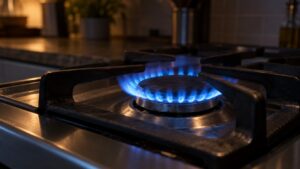
Make sure everything is dry. Place each burner cap back on its base and check that it sits flat and aligned: you should feel it settle into position. A tilted cap disturbs the flame and can stop the spark reaching the gas, as the ignition guide explains. Put the grates back and make sure they sit evenly. When you next use a burner, following your manual, you should see a steady ring of blue flame all round. If the flame is uneven or lifts, switch the burner off, let it cool and check the cap and the ports again. If a burner does not light and you smell gas, do not turn anything on or off, leave the house and call your gas company or 911 from outside.
What does it mean if a burner will not light, clicks or goes out after cleaning?
A burner that clicks but will not catch after cleaning is usually damp, has a cap that is not seated or has a port that is still partly blocked. Give it time to dry completely. A flame that lights and then dies when you let go of the knob is a different symptom, linked to the flame-failure safety device, and our gas flame goes out page explains it. The gas burner won’t light page covers the clicking case. If you smell gas, do not turn anything on or off, leave the house and call your gas company or 911 from outside.
When should you call a technician?
Call if a burner still will not light when it is clean, dry and seated, if the electrode is cracked, if the flame is yellow or lifting after cleaning, or if anything about the gas side looks wrong. Gas valves, spark modules and connections are not owner jobs. Our Fisher & Paykel cooktop repair page explains how a visit works. For the broader choice between gas and induction, our gas vs induction guide may help.
How often should you clean the burners?
Wipe spills as soon as the cooktop is cool, and give the burners a proper clean after every major boil-over. Even without a spill, a routine clean of the caps and ports now and then keeps a flame even. Cast iron grates should be hand washed and dried to prevent rust, as the range guide advises, and the stainless surround cleaned with the grain. If you cook with a lot of oil or sugar, expect more frequent cleaning, and keep the lid or a splatter guard to hand to protect the burner heads while you cook.