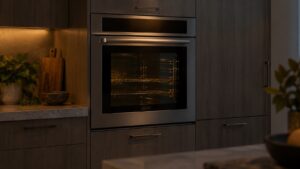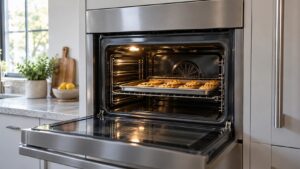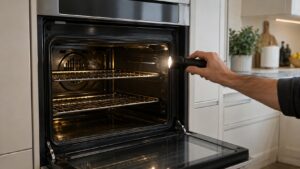
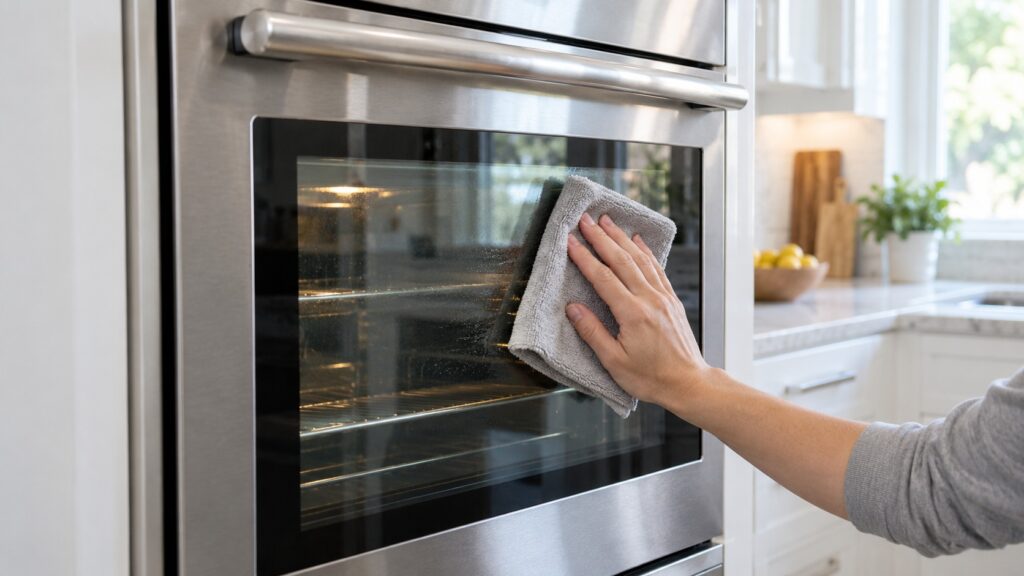
Fisher Paykel oven door cleaning is a cold, gentle job. Wait until the oven is completely cool, wipe the outer glass with a soft cloth and mild soap and water or a non-abrasive glass cleaner, follow your owner’s manual for the inner glass, and keep liquid away from the door seal and the vents. The door is heavy, the glass has sharp edges and the way it is built differs between models, so there is no need to take it off for ordinary cleaning. A light, regular wipe keeps the glass clear for far longer than an occasional hard scrub.
Why does an oven door glass get dirty?
Splatter, grease vapor and smoke condense on the glass, which is cooler than the cavity, and bake on every time the oven runs. The outside collects fingerprints and cleaner residue, and the inside gets the greasy film. Self-cleaning does not fully solve it: our range self-clean guide explains that the cycle turns residue in the cavity to ash, but the glass and the door frame still need separate attention, and our range cleaning and maintenance guide lists the door glass among the surfaces to care for.
How do you clean the outside of the glass?
With the oven off and cool, wipe the glass with a soft cloth dampened with warm water and a few drops of mild dish soap. Wipe again with a clean damp cloth to remove soap and dry with a microfiber cloth to avoid streaks. For stubborn fingerprints or grease, a non-abrasive glass cleaner works, used as the label directs: spray it onto the cloth, not the door, so liquid does not run into the edges. Wipe in straight lines. Avoid steel wool, razor scrapers and scouring powder, which scratch the glass and can create weak points. Do not use commercial oven cleaners on the glass or the door trim unless your manual says it is safe.
What about the inside of the glass?
The inner glass is where the baked-on film collects, and how you reach it depends on the door’s design. Some doors allow a cloth to reach the inner face from the cavity opening, and some have a design that can be opened for cleaning. We do not give steps for taking a door off or opening it, because the door is heavy, hinges differ and a wrong move can hurt you or damage the oven. Follow the cleaning section of your owner’s manual. If it shows no owner access to the space between the panes, leave that to a technician, who can do it safely and refit the door properly.
How do you protect the seal, the vents and the trim?
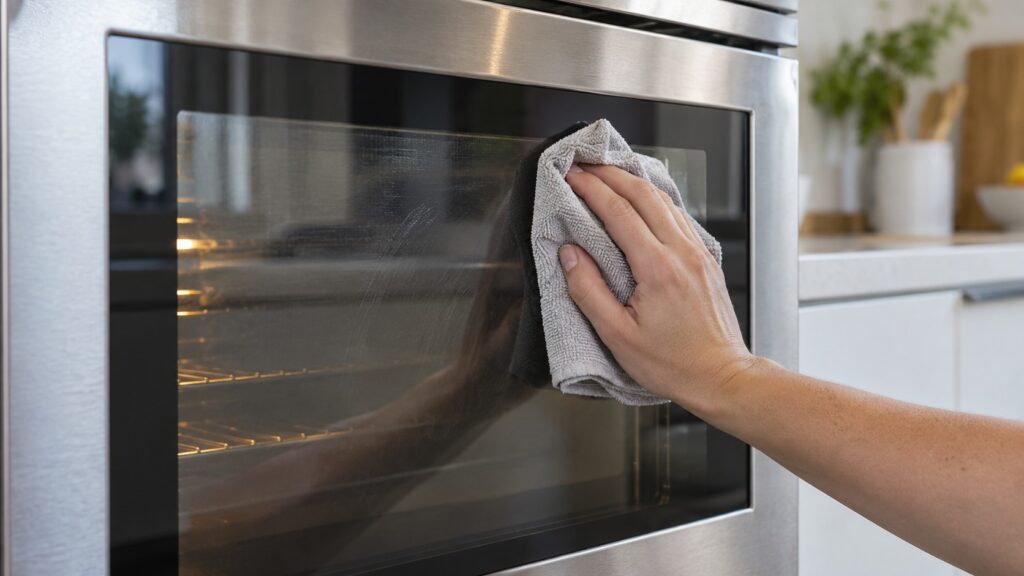
The seal keeps heat in and the vents let air move through the door, so soaking either with cleaner shortens their life or fills them with residue. Keep the cleaner on the cloth and use a dry cloth near the edges. Wipe the stainless frame with the grain, using a soft cloth dampened with warm water and a little mild soap, and dry it. Do not scrub the seal, use solvents on it or pull at it. Look at it as you clean: a seal that is torn, flattened or pulled out of position lets heat escape and should be checked. Our oven noises guide and the oven door locked page cover other door-related symptoms.
How do you keep the glass clear for longer?
Wipe up spills when the oven has cooled, use a roasting pan with sides high enough to catch splatter and cover fatty dishes loosely. Do not line the cavity with foil unless your manual says so, since foil can trap heat and damage the enamel; the self-clean guide warns against it. Wipe the glass lightly and regularly, rather than waiting for a heavy film. Use the self-clean cycle only when the cavity needs it, and before you run it, remove racks and loose debris as the guide describes. A light, frequent wipe is gentler on the glass than a hard scrub twice a year.
When is it more than dirt?
If the glass is cracked or chipped, stop using the oven and call a technician, because heat can make a damaged pane worse. If a film remains between the panes or you see moisture there, the cause is not something you can wipe away. If the door no longer closes flush, sags or the seal looks damaged, have it checked. Do not take the door apart and do not run a cracked door in self-clean. Our Fisher & Paykel oven repair page explains how a visit works, and our oven repair or replace guide helps if a damaged door has you wondering whether the oven is worth fixing.
It is also worth cleaning the handle and the control area near the door at the same time, using the same soft cloth, because grease transfers from hands to everything around the door. Check that the handle is firm. When you finish, open and close the door slowly: it should move smoothly, close flush and latch. If it sticks, drags or does not close properly, do not force it.