A Fisher Paykel induction cooktop repair decision usually turns on one question: is the glass intact? Almost everything else on these surfaces is a replaceable component inside a sound appliance, and almost nothing about induction wears out with age the way a compressor or a motor does. This guide sets out which faults are worth fixing, where replacement genuinely makes sense, and what a like-for-like swap actually costs once the countertop is involved.
Glass first, because it settles the question
A crack in an induction surface is not a cosmetic blemish to be lived with. The glass is the barrier between liquids and the electronics beneath, and a crack that starts small grows with every heat cycle. It also makes the surface unsafe to use. On many models the glass and the frame are supplied as an assembly rather than as a pane, which puts the part cost close enough to a new appliance that replacement usually wins.
So check the glass carefully, in raking light, before anything else. If it is sound, you are almost certainly in repair territory, whatever the symptom.
One zone dead: the cheapest serious fault
A single zone that no longer heats while its neighbors work is a coil, a connection or the module that drives that coil. All three are repairs, and none of them says anything about the health of the rest of the appliance.
Before booking anything, rule out the pan and the placement — a zone that stopped working the week you bought a new saucepan is almost certainly a cookware problem. Our guide on an induction cooktop that is not heating walks the owner-checkable part of that.
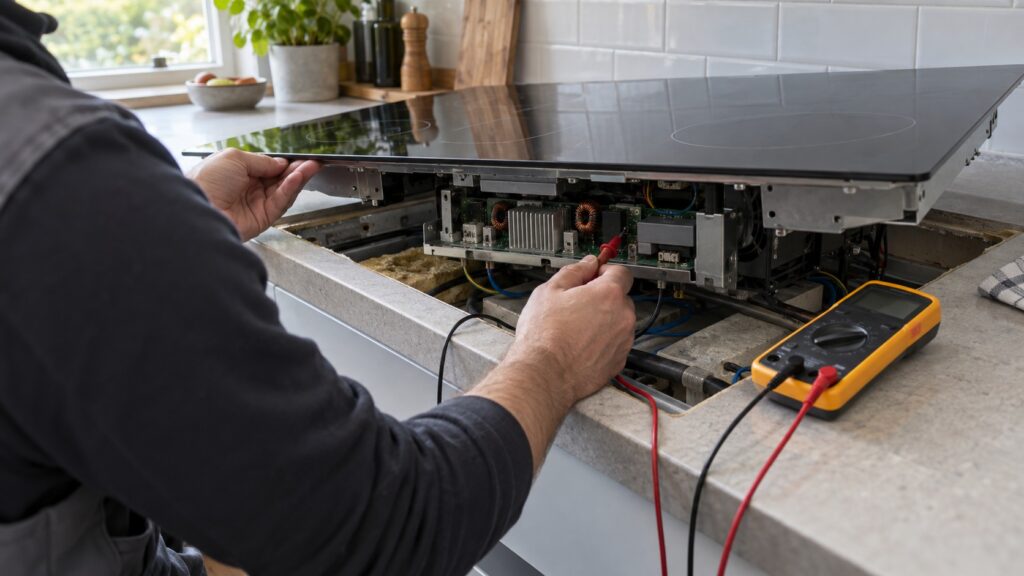
Faults that look terminal and are not
The codes on these surfaces separate a genuine hardware fault from a protective state remarkably well, and our guide on cooktop error codes explains the families. Read the code before reading a price list — it is the single best predictor of what the visit will cost.
What replacement really involves
A like-for-like swap into an existing cutout is the easy case: disconnect, lift out, drop in, connect. Everything else is a project. A different width means countertop work, and in stone that means a fabricator. A different depth or a different underside layout can mean cabinetry. And if the new surface draws more current than the old one, the circuit may need attention — the requirements are covered in our guide on cooktop installation requirements.
None of that is a reason to keep a broken appliance. It is a reason to put real numbers on both sides before deciding, rather than comparing a repair quote against a showroom sticker.
There is one more case worth naming, because it comes up after kitchen leaks and after spills that went unnoticed: water damage underneath. Liquid that finds its way past the seal at the edge of the glass reaches the electronics, and corrosion on a board is the one fault that tends to come back after it has been fixed. If a technician reports corrosion rather than a failed component, treat that repair as a shorter-term fix and let it inform the decision.
Age, and why it matters less here
Induction cooktops have no moving parts except a cooling fan. There is no motor to wear, no compressor to lose efficiency, no seal to harden. A ten-year-old surface with a healthy glass top and clean electronics is not “near the end” in the way a ten-year-old refrigerator might be, and treating it as disposable because of its birthday is how perfectly good appliances end up in landfill.
What does change with age is parts availability. Generator modules and touch boards for discontinued models eventually stop being supplied, and that — not wear — is what usually ends the life of one of these. Ask the technician directly whether the part is still available before committing.
Getting a decision you can trust
Ask for four things from the diagnosis: what failed, what the part costs, what the labor is, and whether anything else on the appliance is showing its age. A technician who has the surface out can see the state of the connections, the fan and the underside — facts that turn a coin-toss into a decision. If the answer is a single module on a sound surface, repair without hesitating: the appliance you get back is the one you chose, fitted to the counter you already have, and it will cook exactly as it did before.
Two habits extend the life of whichever surface you keep. Wipe sugary boilovers as soon as the glass is cool enough to touch, because sugar etches ceramic glass permanently once it has baked on. And keep the cabinet below clear so the cooling fans can breathe — a stack of baking sheets pushed against the underside of the appliance is the cheapest way to shorten the life of the electronics you have just paid to repair.
When to call
Call when a zone is dead with known-good cookware, when the surface shuts down repeatedly despite clear ventilation, when controls behave erratically on a dry panel, when a code returns after a power reset, or when you need an honest answer on whether this cooktop is worth keeping. Cracked glass is the one case to stop using the appliance immediately.
We are an independent repair company, not a factory service arm. Pricing starts from a diagnostic visit — from $129 — with the estimate confirmed before work begins. Fisher Paykel cooktop repair covers coils, generator modules, touch controls, fans and sensors, and you can schedule a visit online.