
A Fisher Paykel refrigerator defrost cycle is a short, automatic warm-up of the cooling coil that melts the frost the coil collects while the fridge runs. The water drains away, the coil goes back to cooling, and you never see any of it. When the cycle works, the back wall stays clean. When it stalls, frost thickens into an ice wall and cooling weakens, which is why Fisher and Paykel ActiveSmart refrigerators log it as a problem when two defrosts in a row fail to finish.
Why does a Fisher Paykel refrigerator need a defrost cycle at all?
Every time the door opens, warm moist air gets in. That moisture meets the coldest surface in the cabinet, the evaporator coil, and freezes on it as a thin layer of frost. A little frost is harmless, but a thick layer insulates the coil and blocks the airflow through its fins, so the fridge has to run longer to cool less. A frost-free refrigerator solves this by melting the frost away before it builds up, instead of asking you to empty the cabinet and defrost it by hand.
That is a different job from the airflow system that spreads cold air around the shelves. Our guide to how Fisher Paykel ActiveSmart works covers the distribution side, and the defrost cycle is the housekeeping that keeps the coil clean enough for that air to be cold in the first place.
What happens during a defrost cycle, step by step?
First the control decides it is time. It may count run time, door openings or both, and the exact logic is built into the electronics rather than something you set. Second, the cooling pauses and the defrost element warms the coil. Third, the defrost sensor watches the coil temperature rise, and when the coil is warm enough that the frost must be gone, the control ends the cycle. Fourth, the meltwater runs down a drain to a pan or evaporation area at the bottom of the cabinet, and cooling resumes.
You may notice small signs that a cycle is running: a soft sizzle or dripping sound, a brief pause in the fan, or a slight, temporary rise in freezer temperature. These are normal. What is not normal is a cycle that never finishes, which is the situation behind code 2.
What does Fisher Paykel code 2 have to do with defrosting?
On an ActiveSmart refrigerator, code 2 means the previous two defrost cycles were aborted. The system started to defrost but did not complete the job, which usually points at the defrost element or at the sensing that tells the control when to stop. Because frost keeps growing while cycles fail, the code is worth taking seriously even if the fridge still feels cold. Our page on refrigerator error code 2 explains how the code is shown and what the owner can try.
The internal power module sits behind a panel, so most numbered problems are technician-level. The only owner action for these codes is a two-minute unplug-and-reset, followed by watching whether the frost returns.
What goes wrong when the cycle stops working?
Four things account for most frost problems. The defrost element can fail, so it never warms the coil. The defrost sensor can misread, so the cycle ends too early or never starts. The defrost control can stop calling for cycles. Or the door seals can leak, so moisture arrives faster than even a healthy cycle can clear. The first three are technician repairs, and the last is often something you can see and fix by cleaning or replacing the gasket.
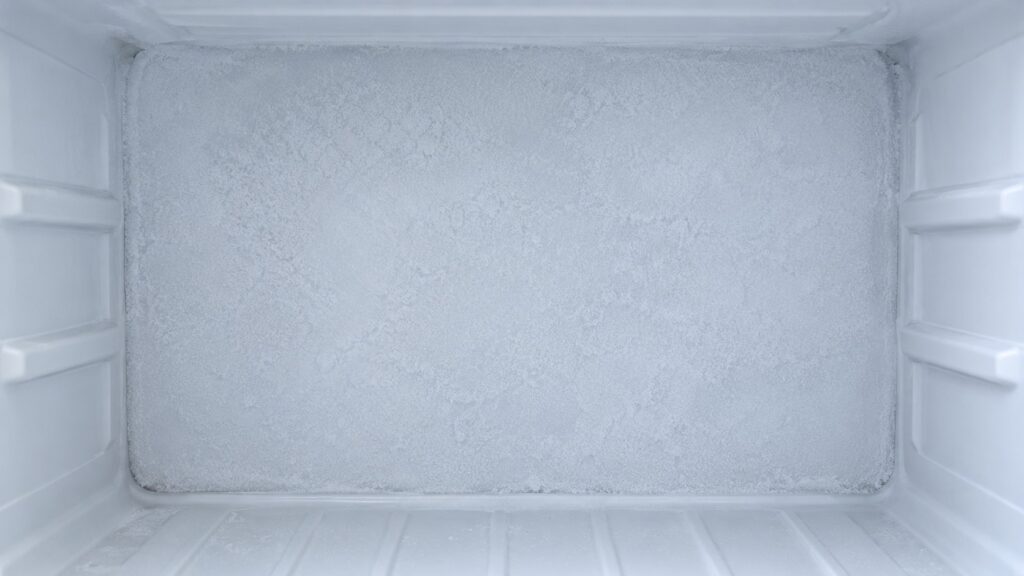
The visible result is the same each time: a growing sheet of frost on the back panel, a thickening ice wall around the coil, drawers that start to stick, and weaker cooling. Our symptom page on refrigerator frost buildup walks through what to look for, and the freezer version of the story is in our guide to defrosting and maintaining a Fisher Paykel freezer.
What can you do to help the defrost system?
Most of the help is about moisture. Close the doors firmly, avoid standing with the door open while you decide what to take out, and check that the gaskets are clean, supple and gripping all the way around. Do not pack food against the back-wall vents, because trapped humid air freezes against the coil. After a heat wave, a power outage or a stretch of heavy door traffic, watch for frost for a week or two, because those are the moments it tends to begin.
If frost returns after you have fixed the seals and the habits, stop chipping at it. Never use a knife or a hair dryer inside the cabinet, since a punctured coil is a sealed-system failure and heat can damage plastic liners. Our annual refrigerator maintenance checklist covers the routine upkeep, and a repeating problem belongs with Fisher Paykel refrigerator repair.