
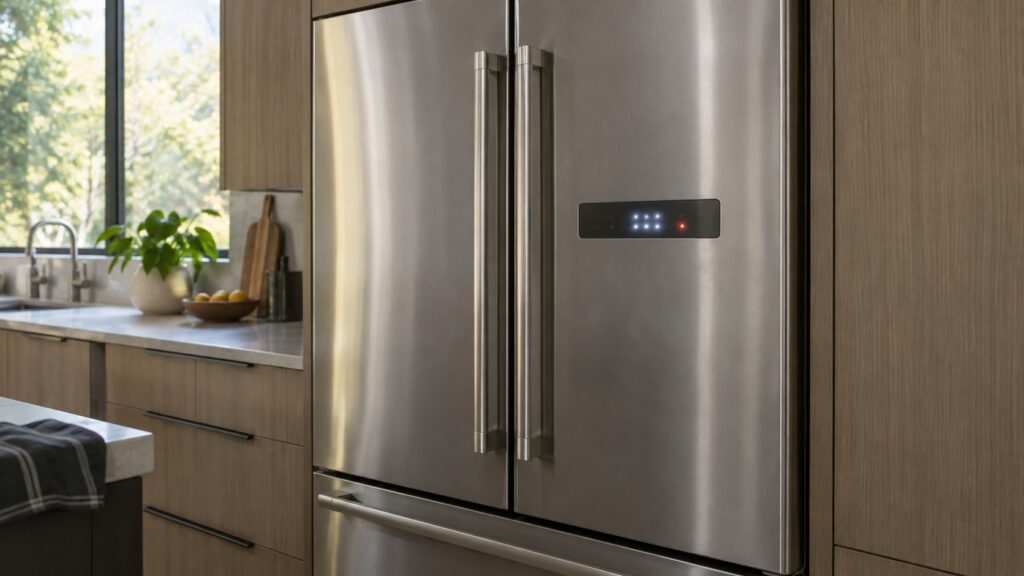
An F30 or F31 fault on a Fisher & Paykel ActiveSmart refrigerator means the display module has lost a valid signal to or from the control, and in most cases that is a repairable connection problem, not a reason to replace the whole refrigerator. The two codes are closely related and point at the same general failure — the link between the internal control and the front display — rather than at the sealed cooling system that actually keeps food cold.
What do F30 and F31 actually mean on an ActiveSmart refrigerator?
Both codes describe the same category of fault: the internal control board is not receiving, or is not successfully sending, a valid signal to the display module at the front of the refrigerator. On a Fisher & Paykel ActiveSmart refrigerator, this kind of problem is signaled by a beep count and, depending on the specific panel, either a flashing binary-LED pattern or a spanner symbol with a number displayed. The internal power module sits behind a panel not meant for casual access, which is why Fisher & Paykel treats most numbered problems like these as technician-level rather than owner-serviceable.
F30 and F31 are close enough in meaning that troubleshooting them follows the same path: confirm the wiring and connector between the control and the display, then the display module itself, before assuming a deeper control-board failure.
Does an F30 or F31 code mean the refrigerator is not cooling?
Not necessarily, and this is the detail worth understanding before assuming the worst. F30 and F31 are specifically about the display’s connection to the control, not about the compressor, the sealed refrigerant system, or the fans that actually move cold air through the cabinet. A refrigerator can continue cooling normally, or nearly normally, while its display shows one of these codes — the food inside is not automatically at risk the way it would be with a genuine cooling failure.
That said, a display that cannot communicate with the control also cannot reliably show the current temperature setting or alert you to a separate developing problem, so a persistent F30 or F31 is still worth addressing promptly rather than living with an unreadable display indefinitely.
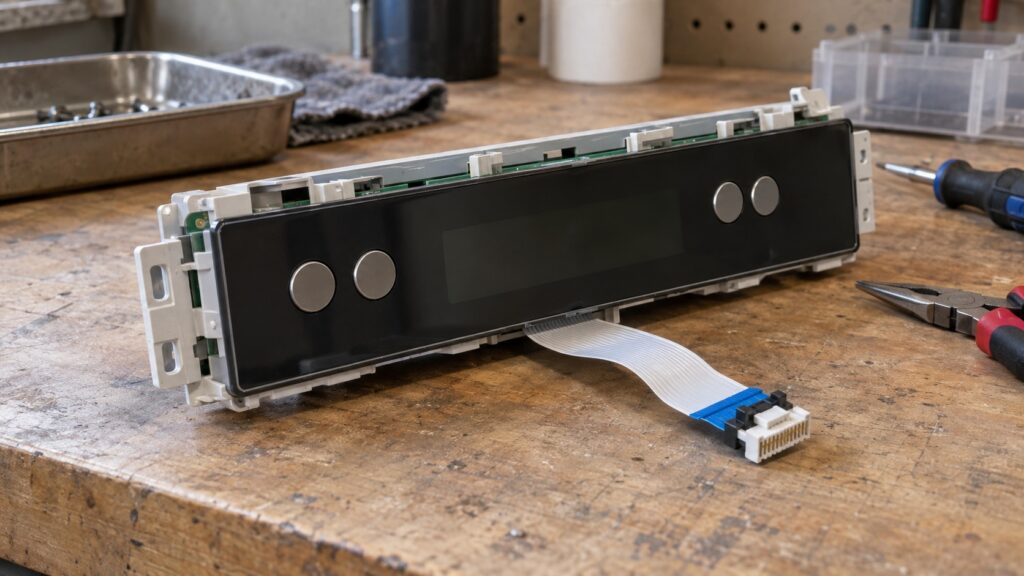
When does repairing the display connection make the most sense?
Repair is the clear choice when the fault is isolated to the display signal itself and the rest of the refrigerator — cooling, the ice and water dispenser if fitted, and the compressor — is working normally. A wiring harness or connector fault between the control and display is a contained, well-defined repair on most models, and a full display module replacement, while a larger job, still does not touch the sealed cooling system at all. Neither repair path affects the parts of the refrigerator that are the most expensive and disruptive to replace.
This is also, generally, an older or a mid-life refrigerator’s fault rather than a sign the whole unit is failing. A wiring connection or a display module wearing out after years of use is normal component aging, similar to a light bulb or a door seal reaching the end of its service life, not evidence that the cooling system is close behind it.
When should I consider replacing the whole refrigerator instead?
Replacement becomes worth considering when an F30 or F31 fault shows up alongside signs of a separate, more serious problem — the refrigerator running constantly, food not staying cold, unusual noises from the compressor, or a sealed-system repair already on record for this unit. A display fault on a refrigerator that is otherwise struggling is a different situation than the same fault on an otherwise healthy unit, and it is worth having a technician confirm which situation actually applies before deciding. Our guide on general repair or replace decisions for a refrigerator covers the broader factors — age, refrigerant type, and overall condition — that apply regardless of which specific fault triggered the question.
Age also matters on its own terms. A display fault on a refrigerator already near or past its typical service life is a reasonable point to weigh a full replacement against a repair, even though the display repair itself would likely succeed — the calculation shifts once a second age-related failure becomes a realistic near-term possibility.
How does a display repair compare in cost to full replacement?
A display connector or module repair is, in almost every case, a small fraction of the cost of a new refrigerator, and it addresses the fault directly without touching anything else on the unit. Because the sealed cooling system is untouched by this repair, a refrigerator that was cooling normally before the display fault appeared should cool exactly as well afterward — the repair restores the display’s ability to communicate with the control, nothing more and nothing less. Our F30 detail page and F31 detail page both list the specific wiring and connector points a technician checks first.
Replacement only becomes cost-competitive when the display fault is one of several problems developing at once, at which point the total repair bill across multiple faults starts to approach what a new unit would cost — a calculation worth having a technician walk through with actual numbers rather than assuming either direction by default.
What should I do before calling for service on F30 or F31?
- Note whether the refrigerator is still cooling normally by checking food temperature, not just the display — this single check tells you whether the fault is isolated to the display connection.
- Cycle power at the breaker for two minutes, since a momentary signal glitch sometimes clears rather than recurring.
- Write down the beep count and any LED or spanner symbol pattern exactly as it appears — this detail helps a technician confirm F30 versus F31 versus a different, unrelated code before arriving.
- Avoid opening the internal power module panel yourself. It sits behind a cover not designed for routine access and is a technician-level area for good reason.
We are an independent repair company, not a factory service arm, and we will tell you plainly whether a display repair or a full replacement makes more sense for your specific refrigerator’s age and condition. Book Fisher & Paykel refrigerator repair or schedule a visit with the beep pattern or code noted, and we will confirm the fault before assuming which repair path applies.
A fisher paykel refrigerator f30 f31 diagnosis that confirms cooling is normal is usually good news: the more expensive part of the machine was never in question.