
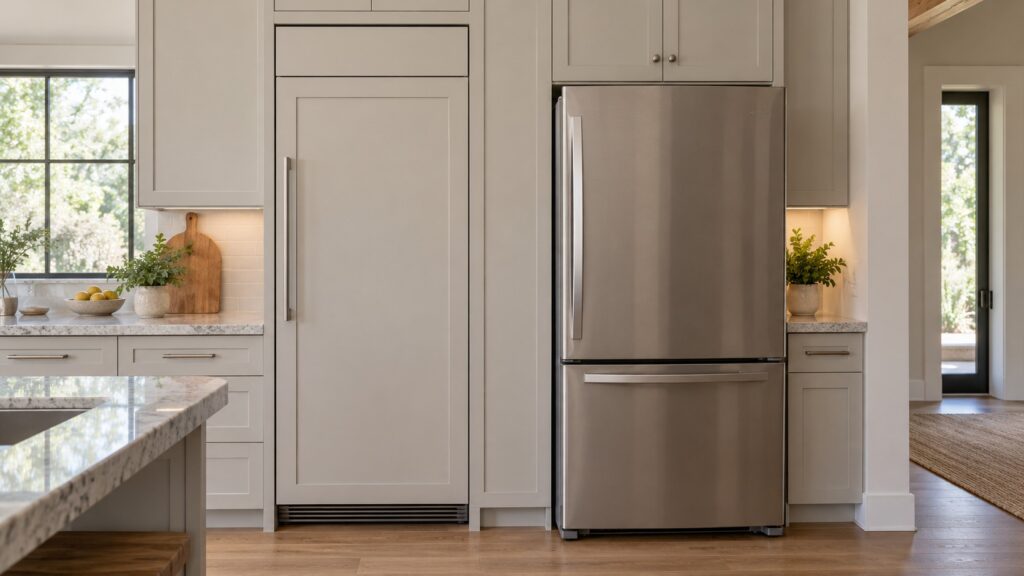
A Fisher Paykel integrated fridge sits inside a run of cabinetry and wears a panel that matches the kitchen, while a freestanding refrigerator stands on its own and shows its own door. Neither is better in every kitchen. The integrated route buys a seamless look and a planned opening, and it costs you flexibility, because the cabinet is built around the appliance. The freestanding route is easier to plan, easier to move and easier to service. This guide compares the two for an owner who is deciding before the cabinet maker or the delivery crew arrives.
What is the real difference between an integrated and a freestanding fridge?
The difference is mostly about the opening, not the cooling. Both kinds of Fisher & Paykel refrigerator keep food cold in the same basic way, and our ActiveSmart guide describes how ActiveSmart temperature control works. What changes is how the appliance meets the room. A freestanding refrigerator stands in a space with some room around it and shows its own finish. An integrated unit is designed to be built into cabinetry and finished with a panel or a matching front, so that it reads as part of the kitchen rather than as an appliance.
Our integrated column freezer buying guide explains the idea from the freezer side: a tall, built-in unit that sits flush with the cabinets and is designed to pair with a matching refrigerator column. If you are weighing a Fisher Paykel integrated fridge, the same logic applies, and it is worth planning the pair together even if you buy the second unit later.
Which is easier to plan around?
Freestanding wins on simplicity. You need a space that fits the cabinet width and depth, enough room for the doors to swing, and the clearances in the installation guide. Our refrigerator installation guide lists what to check before delivery, including clearances, the electrical supply, the water line and leveling.
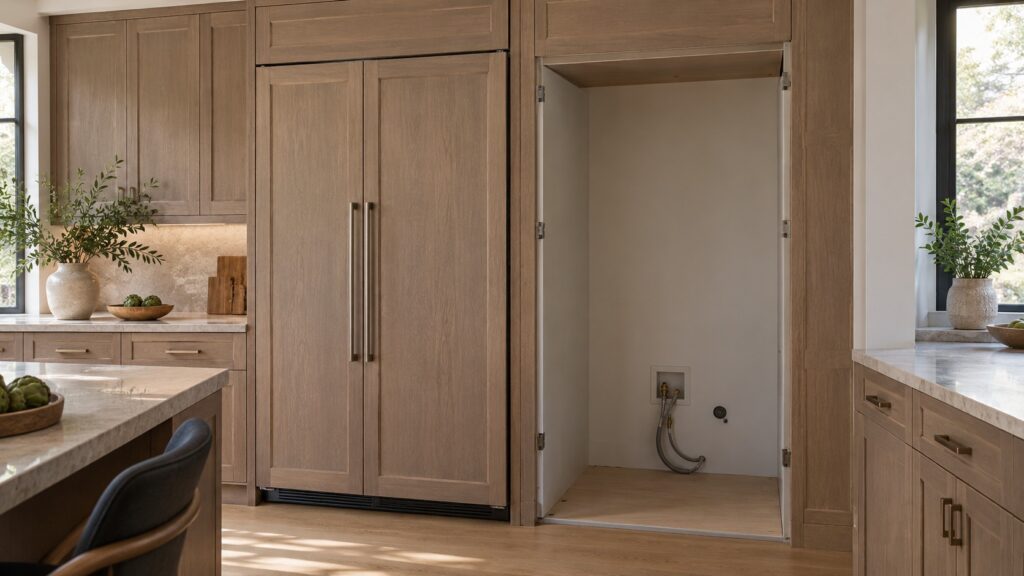
An integrated refrigerator is planned with the kitchen, not after it. The opening, the way the door will swing next to a wall or a neighboring cabinet, the ventilation, the water connection if your model has a dispenser and the weight and fit of the panel all have to be settled before the cabinets are built. If your kitchen is already finished and the opening is a standard gap, a freestanding unit is usually the safer choice.
How do airflow and ventilation compare?
Every refrigerator has to shed heat, and a unit that cannot do so works harder and wears faster. A freestanding unit is usually pulled into a space with room around it. A built-in unit is pushed into a closed opening, so the ventilation has to be part of the design: the air path, any grille in the plinth or above the cabinet and the space behind it all matter. The exact openings differ by model, so follow the installation guide supplied with the appliance rather than a number from a general article.
If you already own a built-in opening and wonder whether it is still adequate, notice how the refrigerator behaves. A unit that runs almost constantly, a warm top panel or a cabinet that feels hot to the touch suggest that heat is not leaving the opening. That is a good moment for a visit rather than a guess.
Which is easier to repair or replace later?
This is the part that buyers forget. A freestanding refrigerator is usually pulled forward on its feet, which gives a technician access to the back and the base. A built-in unit may need to be slid out of a tight opening, and a heavy panel may need to come off first. Neither is a reason to avoid integrated, but it is a reason to leave the opening accessible and to keep the model information and the installation guide in a drawer.
Replacement is the other side of the same coin. If a freestanding unit fails, many models will fit the space. If an integrated unit fails, the new one has to suit the existing opening and, if the panel is reused, the panel as well. When a unit is old and a repair estimate is high, the opening may decide what you can buy next, which is worth knowing today rather than later. Our annual maintenance checklist shows the small routine jobs that make the decision less urgent.
Which one should you choose?
Choose integrated if you are building or remodeling, you want the refrigerator to disappear into the cabinets and you are willing to plan the opening, the panel and the ventilation in advance. Choose freestanding if the kitchen is finished, you want the widest choice of sizes and layouts, or you expect to replace the unit on a normal schedule without touching the cabinets. Our guide to French door versus side-by-side refrigerators helps with the door layout once you know which route you are taking.
Whichever you choose, ask for the installation guide for the exact model before the cabinet maker or the installer commits to dimensions. General articles, including this one, cannot replace it. We are an independent repair company, not the manufacturer, and the manufacturer’s literature decides the clearances for your unit. If a refrigerator you already own is struggling, our Fisher & Paykel refrigerator repair page explains how a visit works, and you can schedule a visit online.