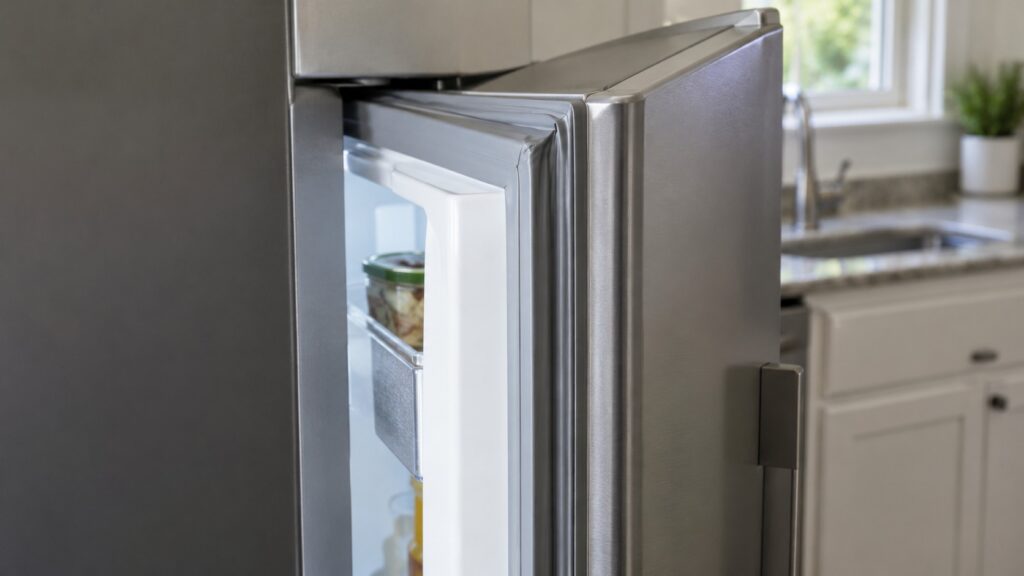
The Fisher Paykel fridge door gasket is the rubber seal around the edge of each door, and it does one job all day: it keeps cold air in and warm, humid air out. A gasket that is dirty, stiff, torn or pulled out of place lets room air leak in, so the refrigerator runs longer, frost and condensation appear and food does not stay as cold. Care is simple. Wipe it clean, test it now and then, keep the refrigerator level so the doors close on their own and replace the gasket if it is damaged. This guide covers each step.
Why does the gasket matter so much?
Because every door opening and every gap costs cold air. A refrigerator with a leaky gasket works harder to hold temperature, and the signs show up as warm food, condensation inside the door, frost and a compressor that seems never to stop. Our annual refrigerator maintenance checklist includes the door seals, and our refrigerator not cooling guide lists a poor seal among the things to rule out before you suspect a part. A gasket costs far less than the electricity and food it can waste.
How do you clean the gasket?
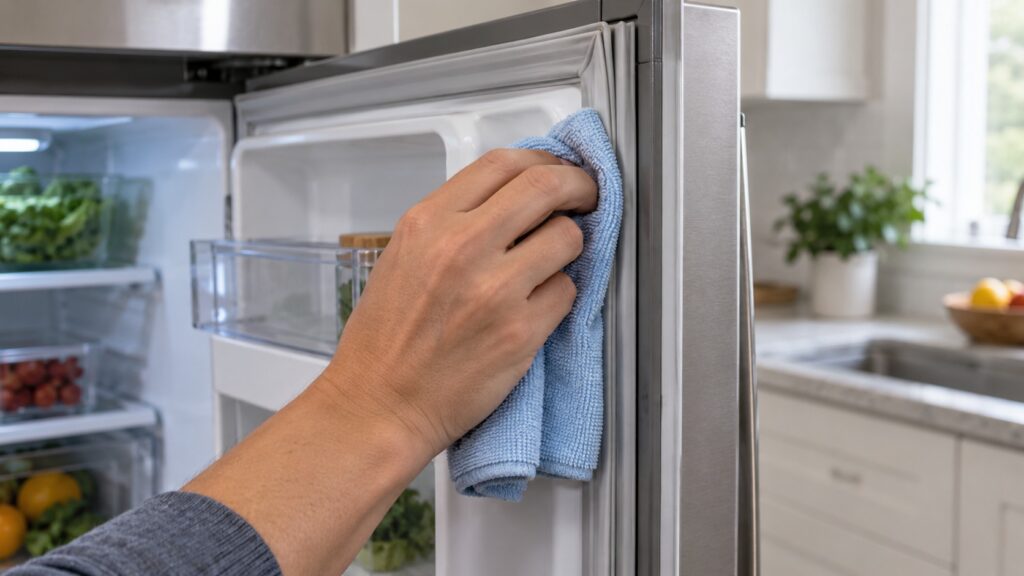
With the doors open, wipe the gasket with a soft cloth dampened with warm water and a few drops of mild dish soap, working along the face and into each fold, where spilled drinks and crumbs collect. Wipe again with a clean damp cloth to remove soap and dry it with a towel. Dried spills and sticky film glue the gasket to the cabinet and tear it when the door opens, so clean any residue as soon as you see it. Use a soft brush, such as an old toothbrush, for stubborn bits in the folds. Do not use solvents, bleach soaks, abrasive pads or sharp tools, which dry out or nick the rubber.
How do you test the seal?
Close the door on a strip of paper, such as a sheet or a banknote, so it crosses the gasket line, then pull gently. A good seal grips the paper with noticeable resistance; if it slides out freely, the seal is not touching at that point, even if the gasket looks fine. Test around the whole door, at the top, bottom and both sides, because a gasket can seal on three sides and fail on one where the door has sagged or the rubber has warped. If you find a weak spot, check whether the gasket is dirty, folded or pulled out of its groove before you decide it needs replacing.
What does a worn gasket look like?
Look for cracks, tears, hardened or flattened sections, a gap you can see along the edge, mold in the folds that will not wipe off and a gasket that has come away from the door. Our DishDrawer seal care guide describes a similar logic for a different appliance: most seal problems are debris or residue, and only a cracked or flattened seal needs a new part. A gasket that is merely dirty needs cleaning, not replacing. A gasket that has lost its shape or is torn needs a replacement part, which should be the correct one for your model.
What else makes a door fail to seal?
The refrigerator being out of level, so the door does not swing shut by itself; a hinge that has dropped; a shelf, bin or package that sticks out and holds the door ajar; a door that is overloaded; or an obstruction at the side. Our installation guide covers leveling and notes that the unit should sit so the door self-closes. Check that nothing blocks the door and that the refrigerator is steady on its feet. Do not adjust hinges or leveling feet beyond what your manual describes. The door alarm page explains what the alarm means if it keeps sounding.
When should you call a technician?
Call if the gasket is torn or will not seat, if a door sags or will not close, if you have cleaned and tested the seal and the refrigerator still runs warm or frosts, or if condensation keeps forming. A technician can fit the right gasket and adjust the door properly, and can check whether anything else is wrong. Our Fisher & Paykel refrigerator repair page explains how a visit works.
What habits protect the gasket?
Do not pull on the door by the gasket, and do not let spills dry on it. Wipe up drips as they happen and clean the gasket along with the shelves each time you clear out the refrigerator. Do not overfill door bins so that they stick out and keep the door from closing. Do not slam the door, since the air rushing out and in can pull the gasket out of place. When you move the refrigerator for cleaning, push it back gently and check that the doors still close by themselves. A gasket treated this way lasts a long time.
Check the gaskets every few months when you clean the refrigerator, and again if you notice frost, condensation or a refrigerator that runs more than it used to. Catching a small gap early means a cleaning or a small adjustment instead of a bigger problem. If you own a refrigerator with more than one door or a drawer, check every seal, because one that fails can go unnoticed while the others hold.