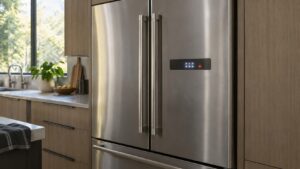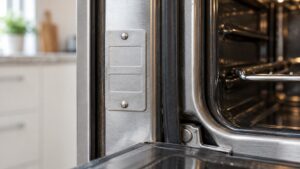

Few kitchen emergencies feel as pressing as a fisher-paykel refrigerator no power failure, because the four-hour window before food safety becomes a real concern starts ticking the moment cooling stops. Rather than fearing a failed compressor straight away, walk this dead-unit checklist from the wall outward. A surprising share of these scares trace back to a tripped breaker or an accidental setting that only mimics a lifeless fridge.
fisher-paykel refrigerator no power: check the electrical supply
Start with the outlet, not the refrigerator. Pull the unit forward enough to access the power cord and plug. Unplug the refrigerator and plug in a lamp or phone charger to verify the outlet is live. If the outlet is dead, check two things:
- Circuit breaker — Open your home electrical panel and look for a tripped breaker. A tripped breaker sits in a middle position between On and Off. Push it firmly to Off, then back to On. If it trips again immediately, there is a short circuit and you should call an electrician before proceeding.
- GFCI outlet — Kitchen outlets near sinks are often GFCI-protected. Press the Reset button on the outlet face. A GFCI outlet can trip due to moisture, a ground failure in the refrigerator, or even a power surge during a storm. Some homes have a GFCI outlet upstream that controls other outlets in the kitchen, so check all GFCI outlets in the area.
Inspect the power cord
With the refrigerator unplugged, examine the entire length of the power cord. Look for cracks in the insulation, burn marks near the plug prongs, or signs of rodent damage. A damaged cord can cause intermittent power loss or a complete failure. Never splice or tape a damaged refrigerator power cord. Replace it with a manufacturer-approved replacement cord. The cord connects to a terminal block inside the rear panel and is a straightforward swap.
Check for demo mode (showroom mode)
Fisher & Paykel refrigerators have a demo or showroom mode used in retail stores. In this mode, the display and lights work but the compressor and cooling system do not run. The refrigerator appears powered on but does not cool. To check for and disable demo mode, press and hold the Alarm Off button (or the Super Cool button on some models) for approximately 15 seconds. You will hear a beep or see the display change when demo mode is deactivated. Consult your model-specific documentation for the exact button combination, as it varies by series.
Listen for the compressor
If the outlet works and the lights inside the refrigerator turn on, but the unit is not cooling, the compressor may not be running. Stand near the refrigerator in a quiet room and listen for a low humming sound from the back or bottom of the unit. If you hear nothing, the compressor is not operating. Common causes include:
- Failed start relay — The start relay is a small component plugged into the side of the compressor. It provides the initial surge of power to start the compressor motor. A failed start relay often rattles when shaken. Unplug the refrigerator, access the compressor area through the rear panel, and remove the relay. Shake it gently. If it rattles, it has failed internally and needs replacement. This is a $20 to $40 part and one of the most common causes of compressor failure symptoms.
- Overload protector — The overload protector cuts power to the compressor if it overheats. If the compressor was running hot due to dirty condenser coils, the overload may have tripped. Clean the condenser coils (behind or beneath the unit) and allow the refrigerator to sit unplugged for 30 minutes before restarting.
- Compressor failure — If the start relay is functional but the compressor still will not run, the compressor motor itself may have failed. You may hear a click-buzz-click pattern as the start relay tries repeatedly and the overload protector trips. This is a sealed-system repair requiring professional service.
Control board failure
The main control board manages all refrigerator functions including power distribution to the compressor, fans, defrost system, and display. A failed board can result in a completely dead unit or selective failures. Look for burn marks, swollen capacitors, or corroded traces on the board. The board is typically located behind a cover on the rear wall of the fresh food compartment or behind the rear access panel. Board-level diagnosis requires testing voltage output at specific terminals, which should be done by a qualified technician. Refer to the www.fisherpaykel.com support section for model-specific technical information.
When to call a technician about no power
Resetting a breaker, restoring a GFCI outlet, exiting demo mode, and swapping a rattling start relay are all safe to handle on your own. Once you have proven the outlet is live, confirmed the cord is sound, ruled out showroom mode, and changed a failed relay yet the box still sits dark or warm, you are into compressor or control-board territory that calls for hands-on diagnosis. Because spoiled groceries wait for no one, schedule Fisher & Paykel refrigerator repair for urgent same-day attention to keep your food cold. Our experienced technicians arrive ready to test the sealed system, and you can book a specialist technician for a fast diagnosis backed by a 30-day labor warranty, with pricing that depends on the diagnosis and starts from $99.