Fresh produce and leftovers last far longer when they sit in the right zone, and that is the whole premise behind these fisher-paykel refrigerator organization tips. ActiveSmart cooling keeps a Fisher & Paykel refrigerator more even from top to bottom than older designs, yet each shelf, drawer, and door bin still behaves a little differently — and using those differences on purpose is what keeps food fresh and waste down. The placement strategy below reflects both food-safety basics and the way our experienced technicians see well-kept refrigerators actually used. For background, you can review the official ActiveSmart overview.
Upper shelves: ready-to-eat foods
The upper area maintains the most consistent temperature. Store:
- Drinks and beverages
- Leftovers and prepared meals
- Ready-to-eat foods (deli items, yogurt, cheese)
- Herbs (wrapped in damp paper towel inside a loose bag)
Middle shelves: dairy and eggs
Despite the door having an “egg” shelf on many models, eggs last longer on an interior shelf where temperature is more stable. Store dairy products (milk, cream, butter) here rather than in the door. The door is the warmest zone and experiences the most temperature fluctuation from opening and closing.
Lower shelves: raw proteins
Always store raw meat, poultry, and fish on the lowest shelf. This prevents drips from contaminating other foods below. Use a plate or container underneath as an extra safety measure. The lower shelf is also slightly colder in most refrigerators, which is ideal for proteins.
Crisper drawers: fruits and vegetables
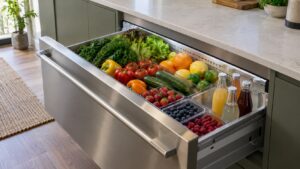
Fisher & Paykel crisper drawers have humidity controls — use them:
- High humidity (closed vent) — Leafy greens, herbs, broccoli, peppers, cucumbers. These vegetables wilt when they lose moisture.
- Low humidity (open vent) — Fruits (apples, pears, grapes), mushrooms, root vegetables. Fruits release ethylene gas as they ripen — the open vent allows this gas to escape rather than accelerating spoilage of everything in the drawer.
Never store fruits and vegetables together in the same drawer. Ethylene from fruit accelerates vegetable spoilage.
Door shelves: condiments only
The door is 3-5°F warmer than interior shelves and fluctuates with every opening. Only store items that tolerate temperature variation: condiments, salad dressings, sauces, pickles, and other preserved items. Never store milk or eggs in the door despite many models having “designated” spots for them.
Space-saving techniques
- Use clear, stackable containers — Square or rectangular containers maximize shelf space (round containers waste corner space). Clear containers let you see contents without opening.
- Lazy Susans — A small turntable on a deep shelf makes items at the back accessible without moving everything in front.
- Shelf liners — Make cleaning easier and prevent small items from falling between wire shelf gaps.
- First in, first out — Put newer items behind older ones so you use older items first and reduce waste.
Temperature check
All this organization matters less if your temperature is wrong. Check with an independent thermometer — the built-in display can drift. Target: 37°F ± 2°F for fresh food, 0°F ± 2°F for freezer. For detailed settings, see our temperature settings guide.
If cooling stays uneven after you have organized the shelves and confirmed the temperatures, the airflow fan, damper, or thermostat may be the culprit rather than your layout. In that case, Schedule Fisher & Paykel refrigerator diagnostics with our specialist technicians.
fisher-paykel refrigerator organization tips: key takeaways
Done consistently, these fisher-paykel refrigerator organization tips stretch how long food stays good, cut grocery waste, and let ActiveSmart do its job without fighting a crowded, mismatched layout. Match each food to its zone, set humidity by drawer, and rotate older items forward — those three habits carry most of the benefit. If your refrigerator still struggles to hold temperature once the contents are arranged sensibly, schedule professional service to rule out a mechanical problem.
Keeping your Fisher & Paykel refrigerator reliable long-term
Good organization works hand in hand with light upkeep: vacuum the condenser coils each quarter, wipe the door gasket so it seals cleanly, and keep vents inside the cabinet clear so ActiveSmart airflow can reach every shelf. Fisher & Paykel engineers its compressors and cooling systems to tight durability standards, yet dust, humidity, and years of door cycles still wear parts over time. Keep the model and serial numbers from the rating plate inside the cabinet handy — our experienced technicians can match the right fan, damper, or control board from trusted parts suppliers faster when they have those numbers. Every repair includes a 30-day labor warranty, and a diagnostic visit starts from a modest fee with the final cost depending on the diagnosis.