Common Fisher & Paykel Ice Maker Problems
Most fisher-paykel ice maker problems trace back to a handful of causes you can check in minutes — a switched-off arm, a throttled water supply, or a filter that’s overdue for replacement. Fisher & Paykel refrigerators with built-in ice makers are reliable, but when production stalls it’s worth working through the basics before calling for service. The manufacturer’s Fisher & Paykel support guide for your model confirms many of these are owner-fixable.
Ice Maker Not Producing Ice
Check the Basics
- Is it turned on? The ice maker has a small on/off switch or lever. On some models, pushing the lever up turns it off.
- Is the water supply connected? Verify the water supply valve behind the refrigerator is fully open. A partially closed valve can stop production entirely.
- Is the freezer cold enough? The freezer must be at 0°F (-18°C) or below for ice production. Check with a thermometer — if the freezer is above 10°F, the ice maker won’t cycle. See our temperature settings guide.
- Is the ice bin full? The ice maker has a sensor or bail arm that stops production when the bin is full. Empty the bin and wait 2–3 hours.
Check the Water Filter
A severely clogged water filter restricts flow to the ice maker. If you haven’t replaced the water filter in over 6 months, install a new one and wait 24 hours for ice production to resume.
Check the Water Inlet Valve
The water inlet valve at the back of the refrigerator opens electrically to fill the ice mold. If the valve is defective, no water reaches the ice maker. You can test this by listening for a buzzing sound when the ice maker calls for water — silence means the valve isn’t activating.
Ice Cubes Are Too Small or Hollow
Small or hollow ice cubes indicate insufficient water flow. Common causes:
- Low household water pressure (below 20 psi)
- Kinked water supply line
- Clogged water filter
- Partially open supply valve
Ice Has Bad Taste or Odor
- Replace the water filter — old filters can impart off-flavors
- Discard the first two batches of ice after filter replacement
- Remove any uncovered food in the freezer that could transfer odors
- Clean the ice bin with warm water and baking soda
Ice Maker Is Leaking
Water leaking around the ice maker usually comes from:
- Overfilling — the water inlet valve may not be shutting off completely
- Cracked water line — inspect the plastic or copper supply line for splits
- Ice buildup — ice jams can redirect water outside the mold. Defrost the ice maker area by turning it off for a few hours.
If the ice maker still isn’t working after these checks, the issue likely involves the ice maker module, water inlet valve, or control board — components that require professional diagnosis. Book an experienced technician for same-day ice maker repair, with labor backed by a 30-day warranty.
Solving fisher-paykel ice maker problems: when to call a pro
If the bin’s empty, the filter’s fresh, the freezer holds 0°F, and the supply valve is wide open yet no ice forms, you’ve ruled out the owner-fixable causes. At that point the inlet valve, ice maker module, or control board is the likely suspect, and that’s where a specialist technician’s diagnostic tools pay off. Repairs start from a modest service fee and the total cost depends on the diagnosis. Book an appointment or contact us for help.
Keeping ice production reliable on your Fisher & Paykel refrigerator
Consistent ice depends on two things people forget: a freezer that actually sits at 0°F and a water filter changed on schedule. Replace the filter every six months, keep the supply line free of kinks, and the ice maker will cycle the way it should.
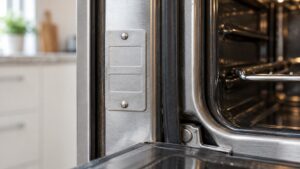
When a valve or module finally needs replacing, grab the model and serial number from the rating plate inside the fresh food compartment first. Quoting that number lets a parts supplier match the exact ice maker assembly for your Fisher & Paykel refrigerator, so the visit isn’t held up waiting on the wrong part.